That Sickening Scrape
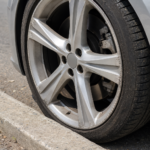
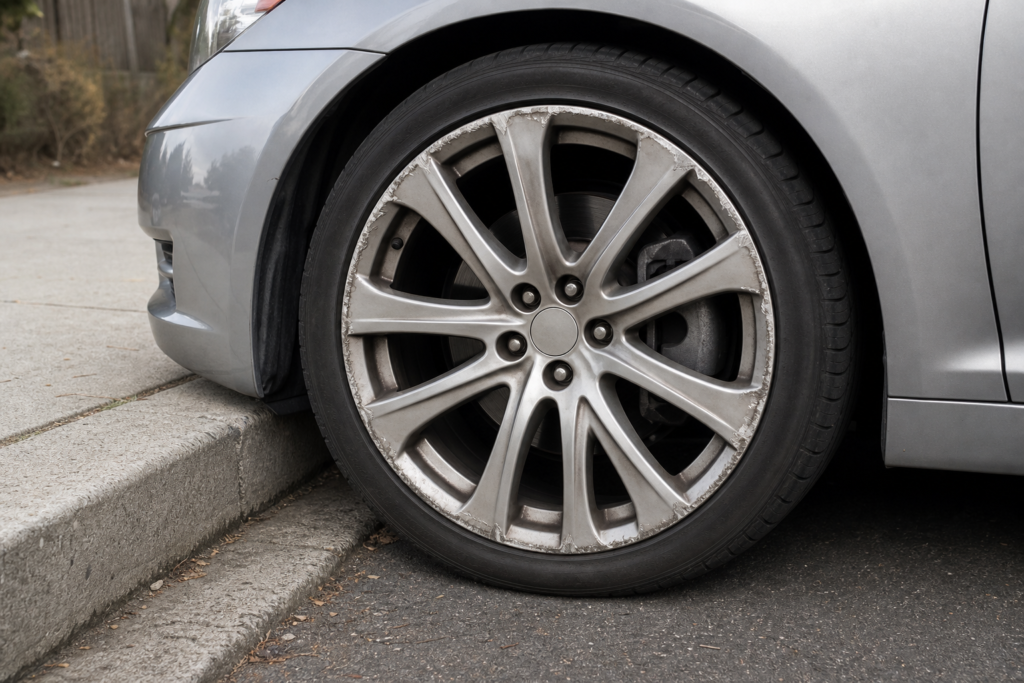
A tight parallel-park, a soft “scrrrp,” and you already know where the sound came from: the outer lip of your alloy wheel. The frustrating part isn’t just the visible scrape, it’s what that nick can turn into after months of salt, water, heat, and brake dust.
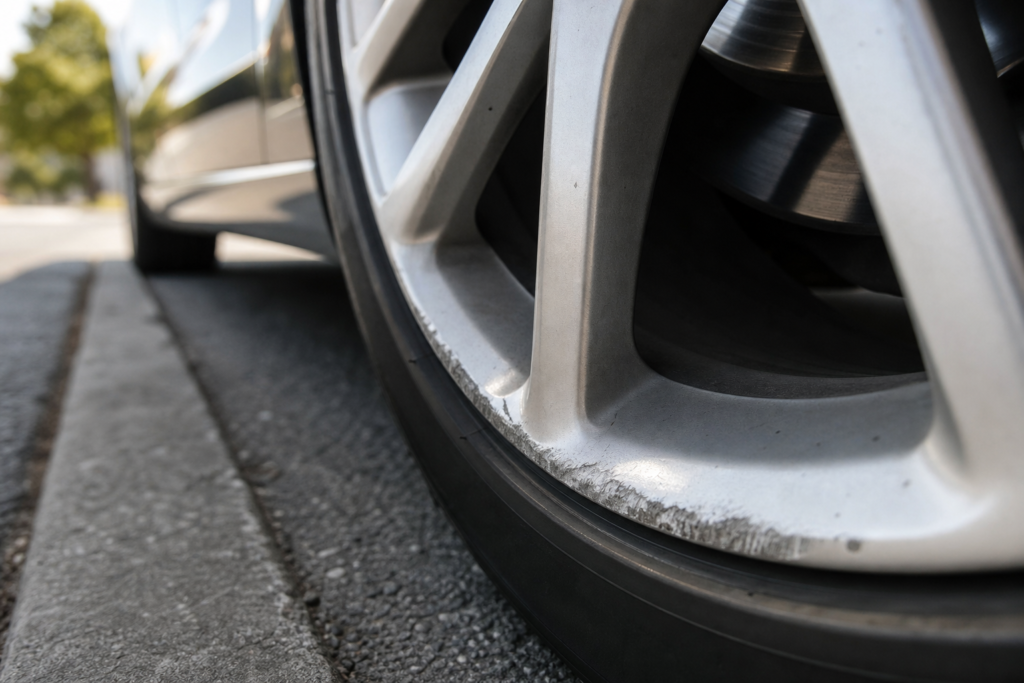
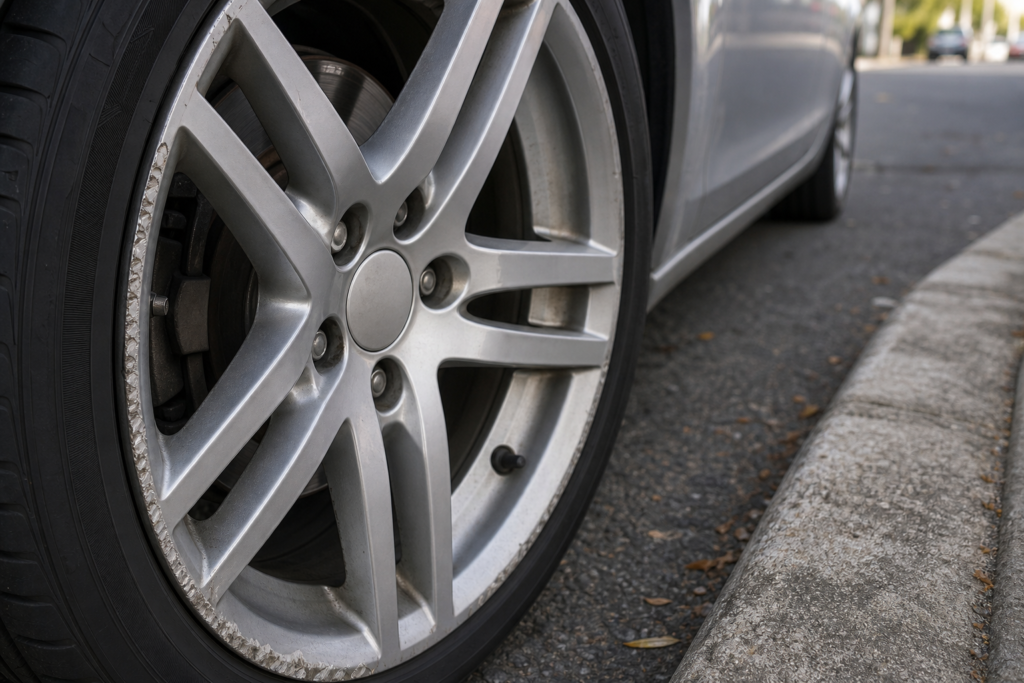
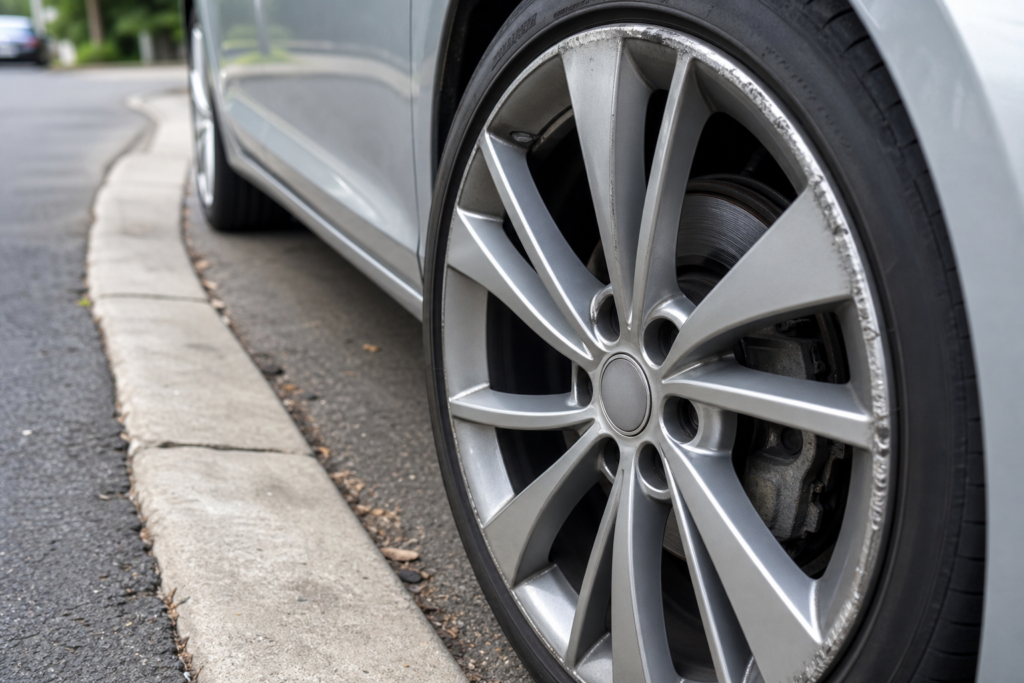
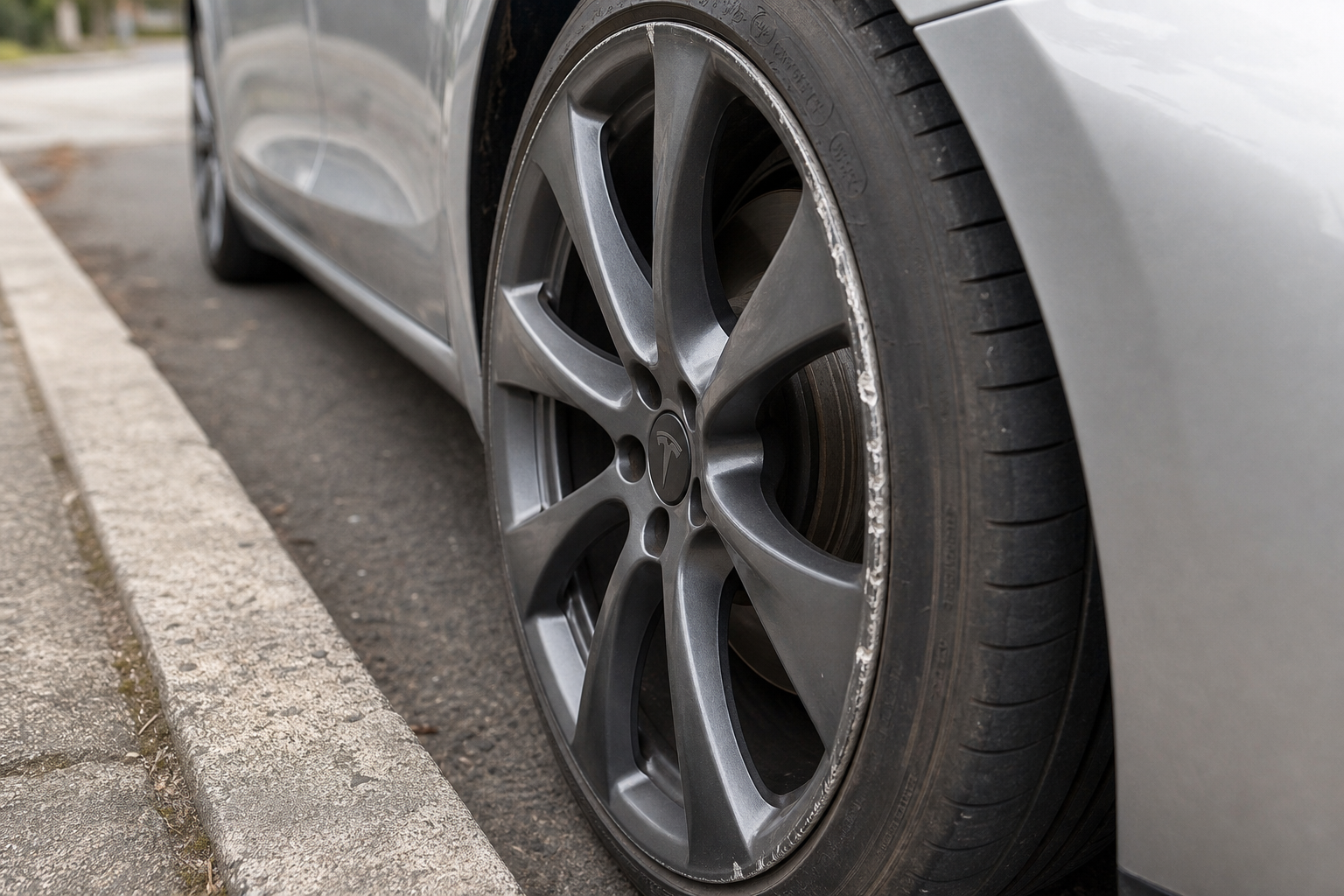
Most drivers have been there. You step out, crouch down, and run a finger across the fresh mark. It’s shallow, maybe a quarter-inch strip where the clear coat and paint are gone, exposing bare aluminum. In isolation, it looks minor. The wheel still holds air, the car drives the same, and by the time you’re back in traffic you’ve almost forgotten about it. That near-instant dismissal is what makes curb rash deceptive. The damage is real, it’s exposed, and it’s now on a clock. That clock ticks faster or slower depending on where you live and how you drive.
Long-Term Wheel Damage
A factory alloy wheel is a layered system: bare aluminum, primer, base coat, and clear coat. That stack keeps air and moisture away from a metal that corrodes easily once exposed. A curb scrape breaches some or all of those layers, and the progression from there is predictable.
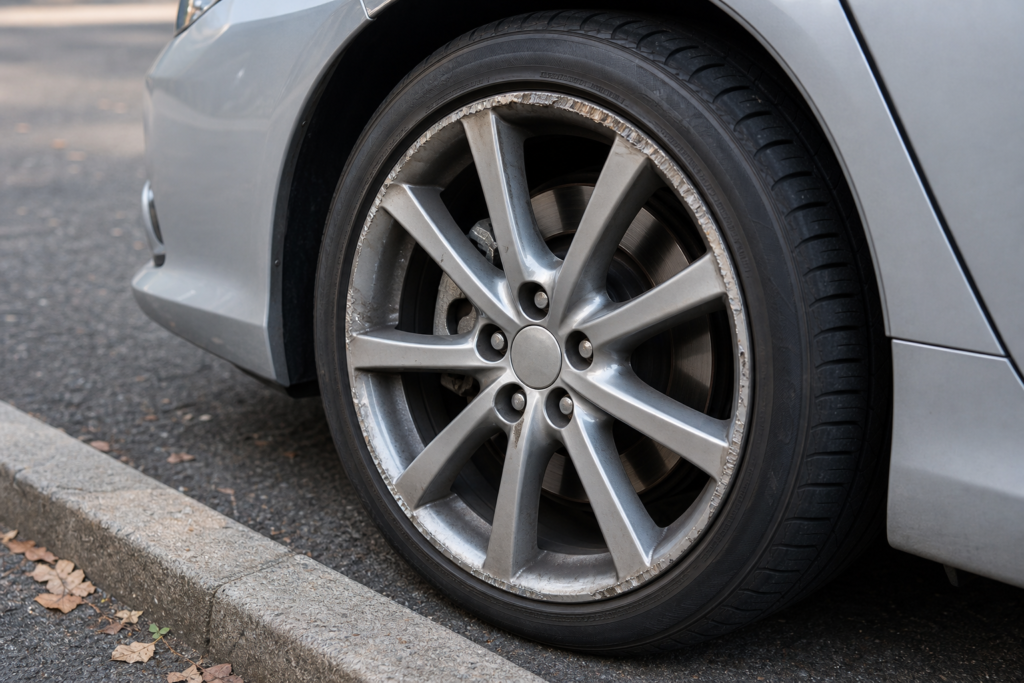
First, brake dust, an acidite mix of iron particles and pad material, settles into the rough, freshly exposed surface. Water follows. In northern states where road salt is applied for months at a time, that moisture carries chloride straight into the aluminum. The result is curb rash corrosion: a chalky white oxidation that spreads outward from the original scrape, lifting paint edges and widening the damaged zone. Coastal humidity accelerates the same process without the salt. Even dry desert climates contribute, because fine silica dust acts as an abrasive that grinds into an unprotected scrape at highway speeds.
The timeline varies. In a mild, dry climate, a small scrape might look roughly the same a year later. In a salt-belt winter, visible corrosion can appear in weeks. Either way, every mile driven without the clear coat intact is a mile where the damage has a chance to compound.
Why It’s More Common
Modern wheel-and-tire packages have shifted the math against drivers. Wheels have gotten larger, many crossovers and sedans now ship with options pushing well beyond the sizes that were common a decade ago, while tire sidewalls have gotten shorter to match. That combination means there’s less rubber cushion between the wheel lip and a concrete curb. Low-profile tires and curb rash go together almost by design: the shorter the sidewall, the less forgiveness you get when a tire rolls against a raised edge.
Vehicle width plays a role too. Many current SUVs and trucks are wider than their predecessors, which makes tight urban parking structures and narrow residential streets more punishing. Mirrors can’t show you everything, and parking sensors are calibrated for bumper-level obstacles, not the six-inch curb your right rear wheel is about to graze.
Then there are the repeat-offender scenarios. Drive-throughs with tight curb radii, angled parking spots with painted islands, and garage ramps with concrete lips all create geometry that catches wheels. Even careful drivers report hitting the same curb at the same spot in their daily routine, because the angle of approach and the vehicle’s turning radius conspire to make contact nearly unavoidable without conscious overcorrection.
Hidden Costs
A single scuffed wheel rarely affects how a car drives. But curb rash that goes deep enough to deform the lip can introduce a slow air leak, one that manifests as a tire that’s always a few PSI low. Heavier impacts can create a slight bend that causes vibration at highway speed, though this is more common with pothole damage than with curb contact.
The financial sting is usually felt later. Curb rash and resale value have a direct relationship: buyers notice wheels immediately, and visible scrapes signal deferred maintenance even when the rest of the car is clean. Wholesale and private-party buyers both discount for it, sometimes disproportionately to the actual repair cost.
Lease returns sharpen the math further. Most lease-end inspection guidelines allow only minor cosmetic wear, and a lease-return curb rash charge can apply per wheel. Multiply that across two or three damaged wheels after a three-year lease and the total rivals the cost of professional refinishing you could have done months earlier. For anyone approaching a lease turn-in or a private sale, the calculus is straightforward: fixing the wheels before inspection almost always costs less than the penalty or the negotiating hit.
Fix, Leave, or Replace
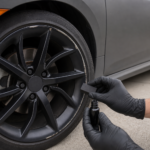
Not every scrape demands action. A light scuff that barely broke the clear coat on a daily driver you plan to keep for years is cosmetic noise. It is worth a dab of touch-up paint to seal the exposed area, but not worth a full refinish. Touch-up paint won’t be invisible, but it stops moisture intrusion, and that’s the point.
Deeper scrapes that expose bare metal across a wider area warrant professional wheel repair, especially on machined or polished faces where DIY paint won’t blend. A reputable wheel refinisher will strip, fill, repaint, and re-clear the entire face, returning it to near-factory appearance. The difference between quality work and a shortcut shows up in a few places: consistent color match across the face, no visible filler ridges when viewed at an angle, and a clear coat edge that doesn’t peel within a few months. Ask to see finished examples, and look at them in direct sunlight. That’s where cheap work reveals itself.
Replacement makes sense when the damage is structural: a bent lip, a crack, or corrosion that has eaten deep enough to compromise the wheel’s integrity. It also makes sense when the wheel design is simple enough that a new one costs about the same as refinishing. Beyond that, refinishing is almost always the more cost-effective path, and a well-done refinish is functionally invisible to the next buyer.
Prevention That Actually Sticks
The most effective way to prevent curb rash has nothing to do with gadgets. It’s a parking habit: when pulling alongside a curb, glance at your right-side mirror before the final approach and leave a deliberate gap. A few inches of clearance costs you nothing and eliminates the most common point of contact. Making that mirror check automatic, the same way you check mirrors before a lane change, turns prevention into muscle memory rather than willpower.
Tire and wheel choices matter too. If you’re selecting a new set, a slightly taller sidewall profile offers more protection without dramatically changing the car’s look or handling. Some aftermarket wheels also feature a raised lip or rim protector ridge designed to take contact before the face does. Neither option is foolproof, but both buy margin.
The broader shift is mental. Wheels are exposed, unprotected components spinning inches from concrete at every parking lot and intersection. Treating them that way, the way you’d treat any part of the car that’s constantly at risk, keeps a minor scrape from becoming an expensive, avoidable problem. Curb rash is common enough that no one should feel embarrassed by it. But it’s also predictable enough that a little awareness goes a long way toward making sure it doesn’t happen twice.