The Never-Off Billboard
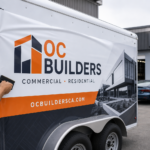
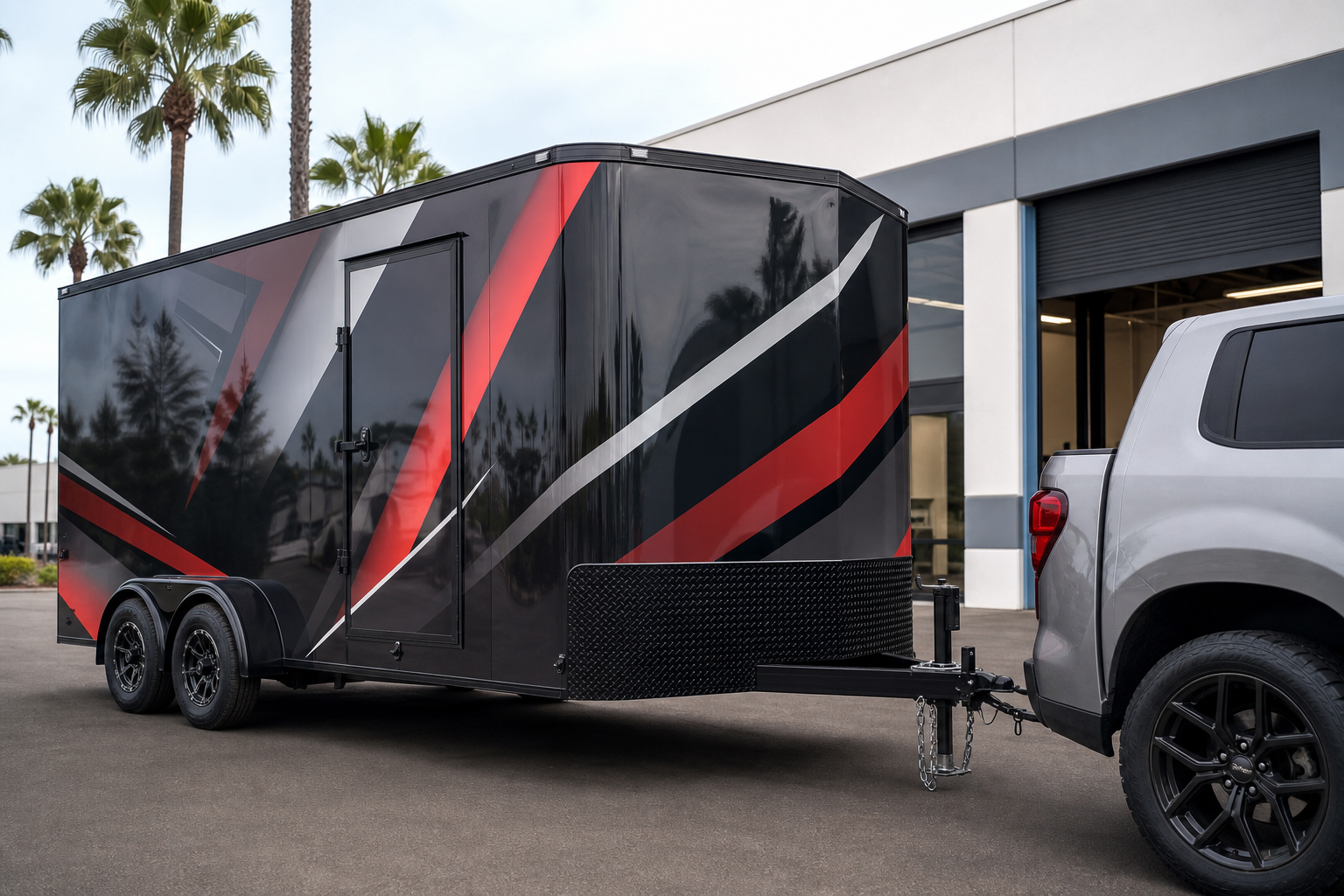
A wrapped 7×16 enclosed trailer inching through the 405/55 interchange during the afternoon crawl puts graphics in front of every driver stuck in that merge, and there are thousands getting a long, involuntary look at its panels. Now picture that same trailer parked at a job site in Santa Ana or an industrial park off the 5 in Irvine, still throwing off impressions while the crew is inside hanging drywall. If you’ve searched for trailer wrap pricing in Orange County, you’re already thinking about that math. You want to know what the spend actually looks like and what pushes the number higher or lower.
The “24/7 marketing machine” framing gets used a lot in this space, but in Orange County it’s genuinely earned. The county’s freeway network is dense and perpetually congested. A wrapped trailer doesn’t just advertise during transit, it advertises during gridlock, during parking, during overnight storage in a commercial lot visible from the street. Unlike digital ads or billboards you rent by the month, a trailer wrap is a fixed asset. You pay once, and it keeps working for years. That changes the ROI conversation entirely, but only if you understand what you’re paying for up front.
Wrap Cost Components
Trailer wrap cost isn’t a single line item. It’s a bundle of decisions, and each one moves the final number. The major variables are trailer size, coverage level, design complexity, material grade, and installation labor. They interact with each other, which is why quoting a flat price without context is misleading.
Size is the most obvious driver. A small open utility trailer has a fraction of the printable surface area of a 20-foot enclosed box trailer. More square footage means more vinyl, more print time, and more labor hours on the install. Coverage level matters just as much: a partial wrap that hits the rear door and one side panel costs meaningfully less than a full wrap covering every visible surface. For many OC businesses, a partial wrap that concentrates the brand message on the highest-visibility panels, the rear and the street-facing side, delivers most of the marketing value at a lower spend.
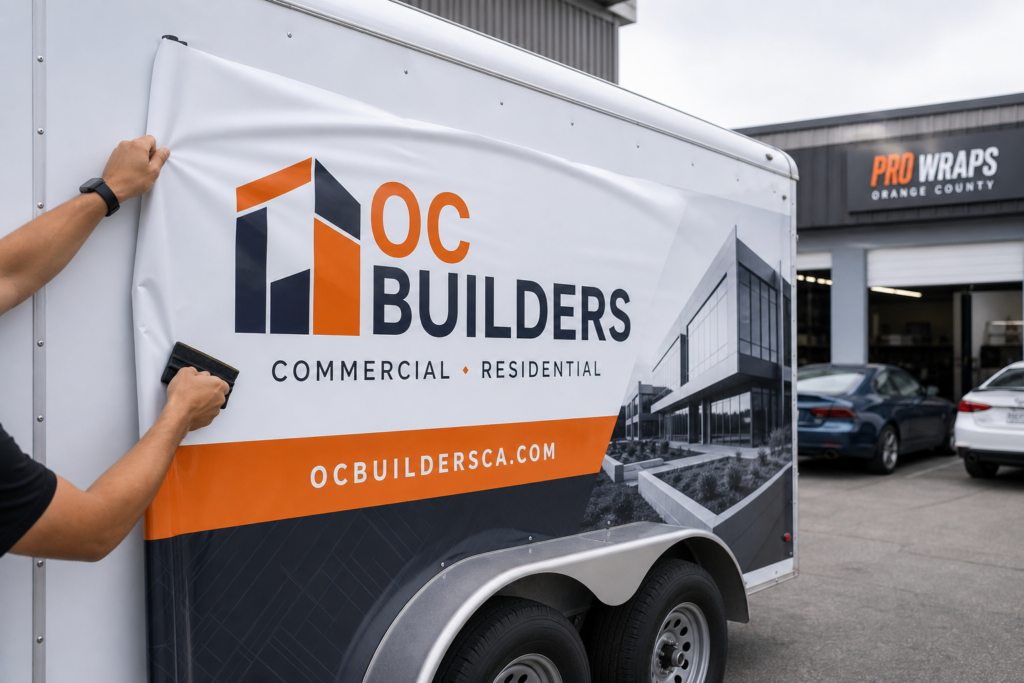
Design complexity adds cost through studio time. A layout with one logo, a phone number, and a clean color field is faster to produce than a wrap with photographic imagery, gradients, or intricate illustrations that need precise alignment across panel seams. Then there’s the material itself. Premium cast vinyl with a UV-protective laminate costs more per square foot than cheaper calendered films, but the price difference buys durability, a distinction that matters more in Orange County than in cooler, cloudier markets. Finally, installation labor reflects the skill required to apply large-format vinyl without bubbles, lifting edges, or misaligned graphics around rivets, corrugations, and door hardware. The difference between a mediocre install and a skilled one often isn’t visible on day one. It shows up six months later.
Real-World OC Pricing Scenarios
So how much does a trailer wrap cost when these variables come together in a real-world situation? It depends entirely on the scenario.
Consider a contractor running a 7×16 enclosed trailer between job sites in Anaheim and Mission Viejo. A full wrap on that trailer, all four sides plus the rear door, with a moderately complex branded design on premium vinyl, will land in a meaningfully different range than a partial wrap on the same trailer that covers only the rear and one long side with simple graphics. The full version involves more material, more print area, more labor, and more design time. The partial version can still deliver strong roadside visibility, especially if the trailer is typically parked with one side facing traffic.
A landscaper with a smaller open utility trailer faces a different equation. The wrappable surface is limited to fender panels, a possible tongue box, and maybe a tailgate, so the total spend drops accordingly. The design is usually simpler, a company name, phone number, maybe an icon, which keeps studio costs down. Box trailer wrap cost for a larger event vendor hauling a 20-foot or longer rig, on the other hand, can climb because of sheer square footage and the likelihood of more elaborate, image-heavy graphics.
The point isn’t to memorize specific dollar figures, because those shift with market conditions, shop workload, and material costs. Whether you’re researching trailer wrap pricing boston or Orange County rates, the point is to understand which variables are moving your number so you can have an informed conversation with any provider.
Materials, Climate, and Durability
Orange County’s environment is harder on vehicle wraps than most people assume. UV exposure is intense and nearly year-round. Coastal areas from Huntington Beach to Dana Point add salt air to the equation, which accelerates adhesive breakdown and edge lifting on lower-grade films. Inland areas along the 91 corridor deal with higher heat and more dust. Either way, the climate is not gentle on vinyl.
This is where trailer wrap installation in Orange County becomes a durability conversation, not just a cosmetic one. A skilled installer working with premium cast vinyl and a quality overlaminate gives the wrap a fighting chance against OC’s conditions. A budget install using thinner film without adequate lamination might look identical on pickup day but start fading, cracking, or peeling within a year. The economics flip quickly: a wrap that lasts four or five years costs less per year than a cheaper wrap you replace in two.
Commercial trailer wraps in Orange County need to be specced for the environment they’ll live in. That means asking about the vinyl brand and grade, the laminate type, and whether the installer has experience with trailers specifically, not just cars or vans. Trailers have rivets, corrugations, and flat expanses that expand and contract in heat. Those details matter for longevity, and they’re part of what you’re paying for when the quote comes in higher than the cheapest option you found online.
Design Readability Tips
A trailer moving at freeway speed gives onlookers a few seconds of reading time. A parked trailer gives more, but the primary design goal is the same: instant readability. The most effective trailer wraps in Orange County tend to be the simplest, a clear company name, a phone number or website, a recognizable color palette, and minimal clutter. Intricate designs with dense text or busy backgrounds often underperform visually even though they cost more to produce.
This is worth thinking about before the design phase begins, because simpler layouts can reduce studio hours and print complexity, which feeds back into the total price. A partial trailer wrap with a clean, high-contrast design on the rear panel and one side can outperform a full wrap with a cluttered layout that nobody can read at 65 miles per hour on the 5.
When you search “trailer wrap near me” and start evaluating what comes back, the practical questions to raise are straightforward. Ask what vinyl and laminate brands are being used. Ask whether the quote includes design or only installation. Ask about the expected lifespan given OC’s sun and coastal exposure. Ask to see installed examples on trailers, not just flat-panel mockups. And ask about warranty, not a vague promise, but what’s actually covered if the film fails prematurely. These questions aren’t adversarial. They’re how you separate a provider who understands the local conditions from one running a volume operation with generic materials.
Long-Term Impression Math
Trailer wrap pricing in Orange County is real money. Nobody should pretend otherwise. But the spend doesn’t exist in a vacuum, it exists in a market where the average commuter sits in heavy traffic on the 405 or the 5 for a cumulative stretch of time that would make a billboard company jealous. A wrapped trailer generates impressions during transit, during job-site parking, during overnight storage, and during weekend downtime in a commercial lot. It doesn’t pause, it doesn’t require a monthly media buy, and it doesn’t disappear when you stop paying.
The per-impression cost over a well-maintained wrap’s lifespan is difficult to match with almost any other local advertising channel. That’s the core of the equation. The up-front number matters, and understanding the variables that drive it helps you spend wisely, but the reason trailer wraps keep showing up on OC roads and job sites is that the long-term math works. Especially in a county where traffic never stops and visibility is everywhere.