You’re Not Alone
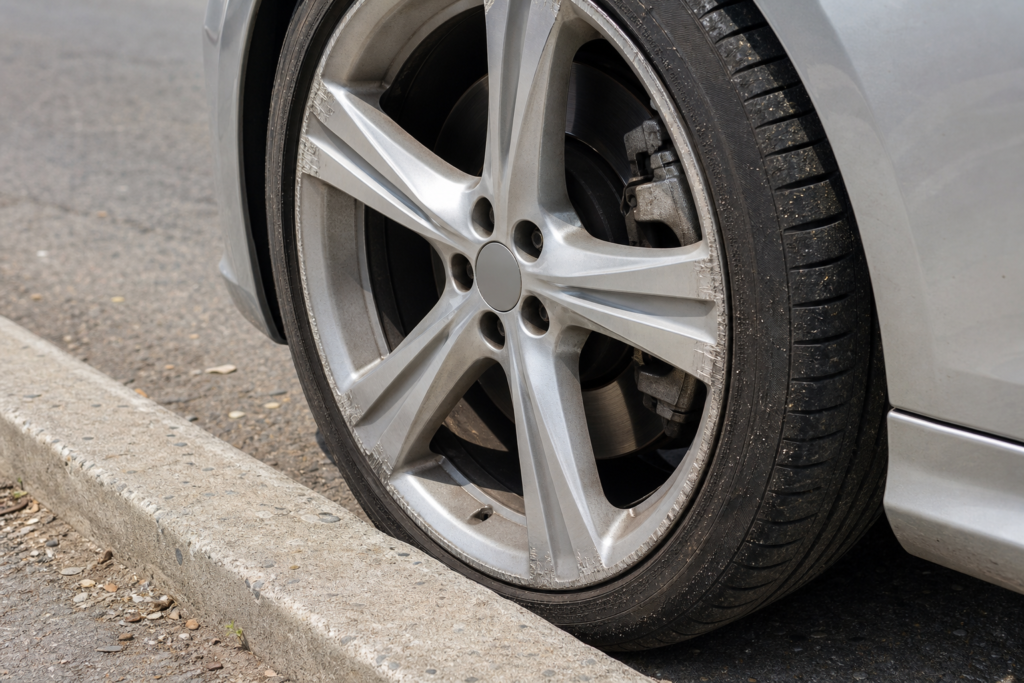
You’re pulling into a tight parking spot, maybe at the grocery store or along a downtown curb, and you hear it, that faint, sickening grind of aluminum against concrete. You step out, crouch down, and there it is: a fresh scrape across the lip of your wheel, on a car you’ve only had a few months. Your stomach drops.
Take a breath. This is one of the most common types of wheel damage on the road today, and it happens to careful, experienced drivers just as often as new ones.
So, is curb rash common? Extremely. Body shops and wheel repair specialists see it constantly. New drivers deal with it, sure, but so do people who’ve been driving for decades and simply don’t parallel park very often. Move to a city with tight street parking after years in the suburbs, and your first curb rash might come within a week. It’s not a sign that you’re a bad driver. It’s a sign that you drive a car near curbs, which is what cars do.
If you’ve found a fresh scrape and Googled this question looking for reassurance, here it is: curb rash on a new car is frustrating, but it’s practically a rite of passage. It happens to all of us.
Modern Wheels Show More Damage
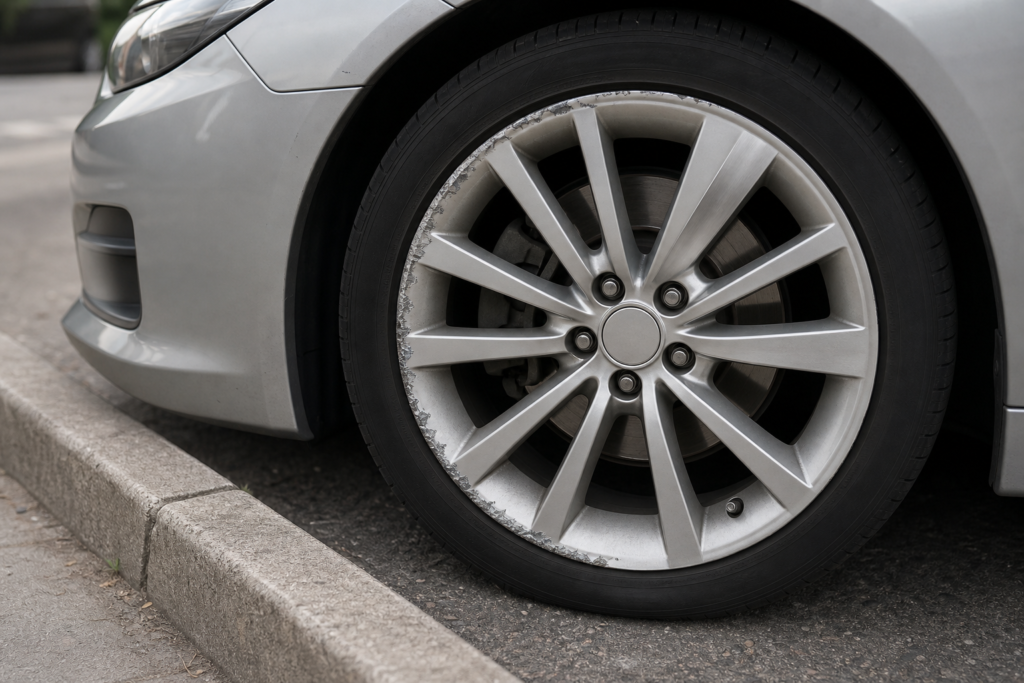
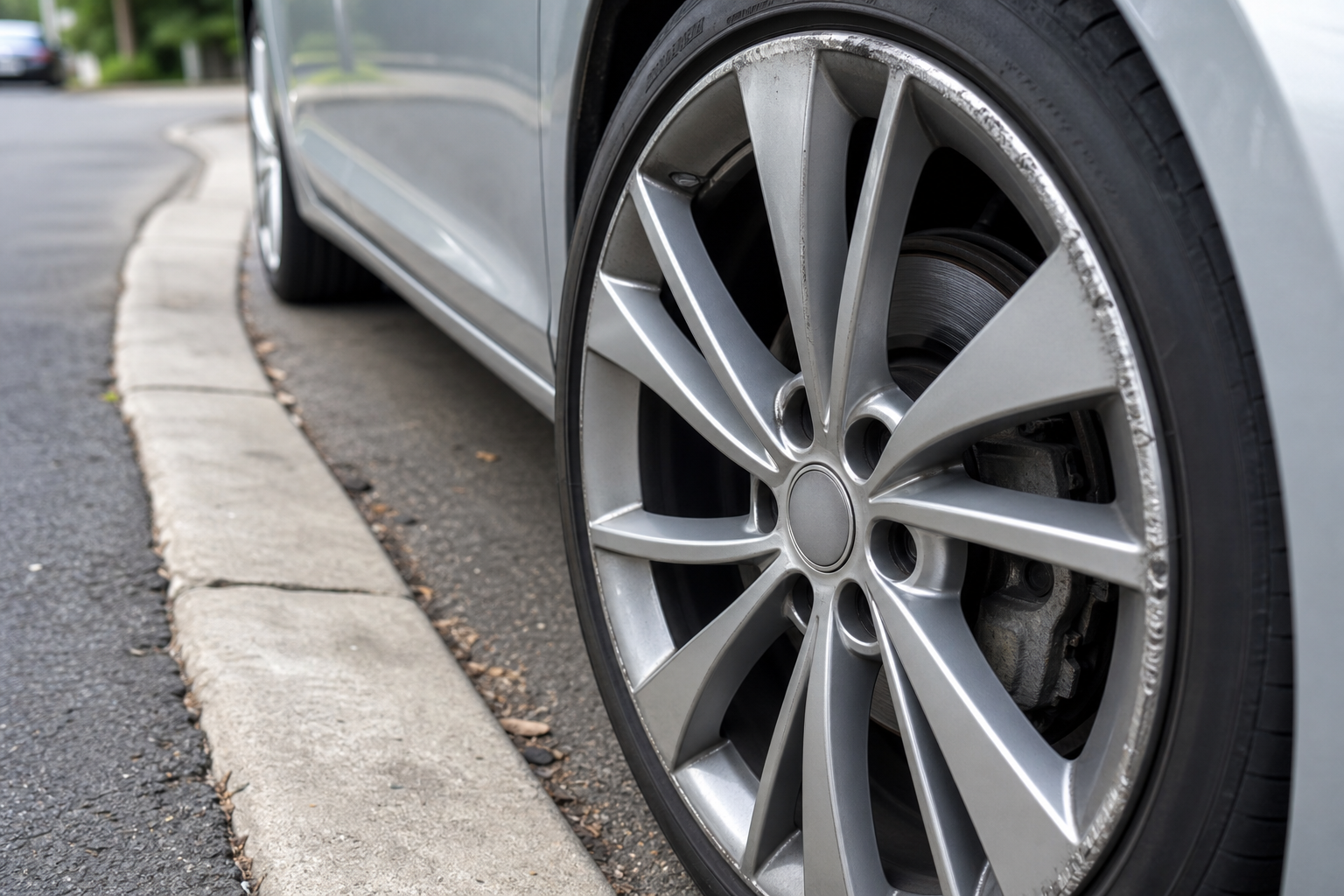
Curb rash is surface damage to a wheel’s outer edge, the lip and face that sit closest to the curb when you park. It shows up as scratches, scuffs, gouges, or chipped finish. Sometimes it’s barely visible. Sometimes it removes a strip of clear coat and exposes bare metal.
The reason it feels more common now than it did twenty years ago isn’t just perception. Several things about modern vehicles make curb rash more visible and more likely. First, alloy wheels are now standard on most new cars, including base trims. Curb rash on alloy wheels is far more noticeable than on old-school steel wheels with plastic hubcaps. A scuffed hubcap could be popped off and replaced for almost nothing. A scratched alloy finish is a permanent mark until it’s repaired.
Second, wheel diameters have grown. Many sedans and crossovers now ship with 18- or 19-inch wheels, which means lower-profile tires with less rubber sidewall between the rim and the road. That thinner sidewall gives you less buffer zone. Where a tall sidewall might have absorbed a light curb kiss, a low-profile tire lets the rim take the hit directly. Third, popular finishes make damage harder to hide. Curb rash on black wheels, machined-face alloys, and diamond-cut finishes stands out immediately. Older silver-painted wheels were more forgiving, a light scuff could blend in. A gouge across a gloss-black or two-tone machined rim is impossible to miss.
None of this means modern cars are poorly designed. It just means the cosmetic stakes of brushing a curb are higher than they used to be.
Cosmetic Versus Structural Damage
Most curb rash is purely cosmetic. A scuff on the wheel lip, some lost clear coat, a few shallow scratches, annoying, yes, but not dangerous. Is curb rash bad in a mechanical sense? Usually not. The wheel’s structural integrity is fine. The tire isn’t compromised. You can drive on it without worry.
That said, there are thresholds worth knowing. If the damage includes a deep gouge, one you can catch a fingernail in, or if the wheel lip is visibly bent or cracked, you’re past cosmetic territory. A bent rim can cause vibration, uneven tire wear, or a slow air leak. A crack is worse; it can grow under load and eventually fail.
Also check the tire sidewall. If the curb scraped not just the rim but also shaved rubber off the sidewall, look for exposed cords or a visible bulge. Sidewall damage doesn’t heal and can lead to a blowout. A surface scuff on the rubber is usually fine. A cut or bulge is not.
For most people, though, curb rash falls firmly in the “cosmetic annoyance” category. It matters most during lease turn-in inspections and at resale, where visible wheel damage can cost you. Lease agreements typically flag curb rash beyond a certain depth or length, and buyers notice it when evaluating a used car. Whether that matters to you depends on your ownership situation.
Repair Costs and Options
Once you’ve confirmed the damage is cosmetic, you have three basic paths: live with it, fix it yourself, or pay a professional.
Living with it is a valid choice. Plenty of drivers accept minor curb rash the same way they’d accept a door ding, part of owning a car that gets used.
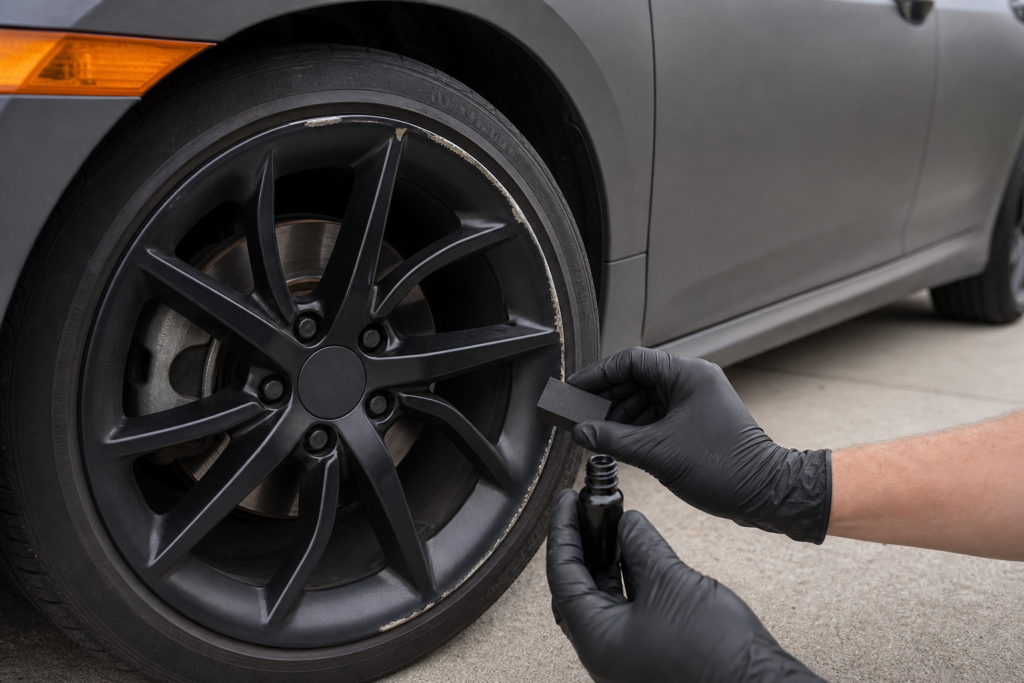
DIY repair kits exist and can work for minor scuffs. A curb rash fix DIY typically involves sanding the damaged area, filling deeper scratches with a metallic filler or putty, and repainting with a color-matched wheel paint. For light damage on a standard silver alloy, the results can be surprisingly decent. For machined or multi-finish wheels, DIY is harder to pull off convincingly.
Professional wheel repair, done by mobile technicians or dedicated shops, produces better results. A service like mobile wheel repair in orange county can come to your driveway and refinish the wheel on-site, saving you the hassle of dropping the car off. Costs vary widely depending on the wheel’s finish, the severity of the damage, and your local market, but straightforward alloy refinishing is generally affordable, while specialty finishes, diamond-cut faces, or chrome cost more. How much is curb rash repair on a full set? It adds up, but most people only need one or two wheels done. Full wheel replacement is the other option, but it’s rarely necessary for cosmetic damage alone. A new OEM alloy wheel can cost several hundred dollars before mounting and balancing. It only makes sense if the wheel is structurally compromised or if you want a perfect match on a high-end finish that’s difficult to refinish.
Prevention and Insurance Considerations
Prevention is mostly about awareness and habit. How to avoid curb rash comes down to a few practical adjustments.
Use your mirrors when parking. Most curb rash happens during parallel parking or when pulling into angled spots with raised curbs. Your passenger-side mirror can show you exactly how close your wheel is to the curb edge. Many newer vehicles also have cameras that help, though they’re not a replacement for spatial awareness. Learn where your wheels track. Front wheels follow a tighter arc than the rear ones during turns. When pulling alongside a curb, the rear wheel is the one most likely to clip it. Giving yourself an extra few inches of clearance on approach helps.
Slow down in parking structures. The painted curbs, concrete barriers, and tight turns inside garages catch a lot of wheels. Low-speed scrapes are just as damaging to a finish as faster ones. Some drivers add rim protectors, adhesive strips or rubber guards that sit on the wheel lip and absorb minor contact. They’re not invisible, and opinions on their appearance vary, but they do work for light brushes. They won’t save you from a hard hit.
As for insurance: is curb rash covered by insurance? Technically, it could fall under collision coverage since you struck a stationary object. In practice, filing a claim for a cosmetic wheel scuff almost never makes sense. The cost of repair is usually well below most deductibles, and a claim could affect your premium. Curb rash prevention through careful parking habits is far more cost-effective than any insurance route.
Curb Rash as Wear Item
Curb rash belongs in the same mental category as rock chips on a hood or minor scratches in a parking lot. It’s evidence that your car exists in the real world, gets driven, and gets parked near things.
If you’re a new driver or someone who recently moved to a city with tighter parking, your odds go up, and that’s fine. The learning curve is real. Even seasoned drivers occasionally misjudge a curb, especially with unfamiliar wheel sizes or a new vehicle’s dimensions.
Inspect the damage. If it’s cosmetic, decide whether to repair it based on your ownership situation. Leases and upcoming sales warrant attention; a daily driver you plan to keep for years might not. If the wheel is bent or cracked, or the tire sidewall is damaged, address it promptly. Otherwise, move on.
Curb rash is common. It’s not a character flaw. It’s a wheel scar, and nearly every driver has one.