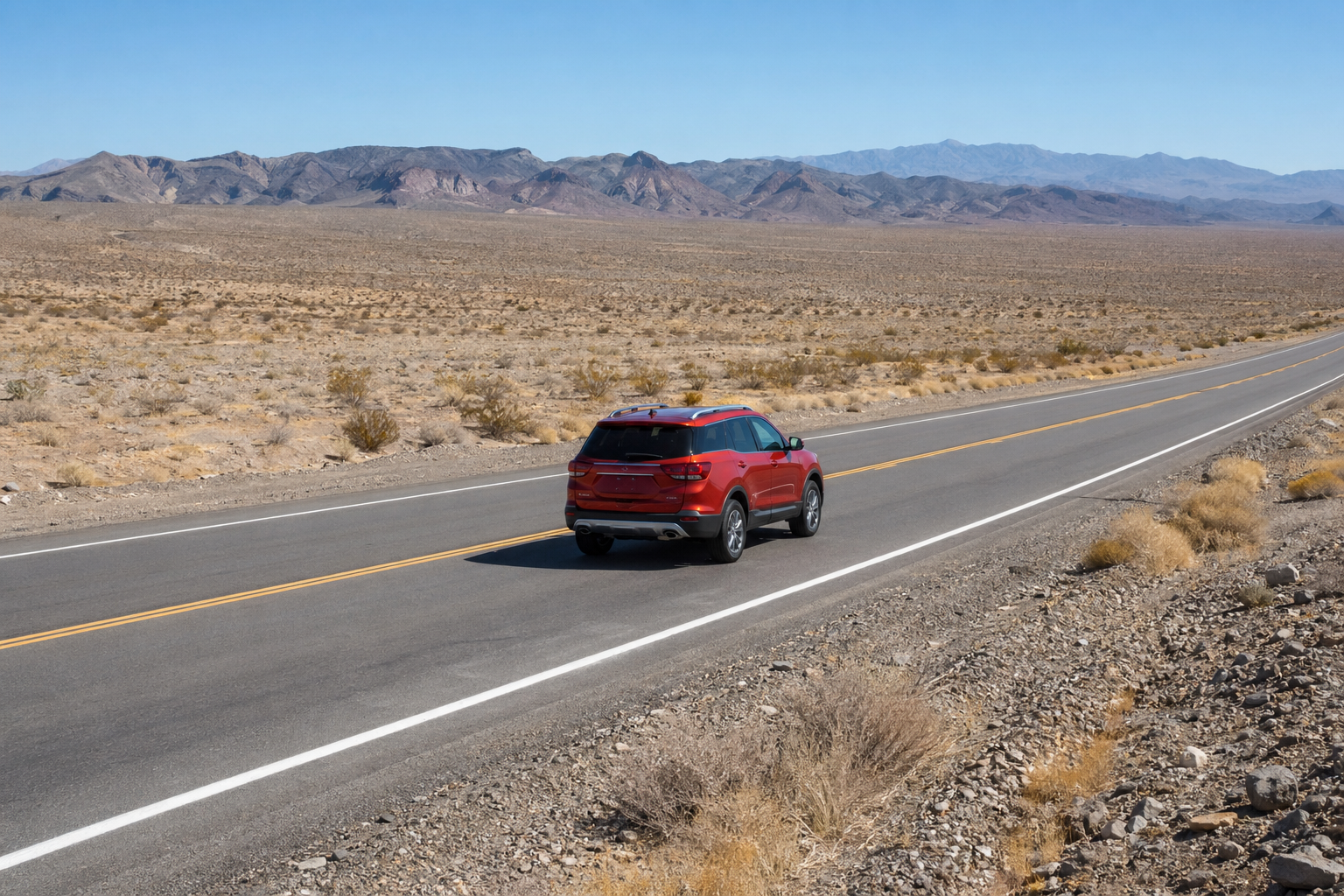
You’re pulling out of Las Vegas on US-93, the Strip shrinking in your mirrors, and the first real decision is already in front of you: Hoover Dam and onward to the South Rim via Kingman and Williams, a shorter westside run to the Skywalk, or, if it’s summer, the longer haul to the North Rim. Each route delivers a different canyon experience and a very different drive.
Choosing Your Rim and Route
The Las Vegas to Grand Canyon drive time depends entirely on which rim you’re headed to. The South Rim is the national park classic, the one with the developed viewpoints, shuttle routes, and the canyon views most people picture. From Vegas, figure roughly four and a half to five hours of driving via US-93 to I-40 to AZ-64, depending on Hoover Dam traffic and your departure time. It’s the most common choice for good reason.
The West Rim and Skywalk are closer, about two to two and a half hours from Vegas. It’s Hualapai tribal land, not the national park, so the experience is different: separate admission, no NPS facilities, and a glass-bridge attraction that carries its own ticket cost. If time is tight, it works, but know that “closest” and “best” aren’t the same thing here.
The North Rim sits at higher elevation and is only open roughly mid-May through mid-October. Snow closes the access road. When it’s open, it’s quieter and arguably more dramatic, but the drive from Vegas runs close to five hours or more. If you’re going in shoulder season, check road status before committing, and consider whether your tires are rated for cold or packed snow at elevation.
For those with a longer day, the East Entrance via Desert View offers a less-crowded approach and a memorable first look at the canyon. It adds time but pairs well with a loop if you’re not doing a strict out-and-back. And if roadside culture matters to you, the scenic Route 66 detour from Kingman through Seligman to Williams adds roughly an hour but delivers the Americana photo ops that the interstate skips.
Hoover Dam to South Rim
The Las Vegas to Grand Canyon South Rim route follows a clean sequence: US-93 south out of Vegas, across Hoover Dam or the bypass bridge, continuing on US-93 to Kingman, then east on I-40 to Williams, and finally north on AZ-64 into the park. The road is well maintained nearly the entire way, smooth asphalt, clear lane markings, reasonable signage. You’ll feel the speed pick up once you’re past the dam and on the open desert stretch toward Kingman.
Scenery shifts gradually. The low Mojave scrub outside Vegas gives way to broader desert basins, then climbs through grassland and juniper as you approach Williams. The final stretch on AZ-64 pushes through ponderosa pine forest before the canyon rim appears almost without warning.
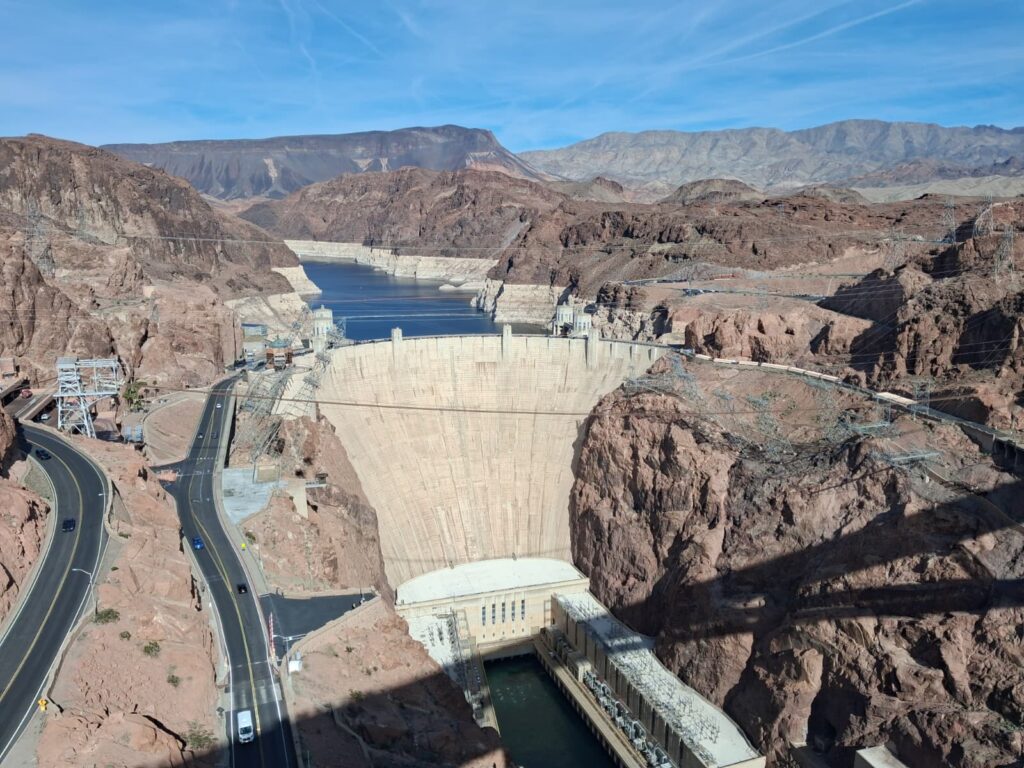
Hoover Dam deserves a stop, but plan it rather than improvise it. If you want a quick look, fifteen to twenty minutes for photos from the walkway and a view of the dam face, park on the Arizona side and walk back. A longer visit with the visitor center and powerplant tour can eat an hour or more. The dam access road can back up, especially mid-morning on weekends and holidays. Leaving Vegas early, before eight, usually means you’ll clear the dam area before traffic stacks. The Mike O’Callaghan-Pat Tillman Memorial Bridge offers a separate vantage point and is worth a brief stop if the dam lot is full.
Arizona Time Zone Trap
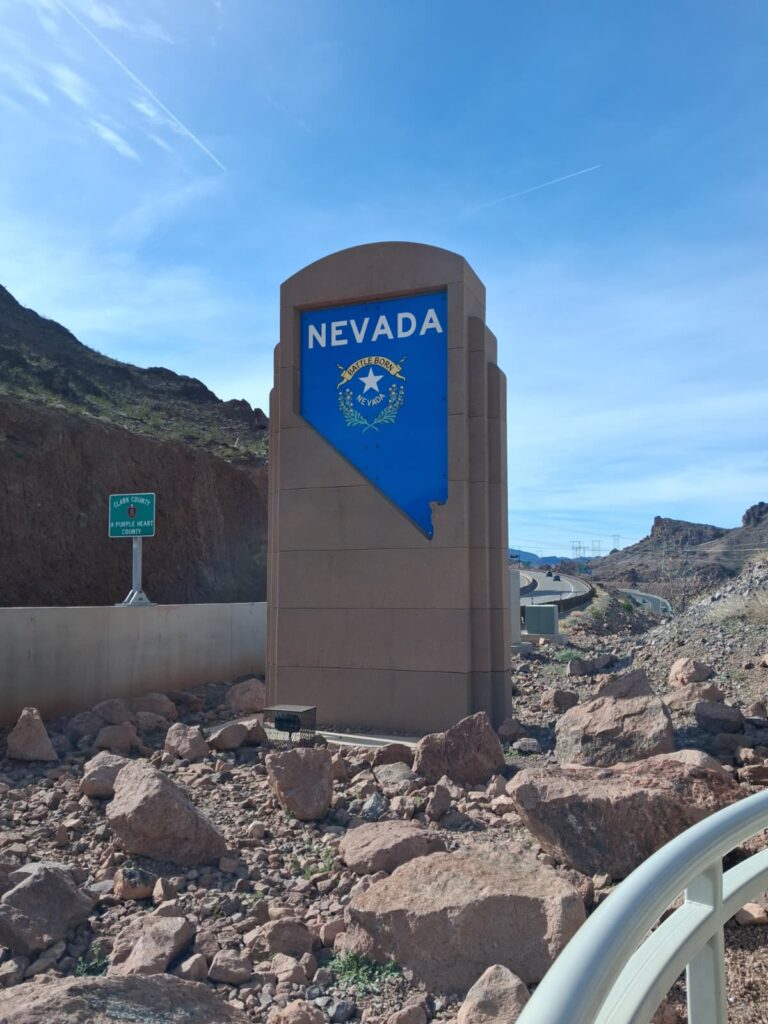
Here’s the gotcha that catches even frequent visitors. Arizona does not observe daylight saving time. Nevada does. So for most of the year, when you cross into Arizona, the local time changes, but the direction of that change depends on the season. During summer months, when Nevada springs forward, Arizona stays put, meaning Arizona is effectively one hour behind Pacific Daylight Time. During winter, Arizona and Nevada’s Mountain/Pacific times align.
This matters for driving to the Grand Canyon from Las Vegas because your phone may or may not auto-update correctly, and your planned sunset arrival can be off by a full hour. If you’ve timed your rim visit around golden-hour light or a specific sunset window, double-check Arizona’s current local time before you leave Vegas. Set a manual clock or confirm with a local source once you cross the state line. In winter, when daylight is already short, compounding a time miscalculation with early darkness means you could end up driving the return through pitch-black desert highway, less than ideal on unfamiliar roads with wildlife crossings.
Fuel, Food, and Roadside Stops
Start with a full tank in Vegas. Top off again in the Boulder City or Kingman area, both have multiple stations. After Kingman, Williams is your last reliable fuel town with competitive prices before the park. Cell coverage gets spotty between Kingman and Williams and again on AZ-64, so don’t rely on your phone to find a last-minute station. If you’re driving an EV, charging clusters exist in Kingman and Williams, but do not assume fast charging is available inside the park or on AZ-64.
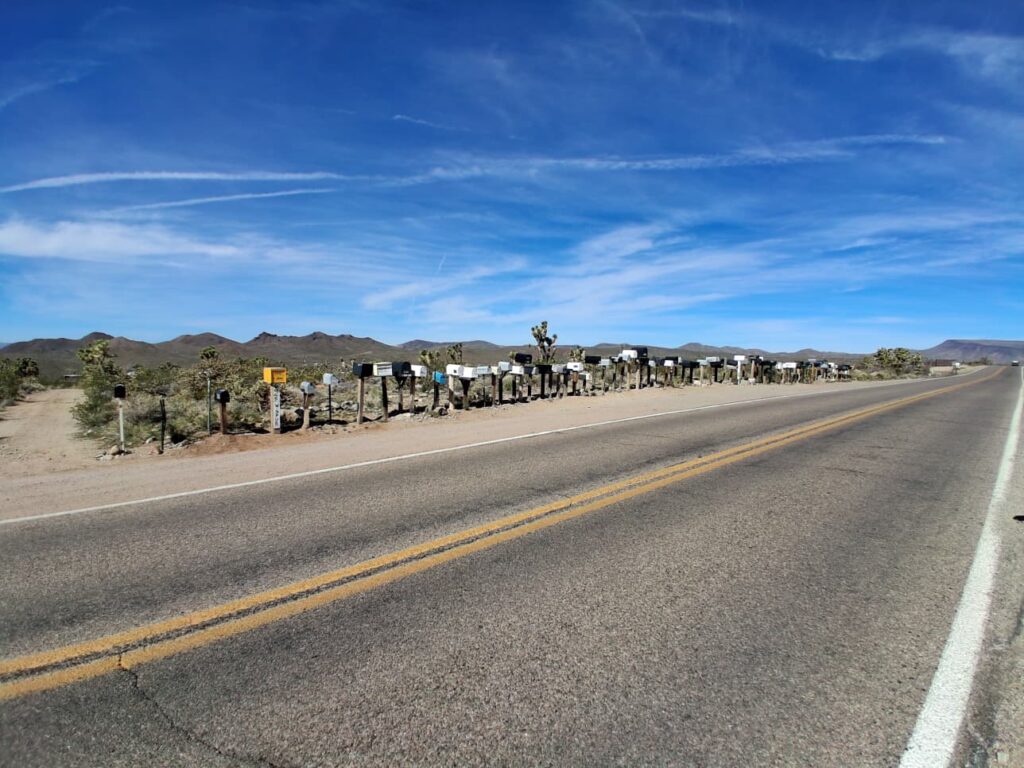
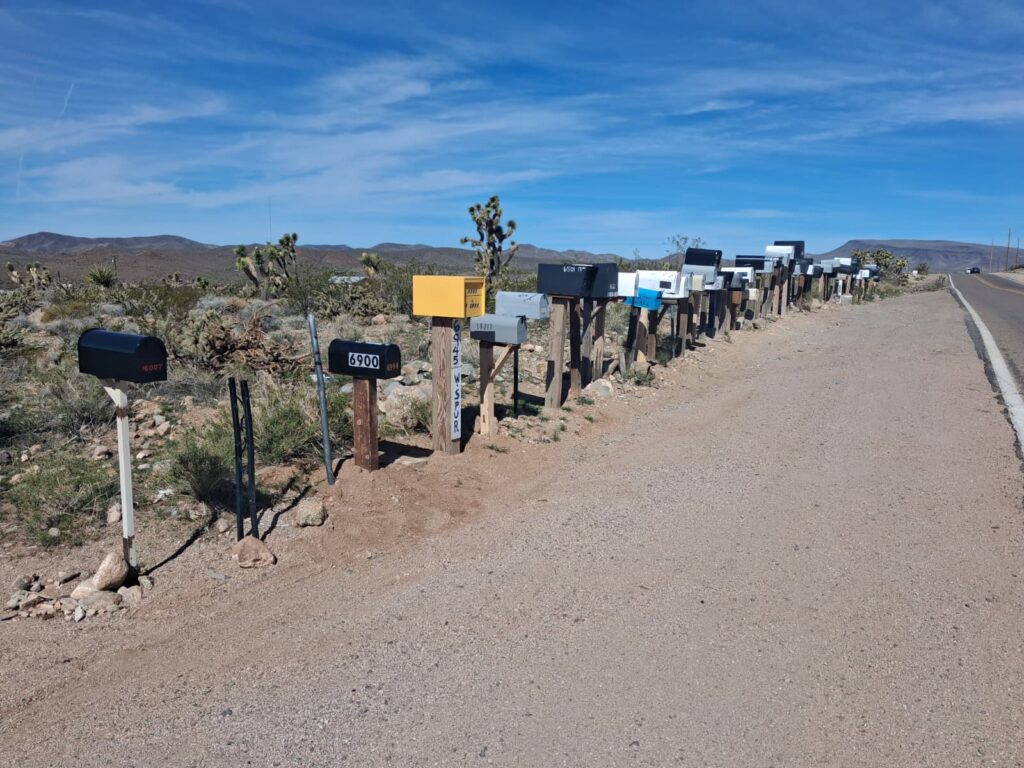
Between the dam and Kingman, keep your eyes on the roadside. You’ll start spotting iconic American post boxes, the old rural mailbox style, sometimes clustered at ranch turnoffs, sometimes standing solo against open desert. They’re a surprisingly photogenic piece of Americana that most drive-by tourists miss entirely. As you gain elevation past Kingman, the vegetation shifts. Low desert gives way to yucca, agave, and various cactus-like plants, Joshua trees near the Nevada-Arizona border, prickly pear and cholla at mid-elevations, then scrub oak and juniper as you climb toward Williams.
One expectation to set now: there is no classic American diner stretch on this route. If you’re picturing a chrome-trimmed roadside diner with a neon sign and counter service, it isn’t waiting for you between Vegas and the South Rim. Kingman and Williams have fast-casual spots, gas station food, and grocery options. Your best move for a day trip is packing a cooler before you leave Vegas, sandwiches, water, fruit. You’ll eat better, waste less time, and keep your schedule intact.
Winter Driving Considerations
Winter changes the equation on the Williams-to-South Rim segment. AZ-64 and the roads around the South Rim sit above six thousand feet, and snow is common from November through March. Ice can form on shaded curves, especially early morning. Pack a scraper, a blanket, extra water, and check that your tires have adequate tread. If your vehicle has traction control or a dedicated snow mode, know where the button is before you need it.
The North Rim road closes for winter entirely, don’t plan on it outside the May-to-October window. The South Rim stays open year-round but conditions vary. Shorter daylight hours compound the time zone confusion mentioned above: if you miscalculate by an hour and the sun sets at five-thirty, you’re suddenly driving AZ-64 in the dark through possible elk and deer crossings.
Spring and fall shoulder seasons offer a middle ground, milder temps, longer daylight than winter, smaller crowds than summer. Mornings can still be cold at elevation, and late-season storms happen, so keep a layer and a rain shell in the car regardless of what the Vegas forecast says.
Realistic One-Day Trip Plan
A Las Vegas to Grand Canyon one day trip is doable if you respect the clock. Leave Vegas by six in the morning. You’ll hit Hoover Dam before the crowds, budget twenty minutes for a quick stop and photos. Continue to Kingman, top off fuel, and grab anything you forgot to pack. You should reach the South Rim entrance between eleven and noon, Arizona time. Confirm that time zone math before you leave.
Spend two to three hours at the rim. Walk a section of the Rim Trail, hit Mather Point and Yavapai Geology Museum, and take in the scale without rushing. Depart the park by two or three in the afternoon. This gives you a buffer to reach Vegas before dark, even in shorter-daylight months.
If you’re running late, the first thing to cut is the Hoover Dam stop on the return, you already saw it on the way out. The second cut is any detour through Seligman or Route 66, save it for a trip with overnight flexibility.
Before you pull out of your Vegas parking spot, run through the list: fuel level, tire pressure (desert heat and elevation changes affect it), coolant topped off, wiper fluid, offline map downloaded on your phone, park entrance hours confirmed, current Arizona time verified, sunset time noted, water and layers in the back seat.
You’ve got a well-maintained road, a clear route, and a plan that doesn’t depend on luck. The canyon will be there. Drive steady, watch the clock, and enjoy the empty desert between stops, it’s half the reason the drive is worth doing in the first place.