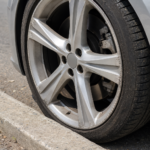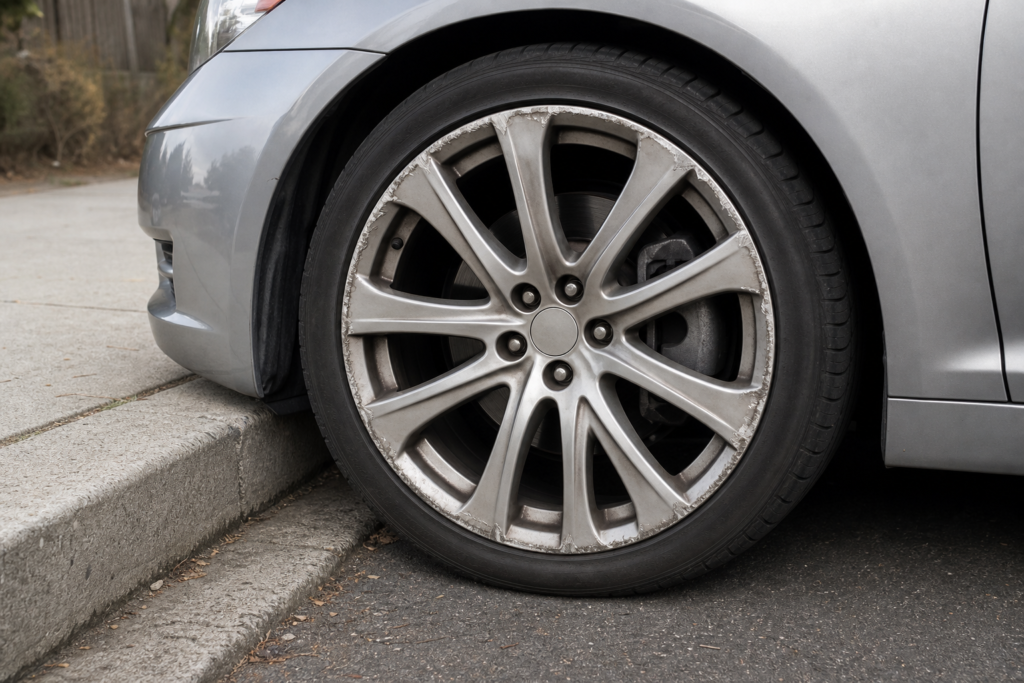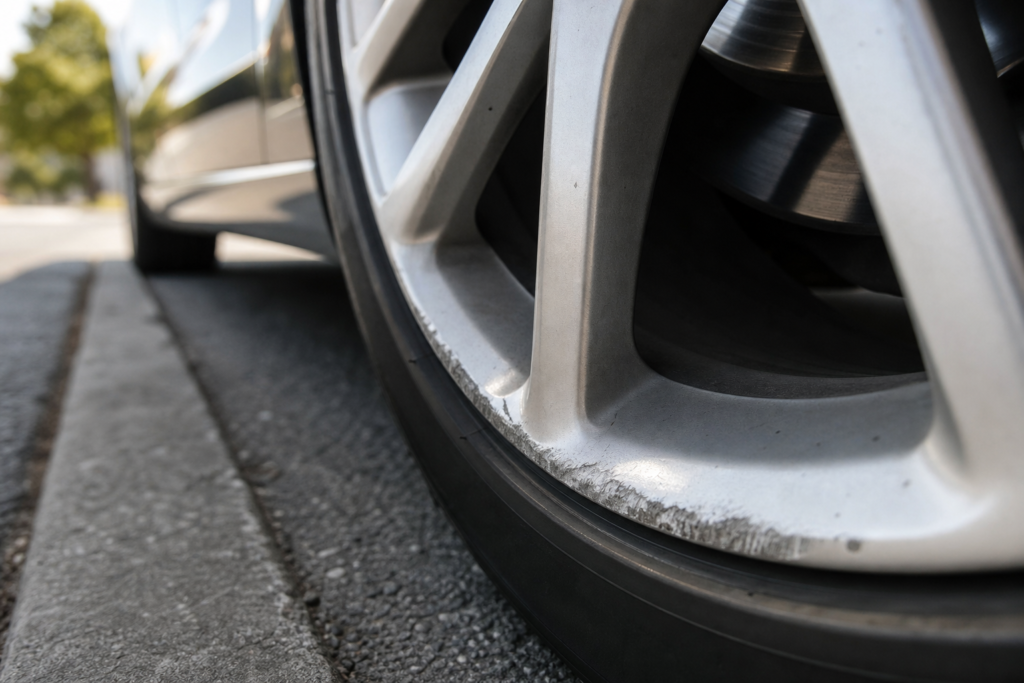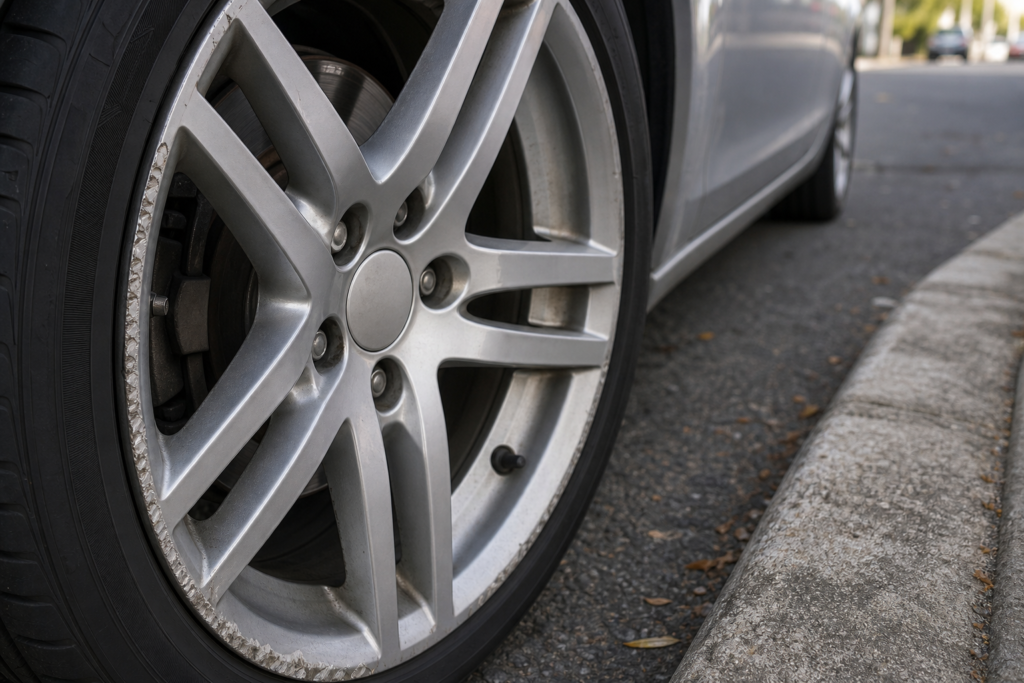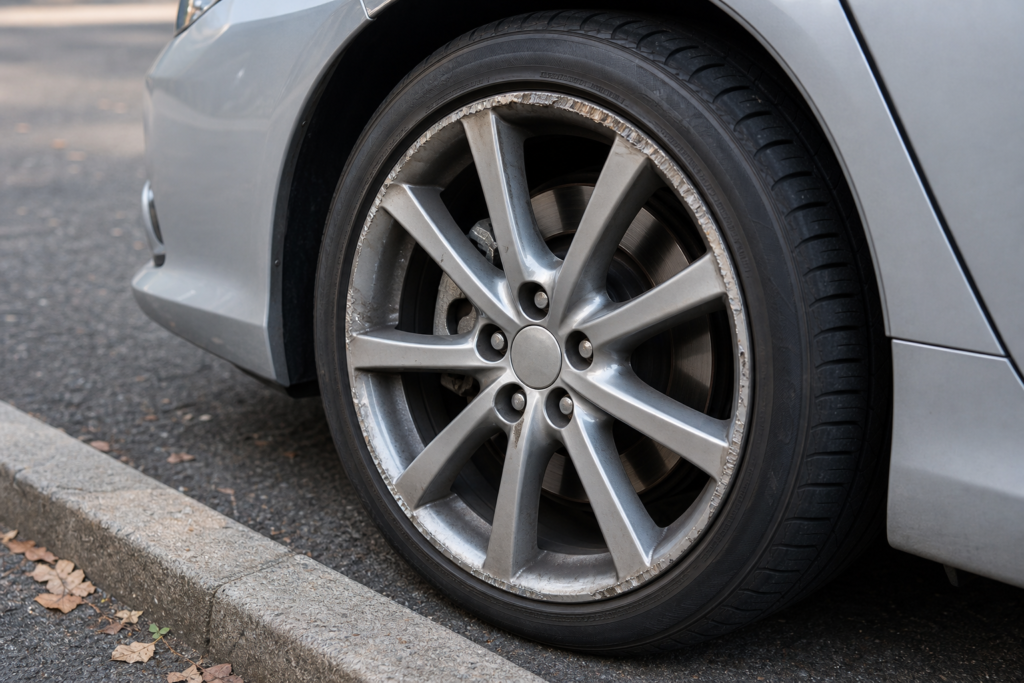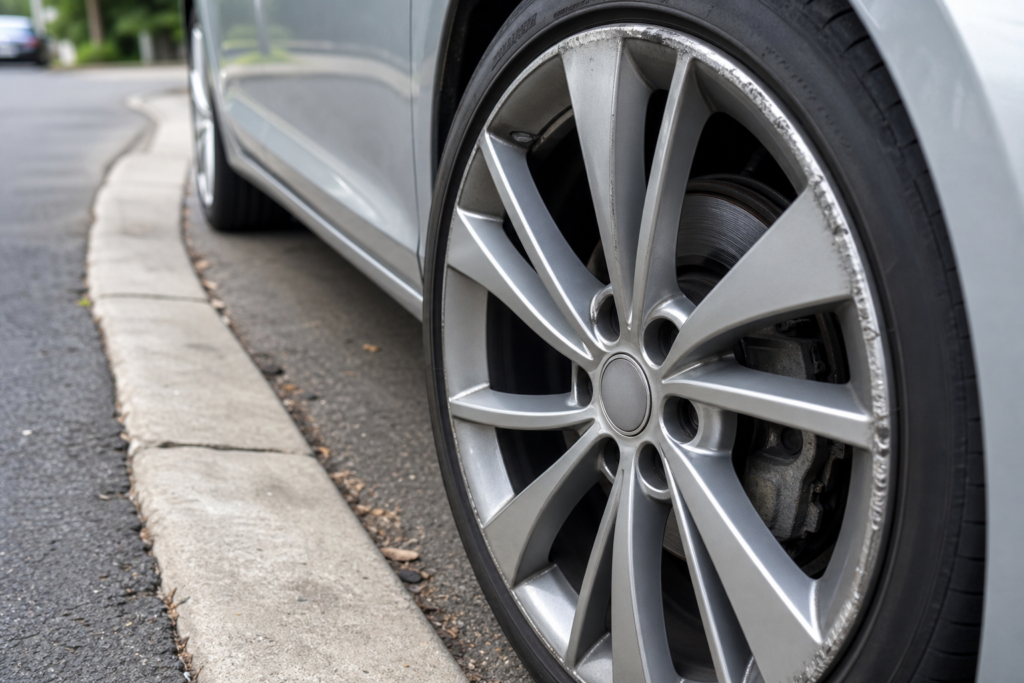
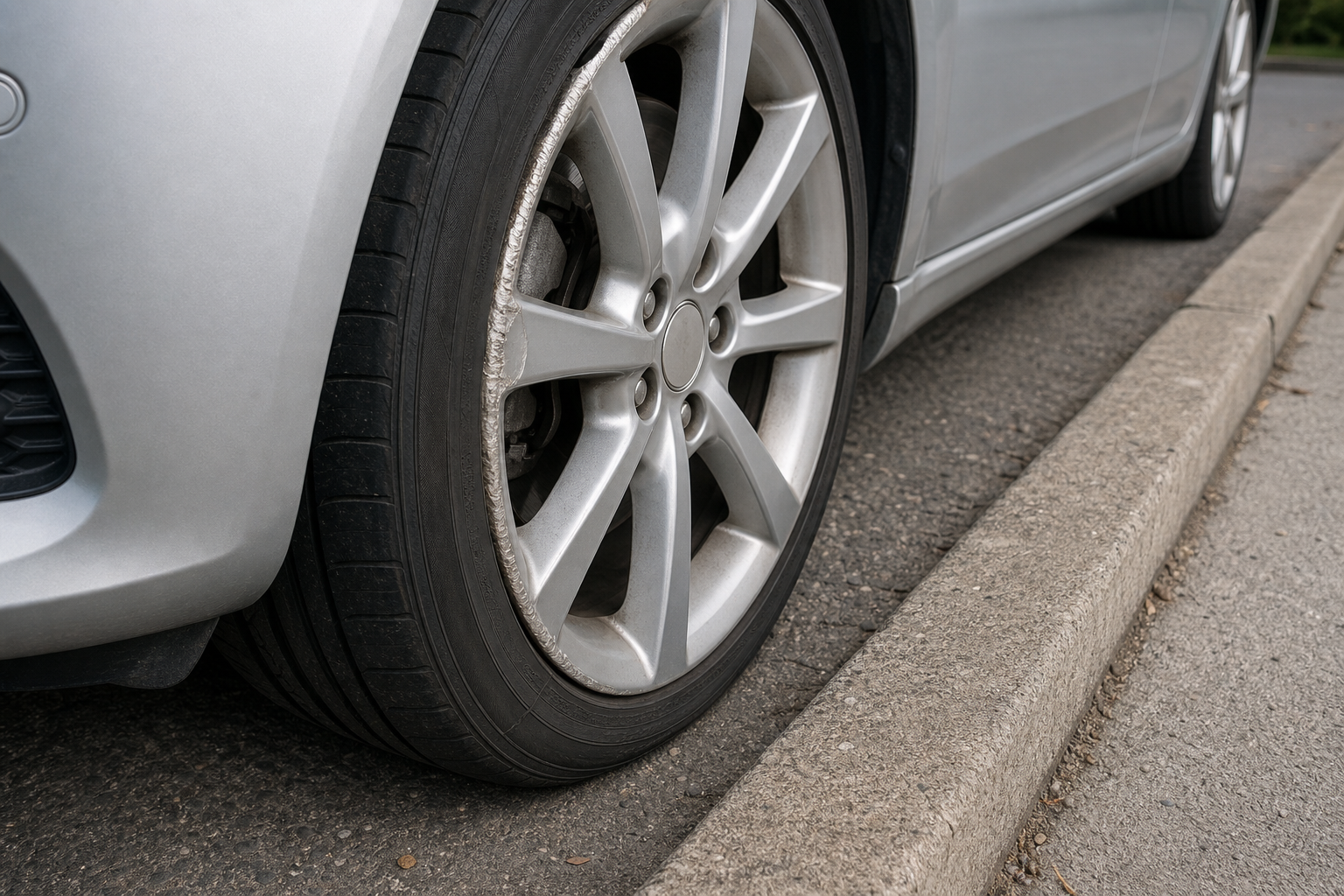
Your front wheel catches the edge of a parking-lot curb, and you hear that unmistakable grinding scrape. Now you’re staring at a bright strip of scraped metal across the rim lip, weighing three options: ignore it, fix it yourself, or pay someone.
The answer depends almost entirely on what’s about to happen with the car. If you’re returning a rental, turning in a lease, or preparing to sell or trade in, fixing curb rash is almost always worth the money. If this is your daily driver and you plan to keep it for years, the calculus changes fast.
Quick Decision Rule
Here’s the short version. If money is about to change hands, in any direction, fix the curb rash before that transaction happens. Lease-return inspectors, rental counter agents, and used-car buyers all use visible wheel damage to justify charges or lower offers. The cost of a cosmetic repair is nearly always less than the penalty or lost value you’ll absorb by leaving the damage alone.
If no transaction is on the horizon, the question shifts to severity. Minor curb rash worth repairing is the kind that’s spreading corrosion, exposing bare metal to the elements, or deep enough that it’s close to structural. A light scuff on a wheel you see every day but nobody else ever will? That’s a personal call, not a financial one.
Fix It or Skip It
Lease returns are where curb rash costs the most money relative to what a repair would have cost. Most lease contracts include an excess-wear clause, and wheels are one of the first things inspectors check. A single gouged rim can trigger a per-wheel charge that’s significantly more than what a mobile cosmetic repair would run. Multiply that across two or three wheels and the gap widens. Getting the work done before the inspection is one of the clearest returns on a small repair bill you’ll find in car ownership.
Rental returns follow the same logic on a compressed timeline. Most rental companies photograph each wheel during check-in. If the damage wasn’t documented when you picked the car up, you own it, and the charge they assign won’t reflect competitive repair pricing. Fixing it before return, or at minimum photographing the car thoroughly at pickup, protects you.
Selling or trading in is subtler but still significant. Curb rash can absolutely affect resale value, not because a scratched rim changes how the car drives, but because it signals neglect to the buyer. At a dealership appraisal desk, damaged wheels give the appraiser a concrete reason to mark the offer down. In a private sale, it gives the buyer negotiating leverage. A clean set of wheels doesn’t add value so much as it removes an easy deduction.
The “skip it” cases are straightforward. You drive the car daily with no plans to sell. The wheels are a common, inexpensive alloy. The scuff is shallow, not spreading, and purely cosmetic. In that scenario, the money is better left in your pocket.
Cosmetic, Structural, or Replace
Not all curb rash is the same repair. A light scuff along the rim lip, bare metal exposed but no material missing, is cosmetic. A deep gouge that removed a chunk of alloy, a visible crack radiating from the impact point, a bend you can feel as a vibration at speed, or a tire that’s slowly losing air, those cross into structural territory. Structural damage means repair isn’t the conversation anymore. Replacement is.
Between those extremes, curb rash repair cost depends on three things more than any others: the wheel’s finish, the wheel’s diameter, and where you live.
Fixing curb rash on alloy wheels with a standard painted or clear-coated finish is the most common and least expensive scenario. The repair process, fill, sand, prime, paint, clear, is well understood, and results are typically very good. Chrome wheels are harder. Curb rash on chrome wheels often can’t be repaired invisibly because matching chrome plating on a small section is extremely difficult; full re-chroming is expensive and sometimes costs more than a replacement wheel. Polished, diamond-cut, and machined-face wheels fall somewhere in between. These finishes are factory-applied on a lathe, so a proper repair means re-cutting the face, a process not every shop offers, and one that generally costs more than a standard alloy repaint.
For a single painted alloy wheel, mobile cosmetic repair typically runs less than a full shop refinish, which itself runs less than a new OEM wheel. Larger diameters, multi-coat finishes, and specialty wheels push costs up. Getting quotes from two or three providers gives you a realistic local number faster than any online range estimate will.
When the repair cost approaches the price of a quality replacement wheel, new OEM or reputable aftermarket, replacement usually makes more sense. You get a wheel with no history and a clean finish. That’s the core of the curb rash repair vs. wheel replacement decision: compare the quotes, factor in the finish match, and pick the path that gets you the better result for the money.
DIY Repair Pros and Pitfalls
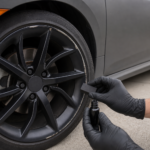
DIY curb rash repair kits are widely available and inexpensive. They work best on shallow scuffs on standard painted alloy wheels where the goal is “presentable from a few feet away” rather than “invisible up close.” If that’s your standard, and it’s a reasonable one for a daily driver, a kit with sandpaper, filler, primer, and a color-matched spray can get you there over a weekend.
Where DIY falls short: deep gouges that need significant filler, color-matched metallic or multi-stage paints, chrome, and any machined or diamond-cut surface. Attempting these without the right equipment usually produces a result that looks obviously repaired, which can actually hurt you more at a lease inspection or sale than the original damage would have.
The middle path is a mobile cosmetic wheel repair service. These technicians come to you, work on-site, and handle standard alloy repairs at a lower price point than a full refinishing shop. Many of the same outfits that offer mobile fender repair also handle wheel work, so it’s worth asking whether they can bundle both services if your car took a hit beyond just the rim. For anything beyond standard alloy, or for damage that’s more than surface-deep, a dedicated wheel refinishing shop with a lathe and a spray booth is the right call.
When searching for “curb rash repair near me,” look for providers who will show you photos of previous work on a similar finish, give you a firm quote after seeing the wheel in person rather than over the phone, and tell you honestly if the damage is beyond cosmetic repair. A shop that claims every wheel is fixable is one to avoid. So is anyone who can’t tell you specifically how they’ll handle your wheel’s finish type.
Practical Rule of Thumb
Stand at arm’s length from the wheel. If you can see the damage clearly, and the car is headed toward a lease return, rental return, or sale within the next few months, get a repair quote. The repair will almost certainly cost less than the penalty or price reduction you’d face otherwise.
If the car is your daily driver with no transaction ahead, run your fingernail across the damage. A shallow scuff you can barely feel is cosmetic, live with it or fix it on your own timeline. If your nail catches in a deep gouge, if you see a crack, or if the tire is losing pressure, that wheel needs professional attention or replacement regardless of whether you’re selling.
Match the repair method to the finish. Painted alloy is forgiving and a reasonable DIY project. Chrome, polished, and machined faces almost always need professional work to look right. And whenever the repair quote gets close to the price of a replacement wheel, buy the new wheel.
That’s the entire decision. Context, severity, finish, cost. Run through those four and you’ll know in about a minute whether fixing curb rash is worth your money, or whether the smartest move is to leave it alone.