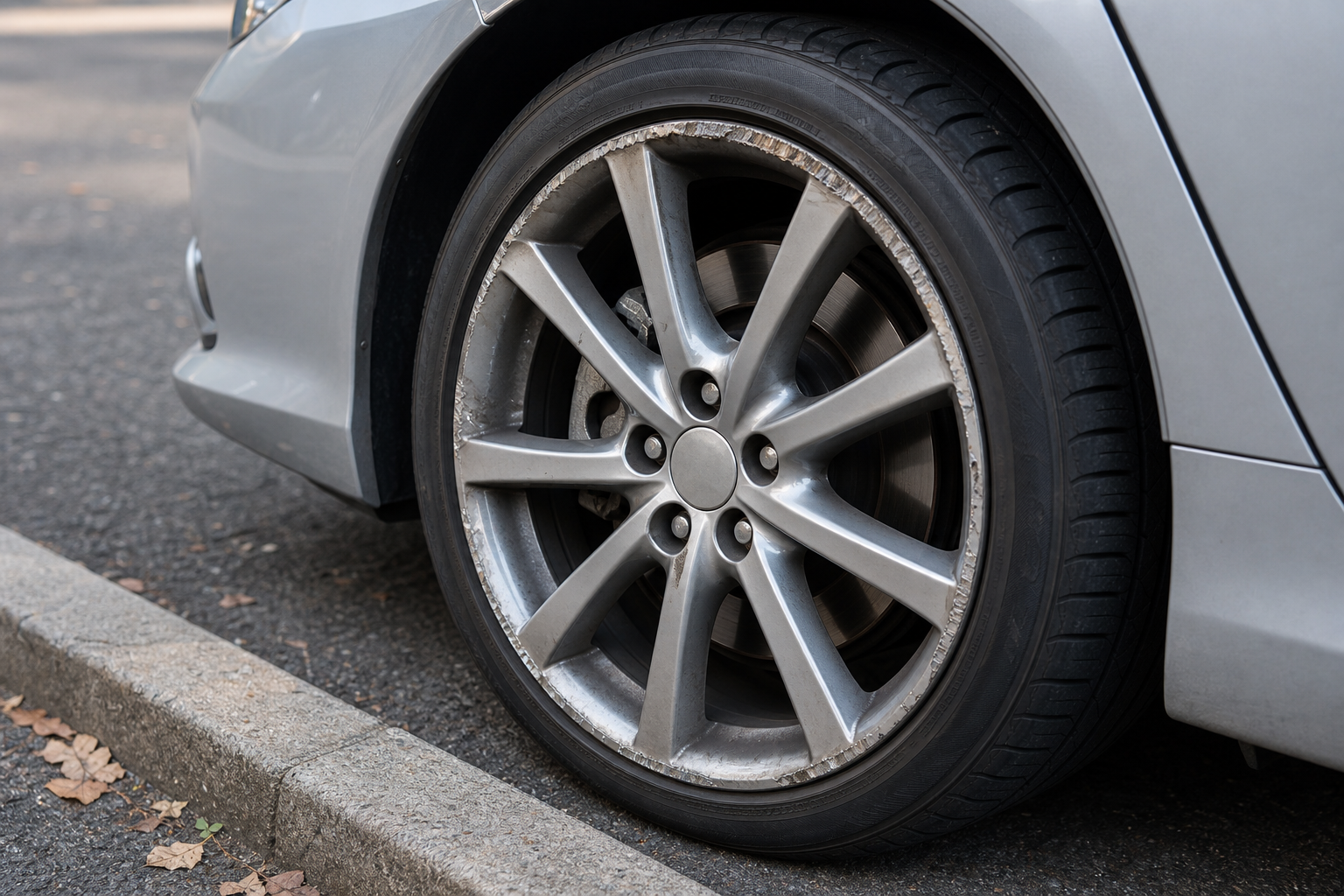
You misjudge the distance in a tight parking spot, and the unmistakable grinding sound of alloy against concrete fills the cabin. The wheel’s done scraping before your foot even hits the brake. Now comes the real question: did you just scuff the finish, or did you actually damage the wheel?
That distinction matters more than most drivers realize. The line between cosmetic rash and the kind that affects wheel balance, tire integrity, or safety isn’t always obvious, and knowing which you’re dealing with determines whether you need to act now, keep an eye on it, or just live with it.
Curb Rash Defined
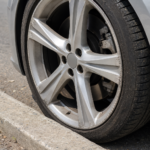
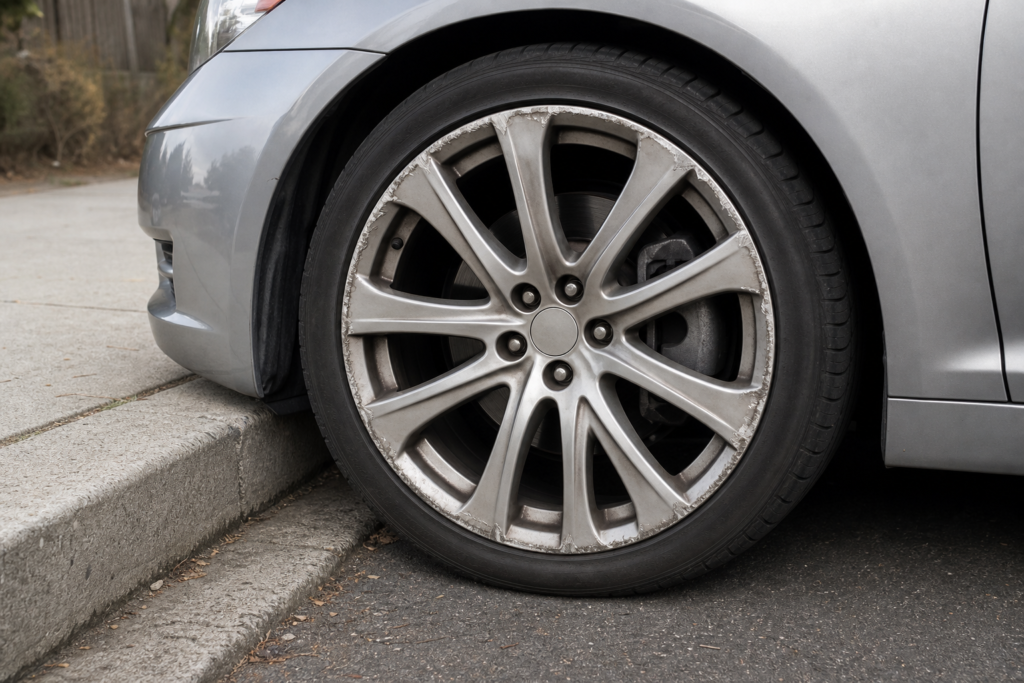
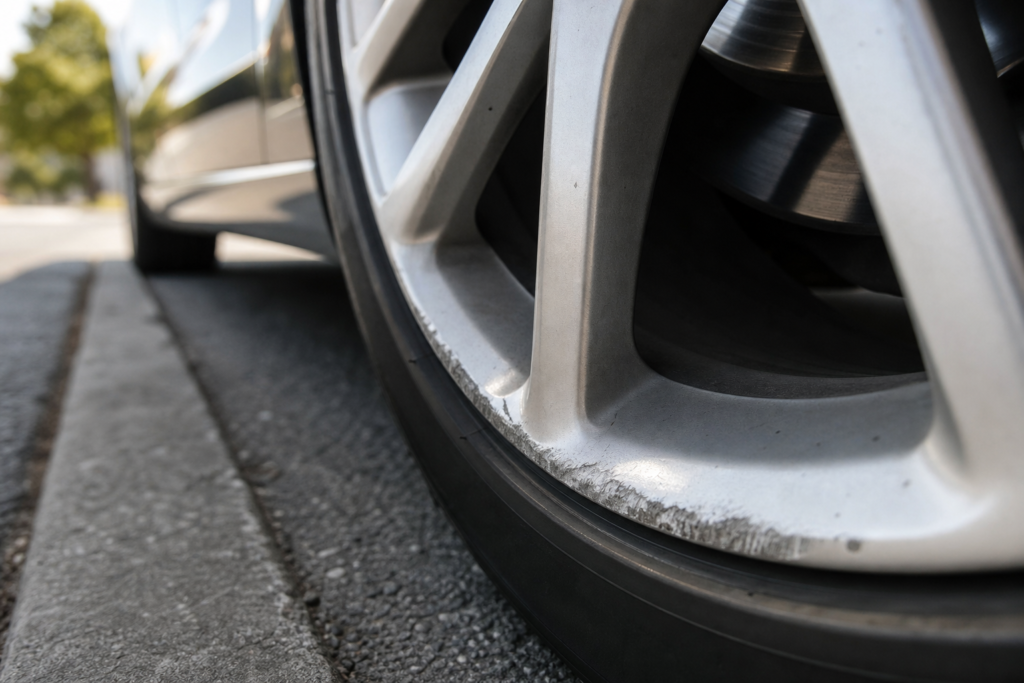
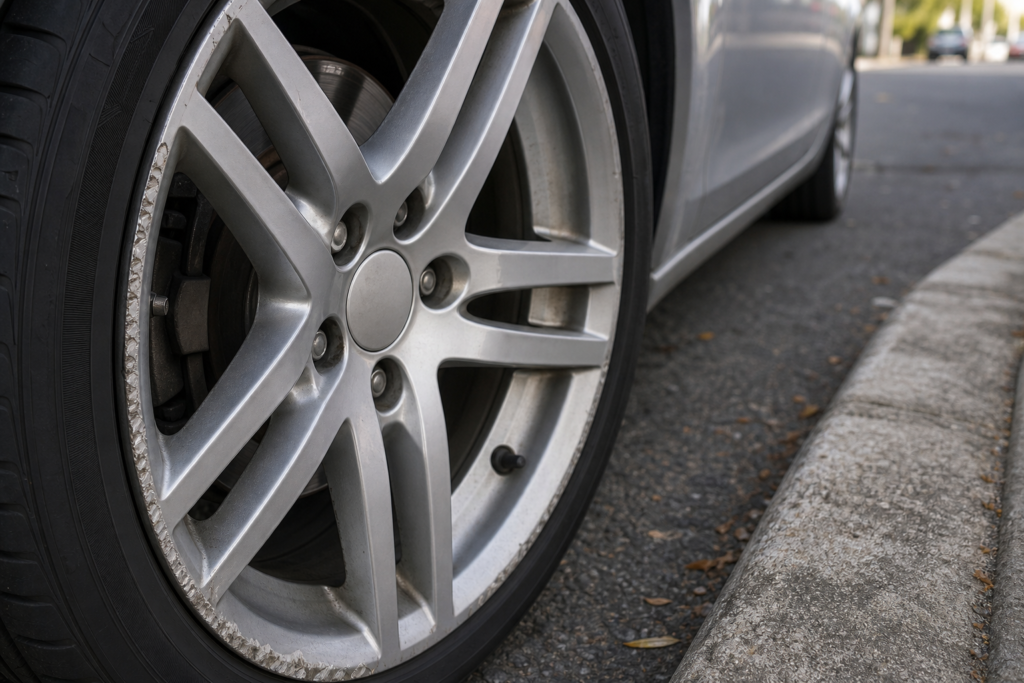
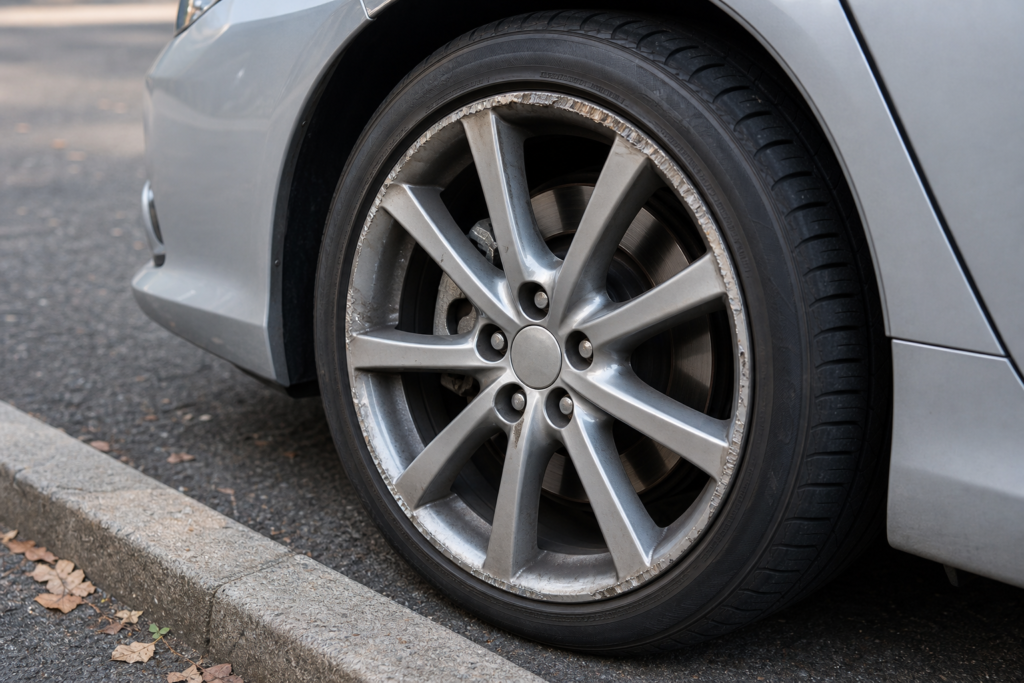
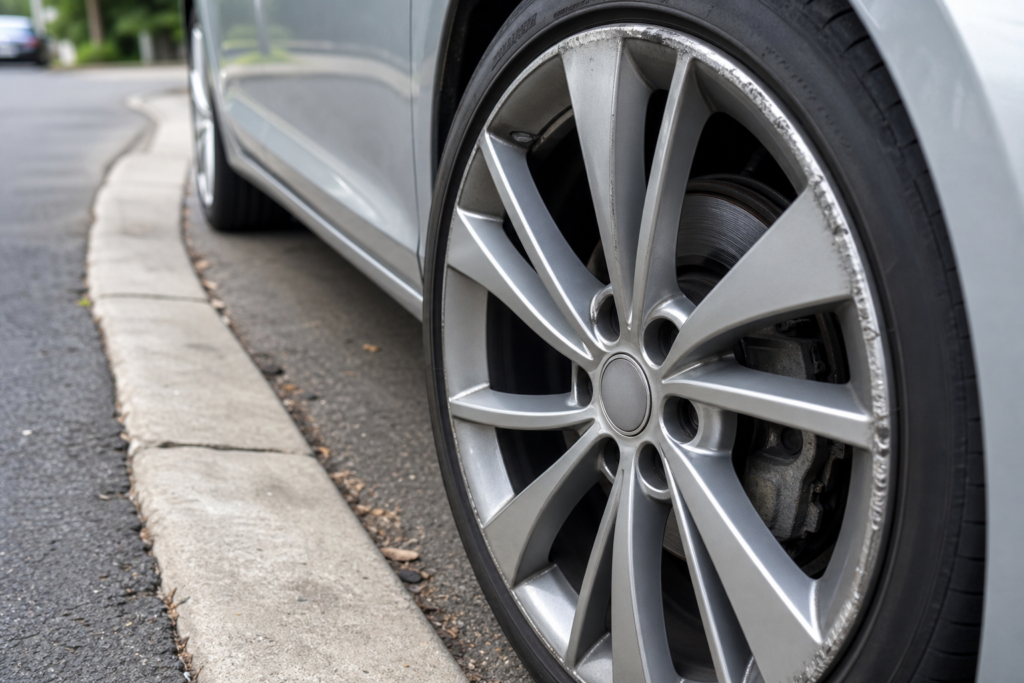
So what is curb rash? It’s surface damage to a wheel’s outer edge, the rim lip, the face, sometimes the spoke area, caused by contact with a raised curb. It shows up as scratches, scuffs, or gouges in the wheel’s finish. On a painted alloy wheel, you’ll see raw metal peeking through the clear coat. On a machined-face wheel, the polished surface gets roughed up. Steel wheels with hubcaps often hide the evidence entirely.
Curb rash is not the same as a bent wheel, a cracked rim, or a sidewall gouge in the tire. Those are structural problems. Rash, in most cases, is cosmetic. The confusion happens because all of these can result from the same curb strike, a light scuff and a cracked spoke can come from impacts that feel similar from the driver’s seat.
The damage generally falls into one of three categories: drive on without worry, schedule an inspection, or stop driving on that wheel until it’s been looked at.
The 60-Second Damage Triage
After any curb strike, a quick visual and driving check tells you most of what you need to know. Run your fingers along the rim lip. If you feel only shallow scratches with no deformation, no dents, no lips of raised metal, no missing chunks, and the edge still follows a smooth circle, you’re likely looking at cosmetic damage only.
Now check the tire. Look at the sidewall between the rim and the tread for cuts, bulges, or scuffing that goes deeper than the surface rubber. Then drive at low speed in a straight line and note whether the steering pulls, the wheel vibrates, or you hear rhythmic thumping. Check tire pressure after a few hours of sitting.
If none of those red flags appear, the rash is almost certainly cosmetic. Light scuffs on the rim lip with no steering change, no air loss, and no sidewall involvement fall squarely in the “ugly but safe” category.
If any are present, vibration, pull, pressure drop, visible sidewall cut, or a crack in the wheel, treat it as a potential safety issue and get a professional inspection before highway driving. Modern low-profile tires leave very little rubber between the rim and the road, so don’t assume the tire escaped just because it still holds air. And even purely cosmetic rash is worth noting: it affects resale value, and exposed bare metal can invite corrosion over months of rain and road salt.
When Rash Becomes Dangerous
Several specific types of damage turn a minor scrape into something that demands attention.
Sidewall contact is the most common escalation. Curb rash tire sidewall damage is fundamentally different from tread-area scuffs because the sidewall has no steel belts reinforcing it. A cut or gouge there weakens the tire’s ability to contain air pressure under load. Sidewall damage can lead to a blowout at highway speed with little warning, and unlike tread punctures, sidewall injuries generally can’t be patched safely.
Wheel integrity is the next concern. A hard enough strike can crack an alloy wheel, bend it, or chip away material from the bead seat, the inner ledge where the tire seals against the rim. Cracks often start small and grow with heat cycling and road vibration. A deformed bead seat can cause a slow leak that’s maddening to diagnose because the tire itself is fine.
Air loss scenarios branch from both of those. A damaged bead seat lets air escape gradually. A sidewall cut can seal temporarily from road debris or sealant residue, then fail under heat. If you’re adding air every few days and can’t find a nail, the curb strike is the prime suspect.
Handling symptoms round out the warning signs. Vibration through the steering wheel at specific speeds, often in the 60–70 mph range, shimmy during braking, or a persistent pull to one side all point to a wheel or tire that’s no longer round, balanced, or properly aligned. A clunk right after the impact suggests something in the suspension took a hit too.
Minor Rash and Wheel Balance
Here’s where things get less obvious. Even when curb rash doesn’t crack or bend anything, it removes material from the wheel’s rim lip, the very area where balancing weights are often placed. A few grams of alloy scraped away can shift the wheel’s weight distribution just enough to create a vibration.
On a standard sedan with tall sidewall tires and a comfort-tuned suspension, that imbalance might never register. The tire absorbs it. The soft bushings damp it out. You’d never notice.
On a sports car, it’s a different story. Low-profile tires transmit more road feedback by design. Stiffer suspension and wider wheels amplify small imbalances rather than masking them. Precision steering feel, the thing that makes a sports car rewarding to drive, becomes the first casualty. Drivers often describe a subtle shimmy that appears at a narrow speed window and vanishes above or below it.
This is typically more annoying than dangerous. But it can mask a bigger developing problem. Exposed metal from even minor rash corrodes over time, especially in climates with road salt. That corrosion roughens the bead seat, potentially compromising the tire’s seal months later. A hard enough impact to scrape the wheel can also subtly nudge alignment or stress a tie rod end without leaving obvious signs. The downstream effects, uneven tire wear, slightly increased rolling resistance, reduced fuel economy, develop slowly and are easy to attribute to something else.
Repair or Leave It
Whether curb rash is worth fixing depends on the severity of the damage, the vehicle, and how you use it.
A daily driver with painted alloy wheels and a light scuff on one rim is a candidate for monitoring. The damage is cosmetic. A touch-up paint pen can slow corrosion for a few dollars. Many owners live with it indefinitely.
A lease return is different, most lease inspections flag curb rash beyond a certain size, and the charge at turn-in often exceeds what a mobile wheel repair would cost. Fixing it before return usually saves money. Resale-focused owners face similar math.
For performance cars or anyone doing regular highway driving and noticing vibration, getting the wheel inspected and rebalanced is the right call. If the shop finds the wheel is bent, cracked, or has structural damage to the bead seat, repair may not be advisable, replacement is the safer and often more cost-effective path. Attempting to straighten a cracked alloy wheel is a gamble most reputable shops won’t take.
Repair costs vary widely based on the wheel’s finish. A basic painted alloy is the least expensive to refinish. Machined or diamond-cut faces cost more because they require lathe work. Powder-coated and multi-finish wheels sit at the higher end. Mobile repair services tend to cost less than full shop refinishing for minor-to-moderate rash, a service like mobile curb rash repair in orange country can handle cosmetic fixes at your home or office without the downtime of a traditional body shop. The number of wheels involved obviously multiplies the bill.
The practical framework: if there’s no vibration, no air loss, and no sidewall damage, you can monitor it. If vibration appears or the rash is deep enough to expose significant bare metal, schedule an inspection. If you see cracks, bends, or sidewall cuts, don’t drive on it, get it towed or swap to a spare.
The Bottom Line
Most of it isn’t dangerous. The vast majority of curb rash is a cosmetic problem that bruises your pride more than your wheel’s structural integrity. Light scuffs on the rim lip, with the tire untouched and no change in how the car drives, fall into the “live with it or fix it when you feel like it” category.
The line into genuine concern is clear: sidewall damage, air loss, cracks or bends in the wheel, or any change in how the car steers and rides. Those demand inspection before the next highway on-ramp.
The less obvious takeaway is that even minor rash can subtly affect wheel balance, something that matters most on sports cars and performance-oriented setups where tolerances are tight and drivers expect precise feedback. A rebalance after a curb strike is a small expense that either confirms everything is fine or catches an issue early.
Curbing a wheel happens to nearly everyone eventually. Tight parking spots, unfamiliar streets, raised curbs that blend into the pavement, awareness is the best prevention, but perfection isn’t realistic. When it happens, a calm 60-second check tells you whether it’s a story you’ll laugh about or a problem you need to solve.