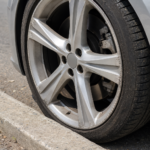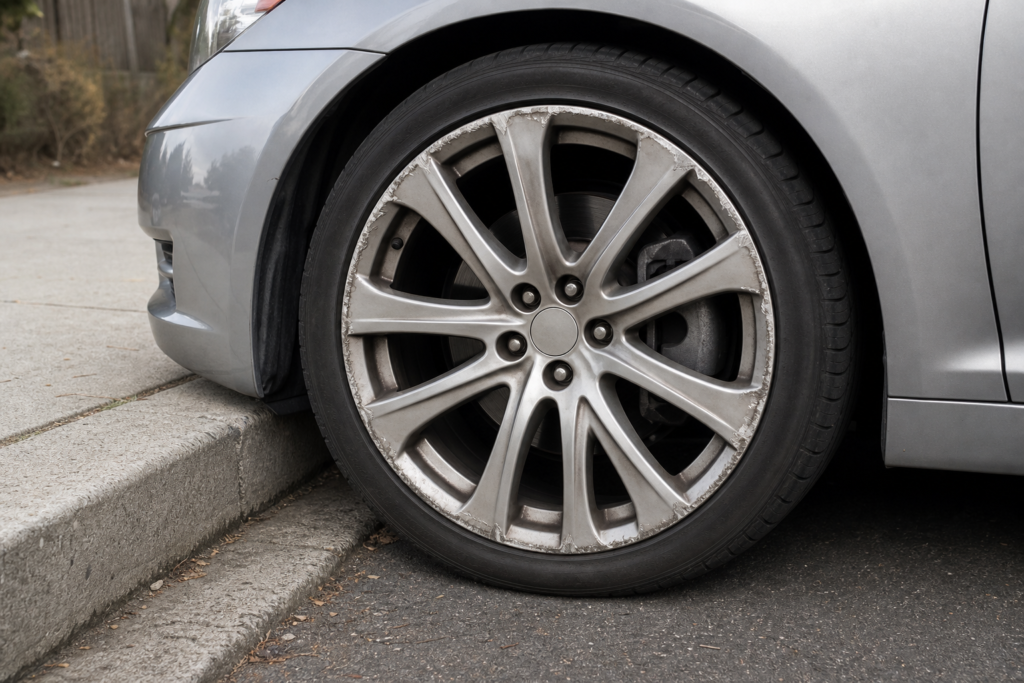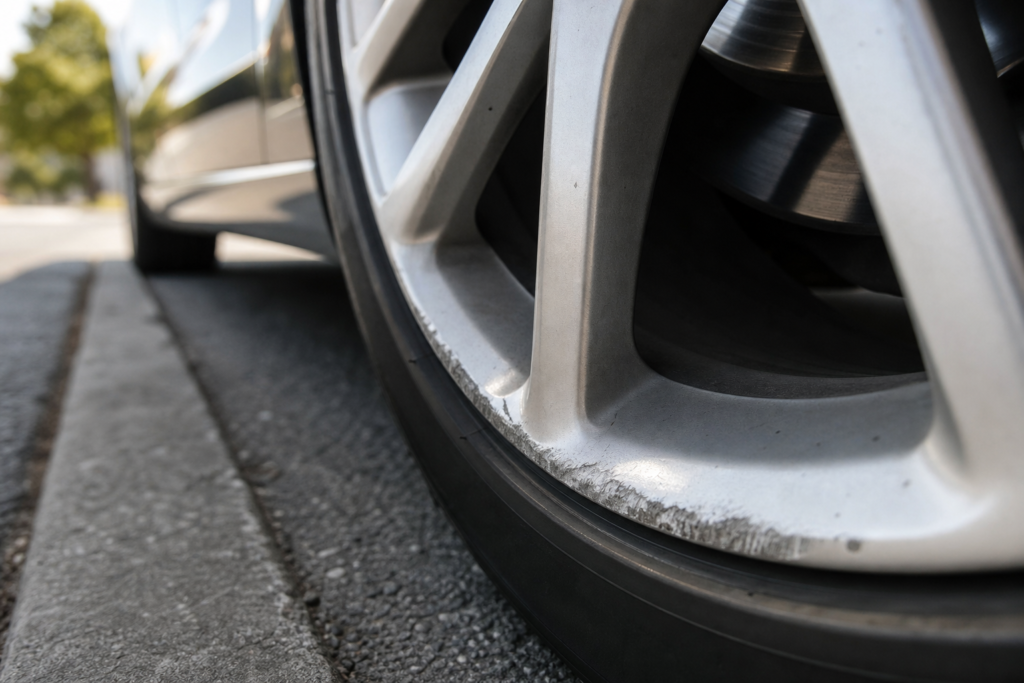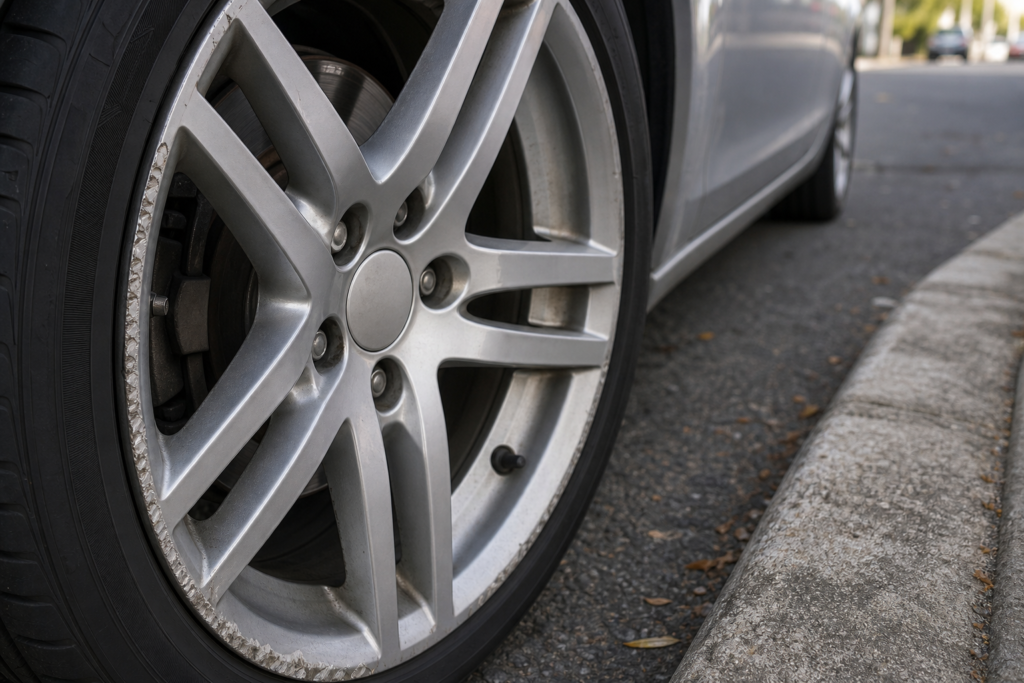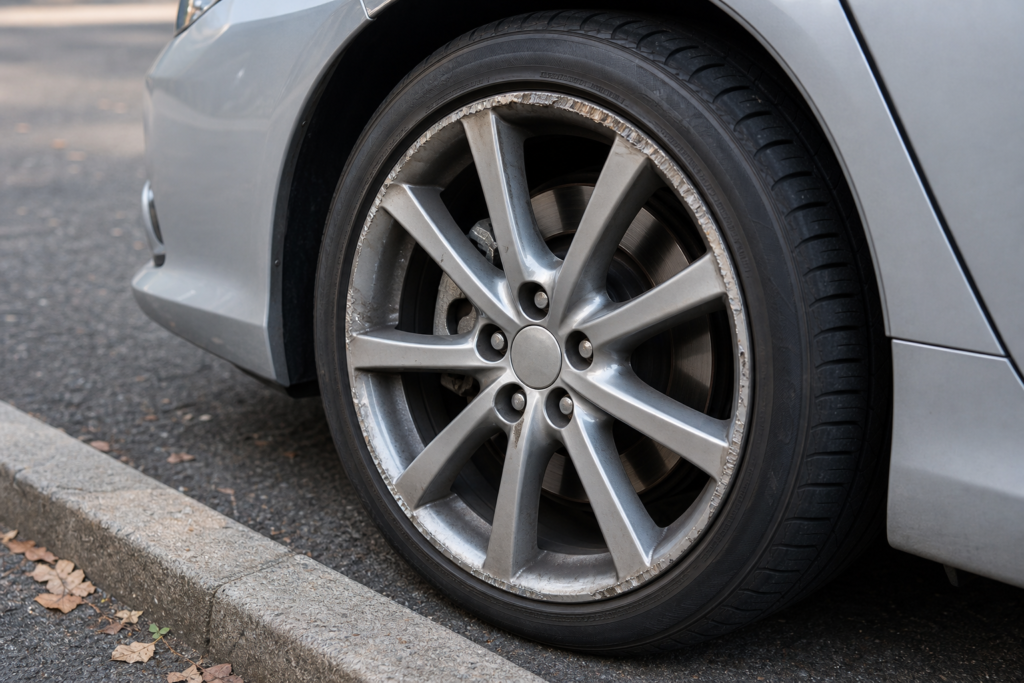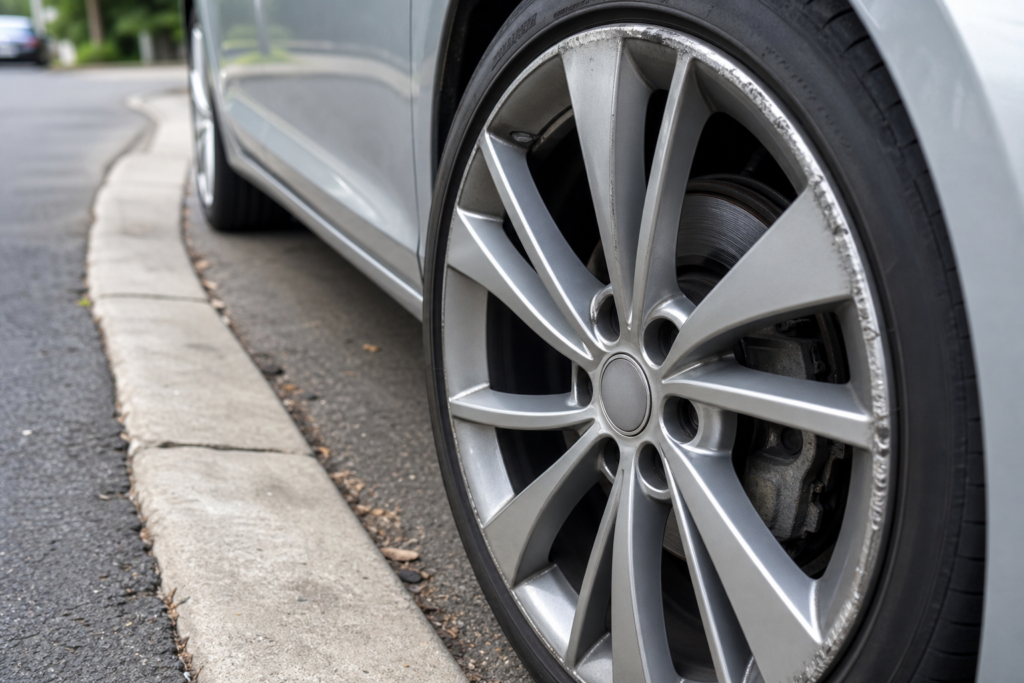
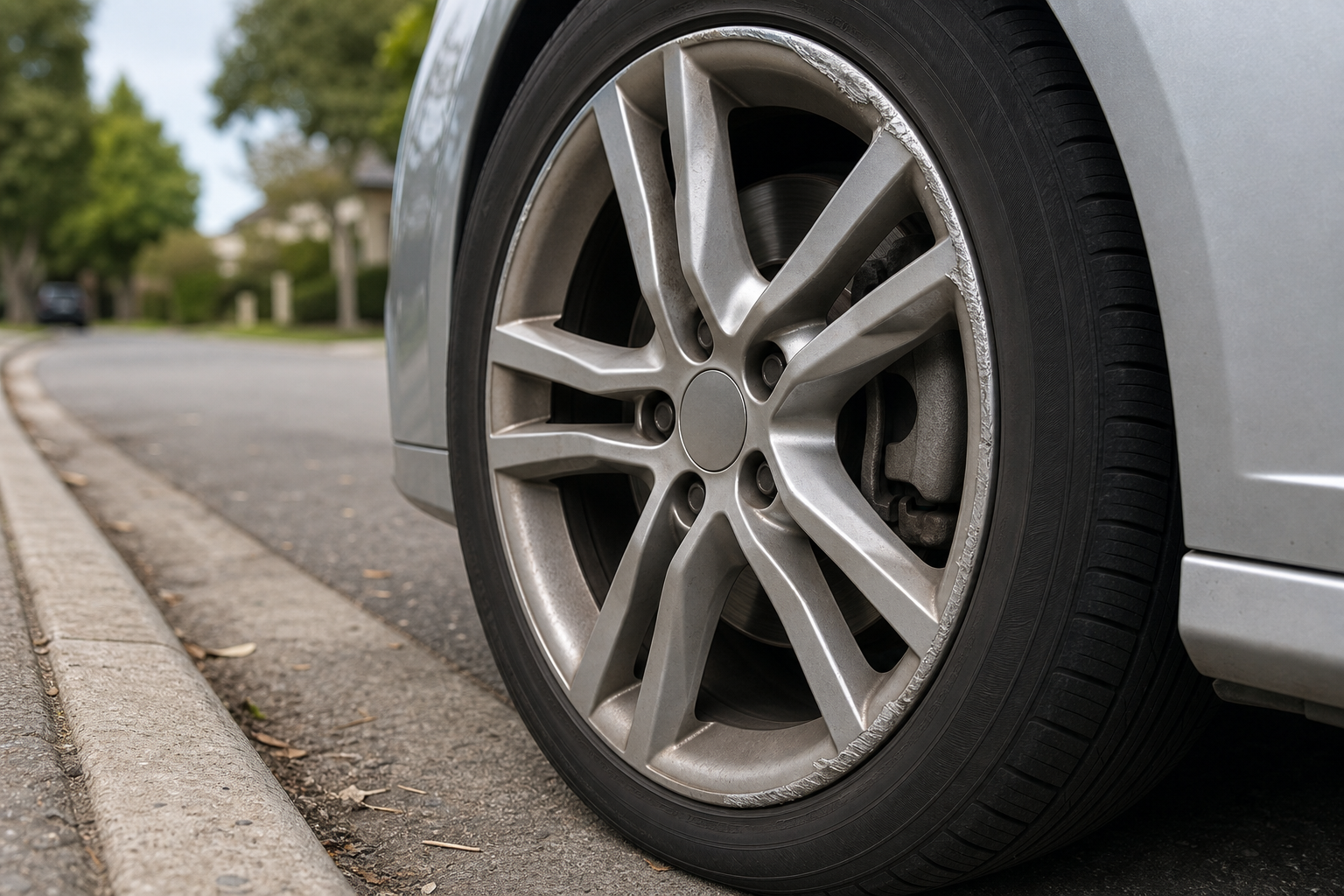
You’re pulling out of a tight drive-thru lane, hear that sickening scrape, and glance in the mirror to see a fresh white streak gouged into your alloy wheel. The damage is done. Now the real question: is curb rash bad, or just annoying? The answer depends on how deep the scrape goes, what you plan to do with the car, and whether you’re driving your own vehicle or a rental.
Mostly Cosmetic, Sometimes More
For the vast majority of drivers, curb rash is a surface-level cosmetic issue. A light scrape on the outer lip or face of a wheel doesn’t compromise the wheel’s structure or your ability to drive safely. Most curb rash falls into this category, a scuff from a parking lot curb or a tight parallel park that left its mark on the clear coat and bare alloy beneath it.
That said, cosmetic doesn’t mean free of consequences. Left alone, exposed aluminum oxidizes. A scrape that looks minor today can invite corrosion that spreads under the remaining finish over months or years. And when it comes time to sell the car, trade it in, or return a lease or rental, curb rash becomes a line item someone will price against you. So while it’s rarely dangerous, it’s not always harmless either.
Scrapes Versus Real Wheel Damage
So what is curb rash, exactly? It’s surface damage to a wheel, almost always an alloy wheel, caused by contact with a curb or raised concrete edge. The scrape strips away clear coat and sometimes gouges the aluminum underneath, leaving rough, bright-metal scratches along the wheel’s lip or face. Curb rash on alloy wheels is especially visible because the contrast between polished or painted alloy and raw scraped metal is hard to miss.
The distinction that matters is between curb rash and actual wheel damage. A true scrape stays on the surface. You can run your finger along it and feel roughness, but the wheel’s shape hasn’t changed. Real wheel damage, a bent lip, a crack, or a visible flat spot on the rim edge, is a different problem entirely.
If the wheel wobbles, if the tire bead area is deformed, or if you see a crack radiating from the scrape, that’s structural. Curb rash vs wheel damage is a judgment call, but the test is straightforward. Shape change or cracking means it’s more than cosmetic.
Wheel runout can be checked quickly on a balancing machine.
Beyond Cosmetic Concerns
The safety concern most people jump to is tire damage, and it’s worth addressing directly. Can curb rash cause tire damage? It can, but usually only in harder impacts. A slow-speed scrape against a parking curb rarely transfers enough force to the sidewall to cause a problem. A faster hit, clipping a curb during a turn at speed, or dropping into a pothole right after a curb strike, is more likely to pinch or bulge the sidewall, nick the tire bead, or bend the wheel lip enough to break the air seal.
Signs that a curb hit went beyond surface rash include a sidewall bulge or cut, persistent air pressure loss, steering vibration that wasn’t there before, or visible deformation of the rim edge. Any of those warrants a same-day inspection. A cosmetic scrape with none of those symptoms is almost certainly just that, cosmetic.
The slower-burning risk is corrosion. Bare aluminum exposed by a scrape will oxidize on its own, and road salt, brake dust, and moisture accelerate the process. Over a year or two, untreated curb rash can develop pitting that makes a future refinish harder and more expensive. A coat of touch-up paint or clear sealant on the scraped area slows this down considerably.
Repair Costs and Value
The good news: curb rash repair cost is generally reasonable compared to most automotive body work. A mobile wheel repair specialist can sand, fill, and repaint a single alloy wheel for a price that typically falls well below the cost of a new OEM wheel. Full shop refinishes cost more, especially for wheels with complex finishes like diamond-cut or two-tone alloy. Replacing the wheel entirely is the most expensive route and usually only makes sense if the wheel is cracked or severely bent.
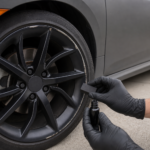
DIY repair kits exist and work adequately for shallow scrapes on single-color painted wheels. They typically include sandpaper, filler, primer, and color-matched paint. The results won’t be invisible up close, but they stop corrosion and look significantly better than raw scraped metal. For deeper gouges, machined-face wheels, or chrome finishes, professional refinishing produces a noticeably better result.
Whether a repair is worth it depends on context. On a daily driver you plan to keep for years, a quick DIY seal-and-paint job protects the wheel and costs very little. On a car you’re preparing to sell, a professional refinish can pay for itself by removing an easy negotiation point for buyers. On a beater you’re driving into the ground, it’s perfectly rational to leave it alone.
Resale, Leases, and Rentals
Curb rash can absolutely affect resale value, though the degree depends on the buyer and the car’s price bracket. On a used economy car, a single scuffed wheel might shave a modest amount off a trade-in offer or give a private buyer leverage to negotiate. On a luxury or performance vehicle with large-diameter wheels, visibly damaged alloys signal neglect and can cost meaningfully more in a dealer appraisal.
Lease-end inspections are stricter. Most leasing companies classify curb rash beyond a small threshold as excess wear, and the resulting charge can be surprisingly steep, often priced closer to full wheel replacement than to what a repair would have cost you beforehand. Fixing curb rash before a lease return is almost always the financially smarter move.
Rental cars are where this catches the most people off guard. Rental agencies inspect wheels at return, and curb rash on a new car, which most rental fleets are, stands out immediately. Agencies may charge a damage fee that far exceeds what a local wheel repair would cost you on your own vehicle. If you’re returning a rental, do a walkaround before you leave the lot at pickup and photograph every wheel. Document existing damage so you aren’t billed for scrapes that were already there. That five minutes of effort can save a significant charge on your final bill.
Practical Rule of Thumb
Classify the damage first. If the wheel’s shape is unchanged, no air is leaking, the tire sidewall is intact, and there’s no vibration, you’re dealing with cosmetic curb rash. From there, the decision tree is simple.
If the scrape is shallow and you’re keeping the car long-term, a quick sealant or touch-up prevents corrosion and costs almost nothing. If the damage is deeper or you’re selling, trading, or returning the vehicle soon, a professional repair pays for itself. If the wheel is cracked, bent, or losing air, skip the cosmetics and replace or have it professionally inspected.
Is curb rash bad? Rarely in the way people fear. It’s not going to cause a blowout on the highway or make your car unsafe to drive. But it’s not nothing, either. Corrosion creeps, resale impressions matter, and rental return fees sting. The practical move for most people is a modest repair that costs far less than ignoring it eventually will.