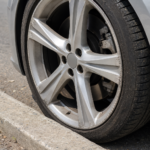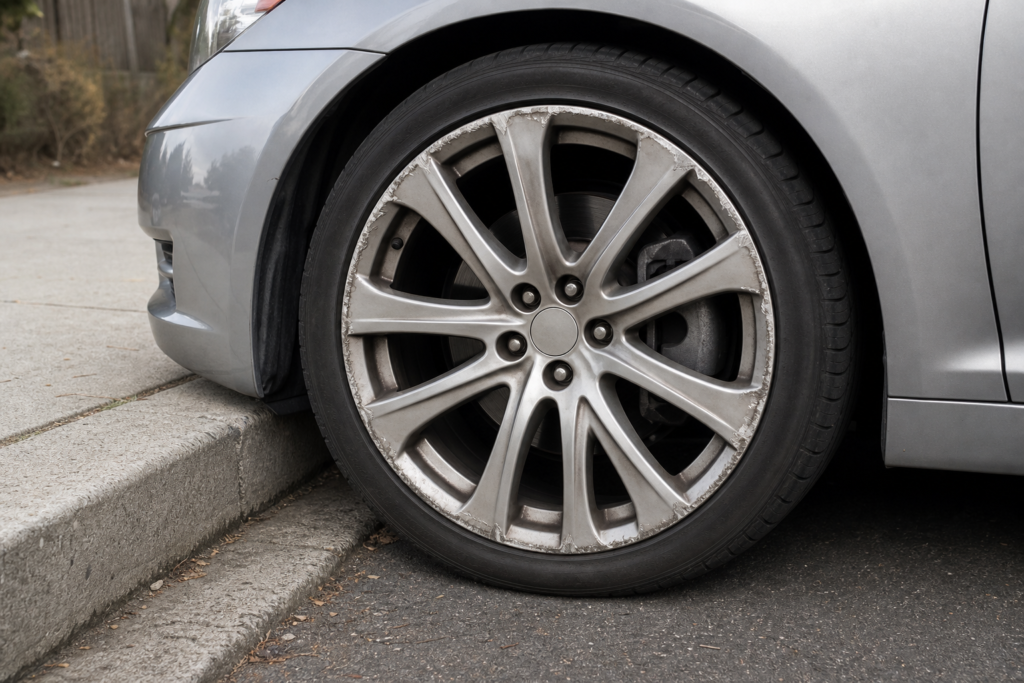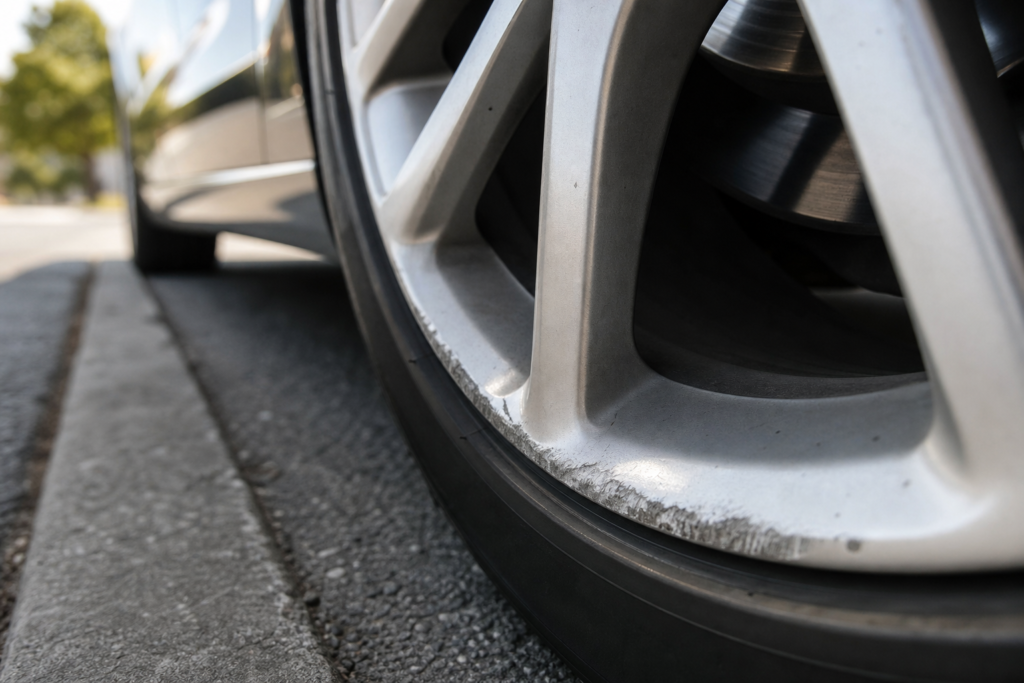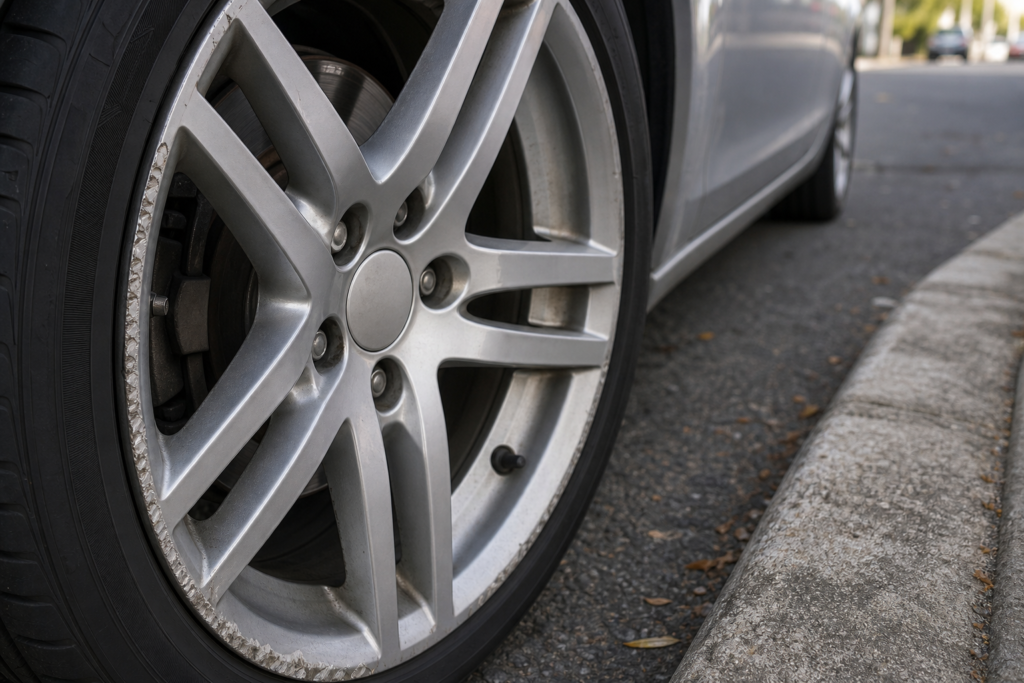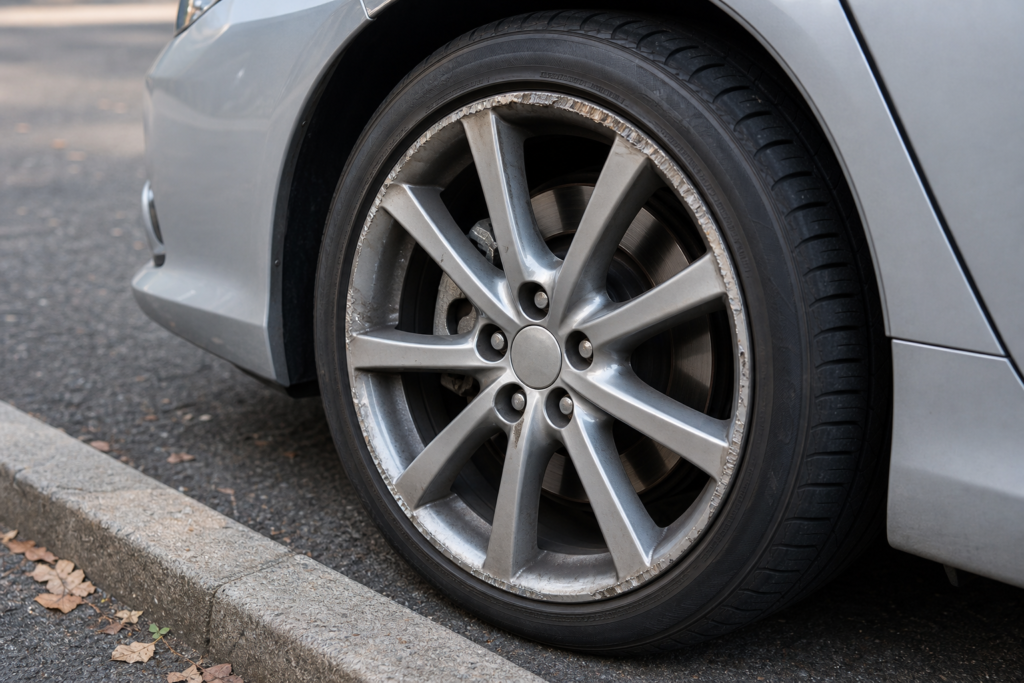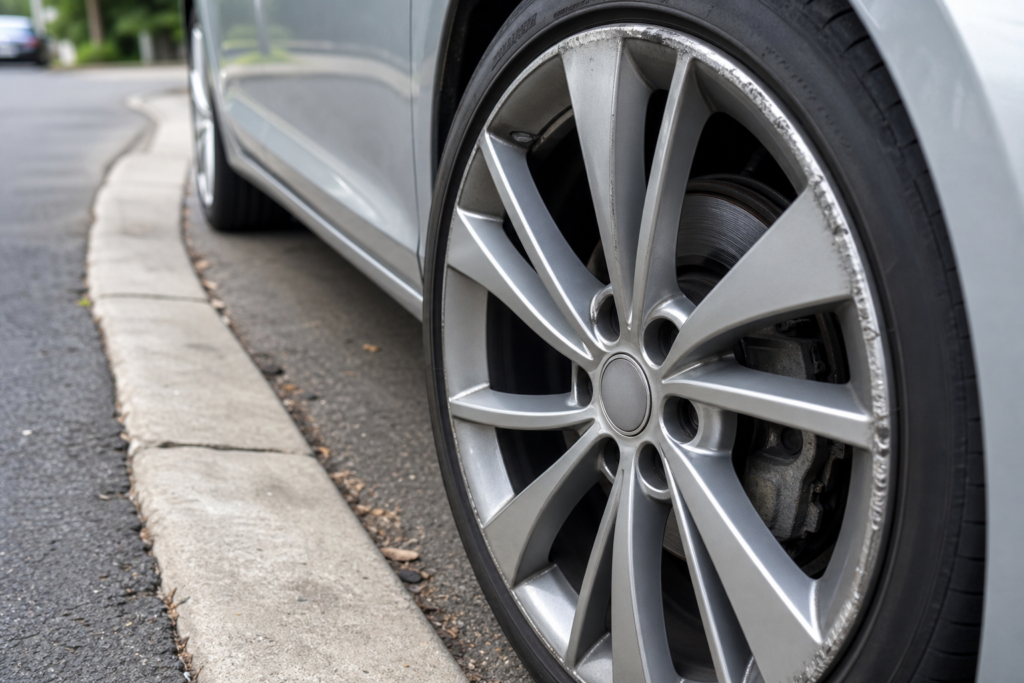
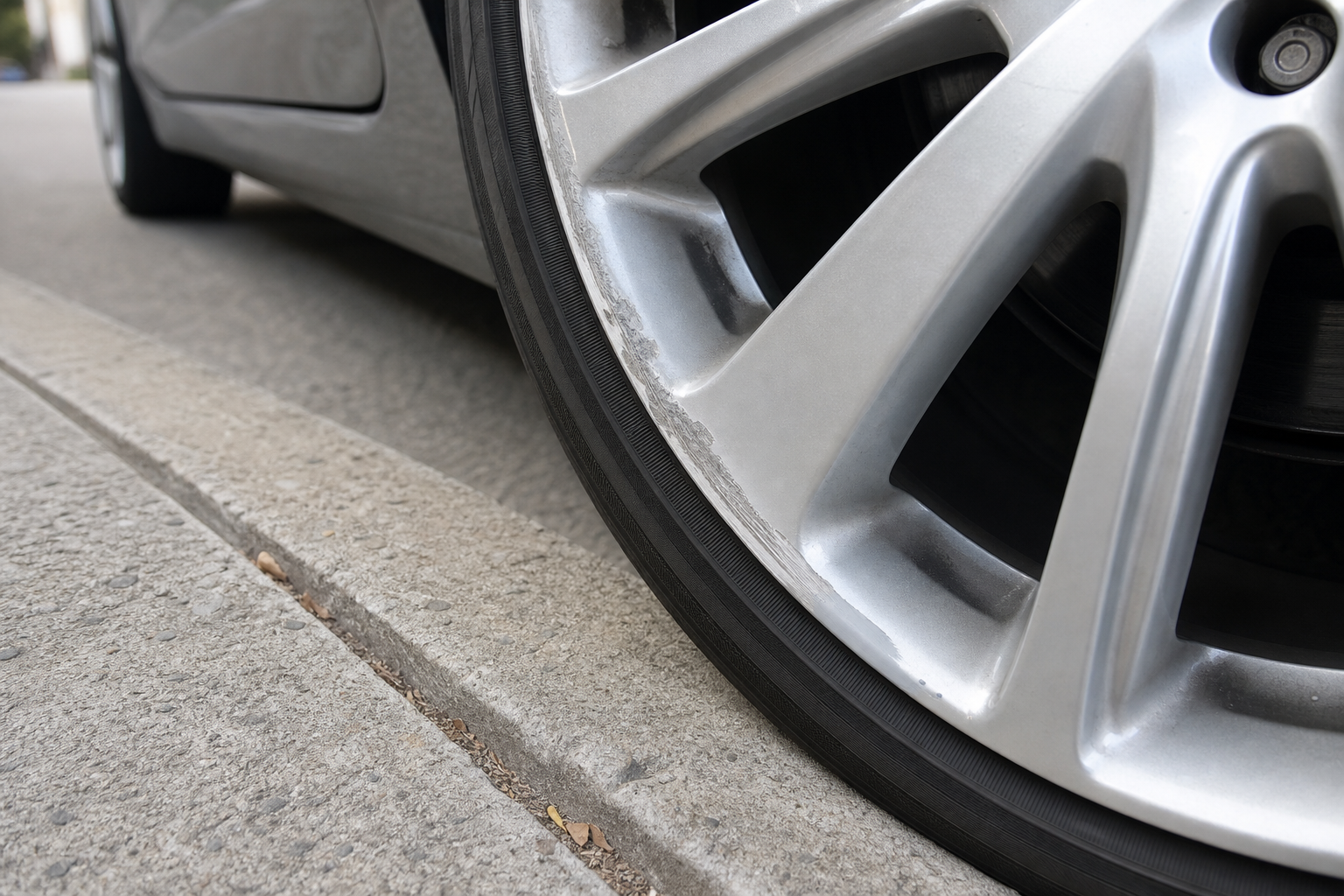
A momentary misjudgment in a tight parking garage, cutting the wheel a fraction too late, produces that unmistakable grinding scrape of alloy meeting concrete. You step out, crouch down, and there it is: a raw, scuffed streak running along the rim lip.
So, can curb rash be fixed? In most cases, yes. But “fixed” covers a wide range of outcomes, and the right repair depends on how deep the damage goes and what kind of finish your wheel wears. A light cosmetic scuff on a painted alloy is a different problem than a deep gouge on a machined or chrome wheel, and treating them the same way leads to wasted effort or a worse-looking result.
Gauging Curb Rash Severity
Curb rash is surface damage to the outer edge or face of a wheel caused by contact with a curb, parking barrier, or pothole edge. The term covers everything from a faint scuff that barely broke the clear coat to a chunk of missing material with visible cracks. Before deciding how to fix curb rash on rims, you need to categorize what you’re looking at. For reference, “rims” and “wheels” mean the same thing here, the metal component the tire mounts on.
A cosmetic scuff is the mildest form. The clear coat is scratched, the paint may be scraped, but you can run a fingernail across it and barely feel a lip. A moderate gouge goes deeper, there’s a noticeable groove in the metal, paint is stripped, and you can feel a definite ridge. Then there’s structural damage: cracks radiating from the impact point, a bent rim flange, missing chunks of alloy, or a bead seat that’s been deformed enough to cause a slow air leak or vibration. That last category isn’t just cosmetic anymore. It affects tire seal, balance, and safety.
Spend sixty seconds with your wheel. Clean the damaged area, run your finger across it, and look for cracks under good light. If you see any crack or bend, or feel vibration while driving, stop the DIY approach and get a professional assessment.
DIY vs. Professional Repair
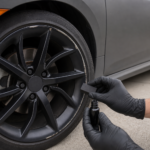
The decision tree is simpler than most people expect. Minor to moderate curb rash, scuffs and shallow gouges on standard painted or clear-coated alloy wheels, can often be addressed at home with sandpaper, filler, primer, and touch-up paint. The work isn’t complicated, but it demands patience and a realistic eye. A DIY curb rash fix won’t return the wheel to factory condition, it will make the damage far less noticeable at normal viewing distance.
Major curb rash pushes past what sanding can handle. If the gouge is deep enough that filler alone can’t level it, if there’s structural compromise, or if the wheel has a finish that’s difficult to replicate at home, chrome plating, powder coat, CNC-machined faces, the smarter move is professional repair. Professionals have lathes, spray booths, and finishing expertise that a driveway repair can’t match. Choosing the wrong path doesn’t just waste a weekend, aggressive sanding on a machined wheel, for example, can destroy the factory cut pattern and make the damage more visible than it was before you started.
Sandpaper Repair Limits
For a standard painted alloy wheel with light-to-moderate scuffing, the process involves sanding the damaged area smooth with progressively finer grits, filling any remaining low spots with an appropriate filler, priming, painting, and finishing with clear coat. Some very light scuffs, where the clear coat is marred but the metal isn’t exposed, can sometimes be improved with polishing compound alone. If you can buff out the mark without exposing bare alloy, that’s the least invasive option. Many people search whether can curb rash be buffed out, and the honest answer is: only if the damage hasn’t gone past the clear coat layer.
Where sanding works well, results can be genuinely good. Curb rash before and after a careful DIY repair often shows a dramatic improvement, the scrape goes from an obvious eyesore to something you’d have to look for on purpose. But there are limits. Sanding too aggressively thins the metal edge and can create a wavy profile. Color-matching spray paint to a factory finish is tricky, especially on metallic or pearl coatings. And if the damage wraps around the rim lip onto the inner bead area, you risk compromising the tire seal, which is a clear signal to stop and move to professional repair.
Finish Type Changes Everything
Most curb rash conversations center on standard painted alloy wheels because that’s what most vehicles wear. Curb rash on alloy wheels with a simple paint-and-clear-coat finish is the most forgiving scenario for DIY repair because the materials are accessible and the process is straightforward.
Chrome wheels shift the difficulty significantly. Curb rash on chrome wheels often means the plating has chipped or flaked, exposing the base metal underneath. Chrome plating can’t be touched up with spray paint and a polishing cloth, it requires stripping and replating, which is a shop-only process. Attempting to sand or fill a chrome wheel at home tends to make it look worse.
CNC-machined or diamond-cut alloy wheels present a similar challenge. The factory finish on these wheels is created by a lathe cutting a precise pattern into the alloy face, then sealing it with clear coat. If curb rash damages that machined surface, no amount of hand sanding will replicate the lathe pattern. A professional shop with the right equipment can re-machine and reseal the face, but it’s not a driveway project.
Powder-coated wheels fall somewhere in between. Minor scuffs can sometimes be touched up, but a proper powder coat repair involves stripping, recoating, and baking, again, shop territory. The finish type on your wheel is arguably the single biggest factor in whether DIY makes sense. For owners who want to prevent curb damage altogether, proactive measures like colored ppf in orange country or ceramic-coated rim guards can shield the wheel’s finish before it ever meets a curb.
Professional Repair Process and Cost
A qualified wheel repair technician can handle everything from cosmetic refinishing to straightening a bent flange on a hydraulic press. Mobile repair services come to your location and work on painted alloy scuffs on-site, while shop-based operations handle chrome replating, machined-face restoration, and structural repairs that require removing the tire.
Curb rash repair cost varies widely. Light cosmetic touch-ups from a mobile service tend to sit at the lower end. Full refinishing of a single wheel, strip, repair, repaint, and clear coat, costs more, and chrome replating or diamond-cut re-machining sits at the top of the range. The drivers are damage severity, finish type, wheel diameter, and local labor rates. Getting two or three quotes from shops in your area is worth the effort; pricing is not standardized. Searching for curb rash repair near me will surface both mobile technicians and brick-and-mortar alloy wheel repair shops, and either can be a good option depending on what your wheel needs.
Set realistic expectations. A professional cosmetic repair on a painted alloy wheel can look nearly factory-fresh. Chrome replating and machined-face work can also produce excellent results, but the cost reflects the complexity. No repair, DIY or professional, makes a wheel literally new again. What it does is restore appearance, protect exposed metal from corrosion, and maintain the wheel’s resale value.
Repairing Sooner Prevents Worse Damage
Bare alloy exposed by a curb scrape begins to oxidize. In wet or salted-road climates, that oxidation accelerates and can spread under the surrounding clear coat, causing bubbling and flaking well beyond the original damage. A small repair done promptly stays small. A scrape left for a year may need a full refinish.
Here’s a simple rule of thumb: if the damage is a surface scuff on a standard painted alloy, a careful weekend sanding-and-paint job is reasonable. If you see cracks, bends, missing chunks, chrome flaking, air loss, or vibration, or if the wheel has a finish you can’t replicate by hand, the repair usually calls for professional equipment and experience. The goal isn’t perfection; it’s matching the repair to the damage so you protect the wheel, keep it safe, and don’t spend more than the situation warrants.