Why Curb Rash Stings
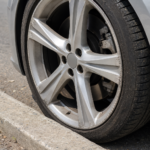
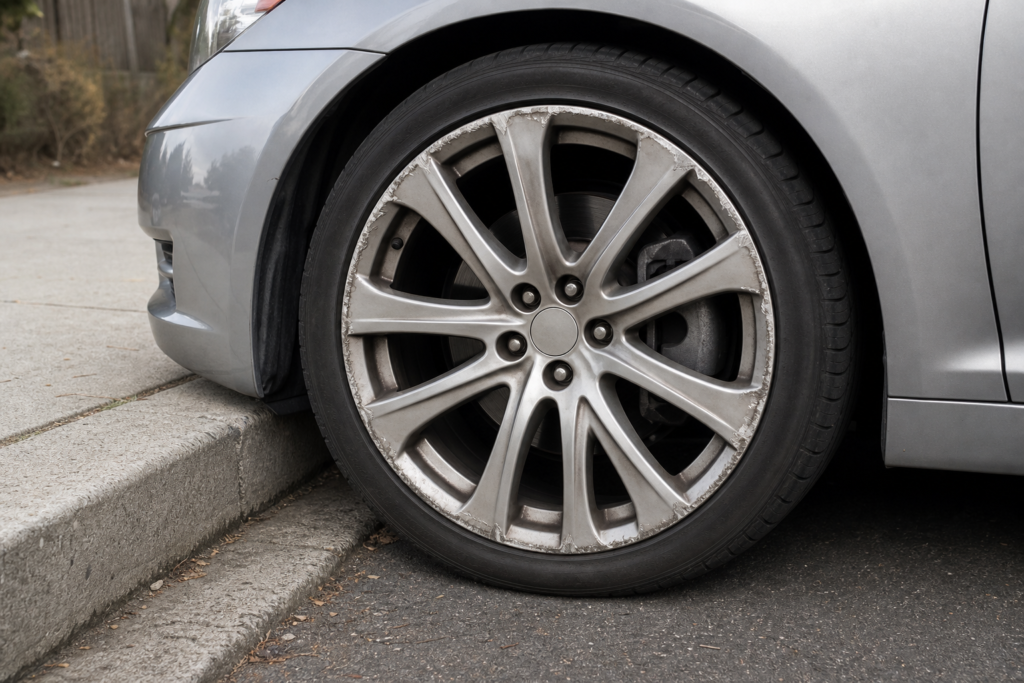
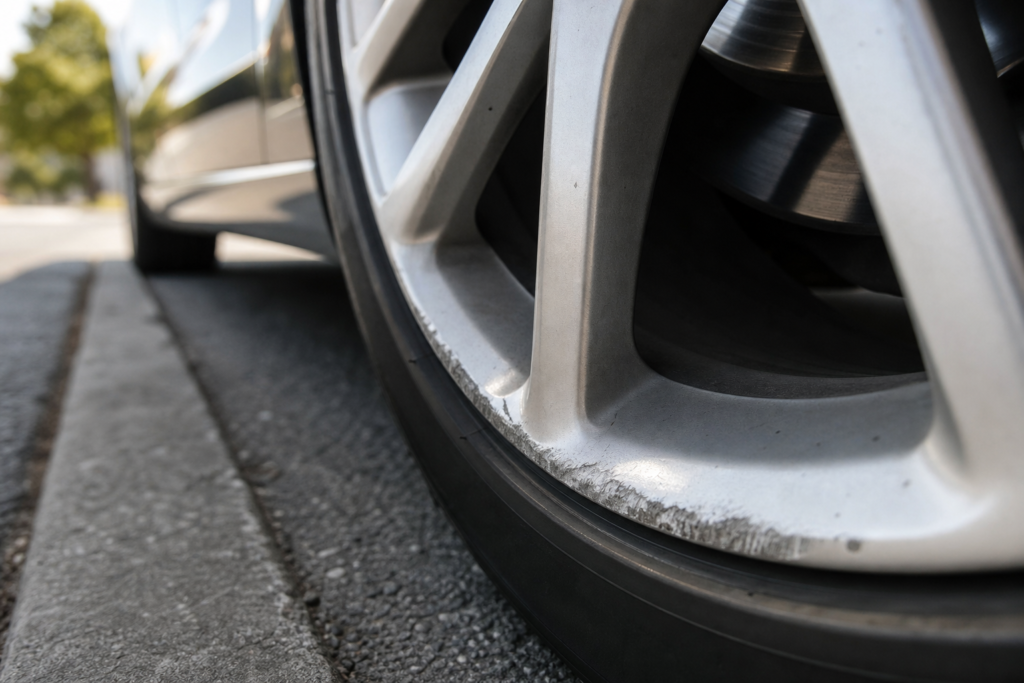
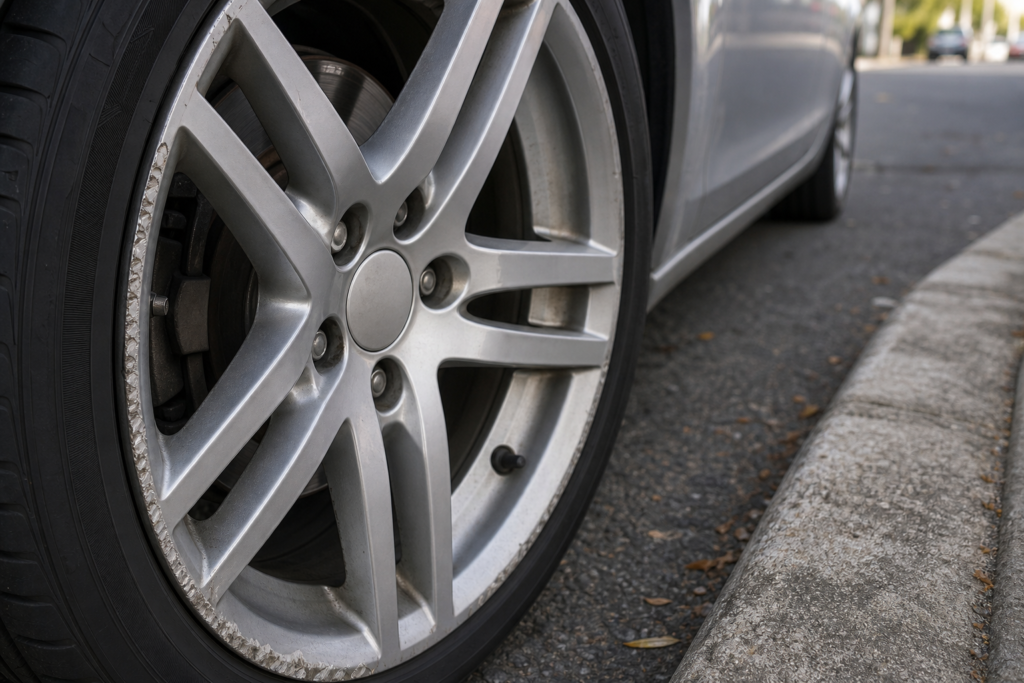
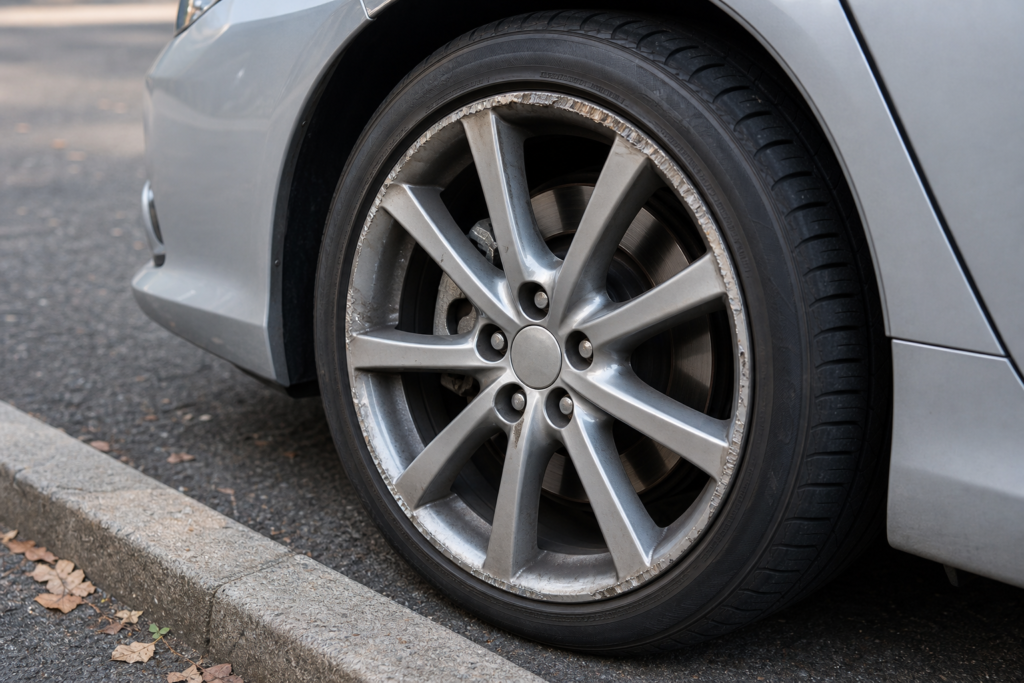
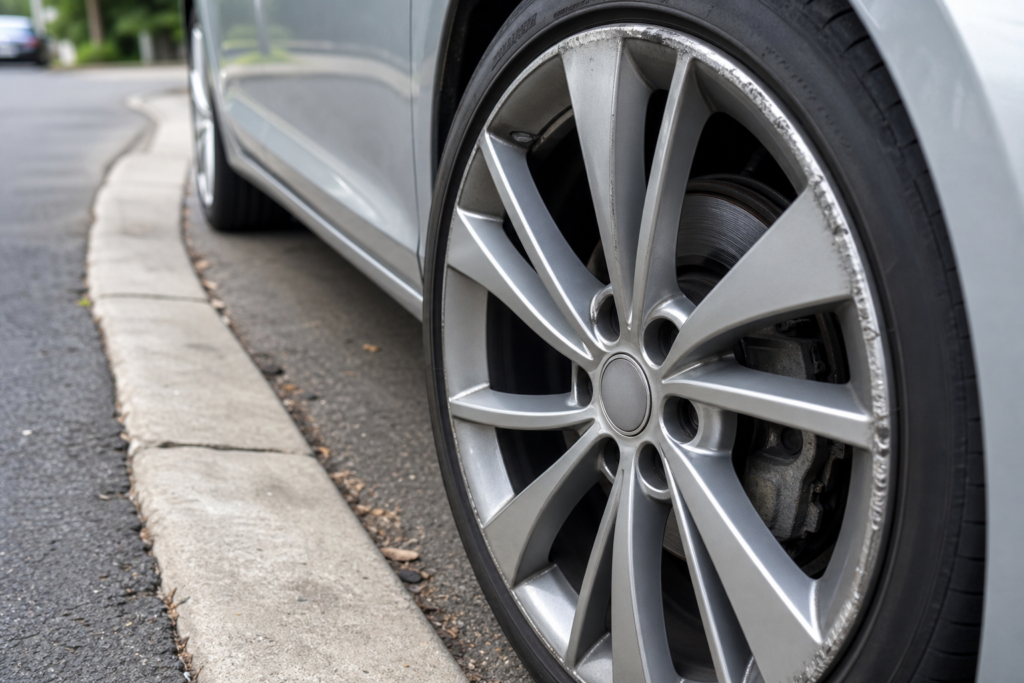
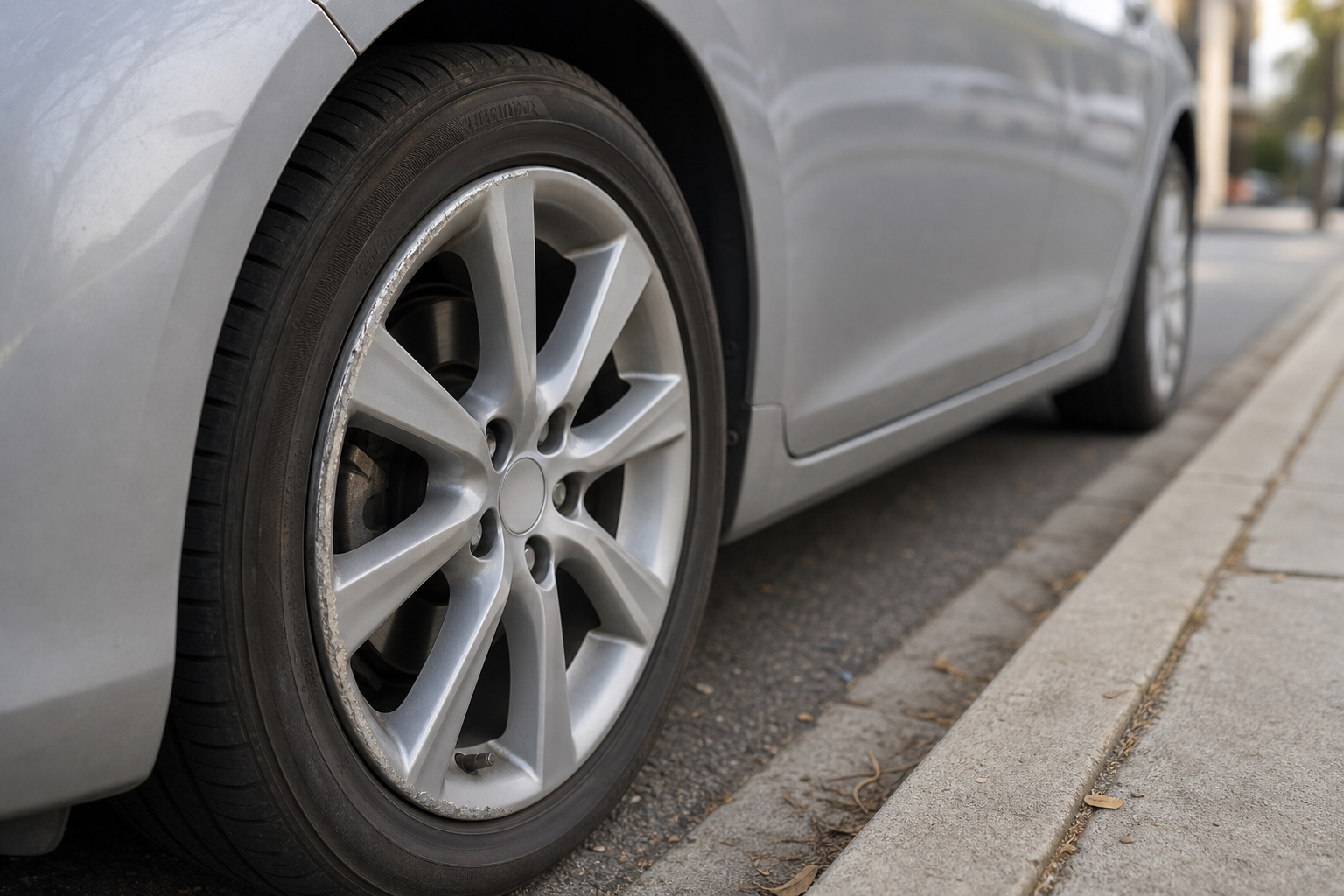
You’re threading a tight turn into a city parking garage, inching toward a narrow spot, and then it comes, that soft, grinding “scrrrp” from the front wheel lip against the concrete edge. The next morning, in daylight, you find it: a bright, raw-aluminum scar running along the rim of an otherwise clean wheel.
The reaction is always disproportionate to the damage. Curb rash on alloy wheels stings because it’s visible, it’s on something you paid real money for, and it happened in the most mundane possible way. No pothole drama, no road hazard, just a parking lot and a moment of misjudgment.
Modern wheel and tire packages make this worse than it used to be. Factory wheel diameters have grown steadily, and the tires mounted on them have gotten proportionally thinner. Low-profile tires and curb rash go hand in hand because there’s simply less rubber standing between the wheel lip and any raised surface. Older setups with taller sidewalls acted as a buffer, the tire would scrub or compress before the rim made contact. On a lot of current cars and crossovers, the alloy edge is practically flush with the outermost point of the tire. A sidewall that’s only a few inches tall offers almost no forgiveness. That’s why a wheel that survives years on one vehicle can get rashed in the first month on another just because the tire profile changed.
None of this means the damage is automatically serious. But understanding why it happens so easily now helps explain why it’s worth evaluating rather than just shrugging off.
Cosmetic Nuisance vs. Real Damage
The scrape itself is obvious. What matters more is what it exposes. Most factory alloy wheels leave the production line with a protective finish, a clear coat over paint, a machined face sealed against the elements, or a polished surface treated to resist oxidation. A curb strike cuts through that barrier.
Once the clear coat is breached, the bare aluminum underneath is open to moisture, brake dust, and road grime. In climates where roads are salted in winter, road salt wheel damage accelerates this process considerably. Salt is hygroscopic and draws and holds moisture against the exposed metal. Within a single winter season, untreated curb rash can develop visible corrosion: a white, powdery oxidation that spreads outward from the original scrape. Curb rash corrosion doesn’t just look worse over time, it undermines the surrounding finish, causing clear coat to peel and flake beyond the edges of the original damage.
The line between cosmetic and structural depends on where the rash sits and how deep it goes. A light scuff along the outer lip, the most common kind, is almost always cosmetic. Run your fingernail across it: if it catches on a shallow texture but the surface is still relatively flat, the wheel’s integrity is fine. If you find a deep gouge, a noticeable flat spot, or if the rash extends onto the bead seat area where the tire seals against the rim, the situation is different. Damage to the bead seat can cause slow air loss. A hard enough hit to gouge deeply into the alloy may also bend the lip, which isn’t always visible but shows up as a vibration at speed or a persistent slow leak.
Surface-level rash is common and manageable. Damage that affects the wheel’s ability to hold air or run true is a safety and reliability concern, and the response should match.
Fix It or Leave It
Plenty of drivers live with minor curb rash for years without consequence. The question isn’t whether it’s fixable, it almost always is, but whether fixing it is worth the money and effort right now.
Lease returns sharpen the math. Lease-end inspections specifically look for wheel damage, and lease return wheel damage beyond normal wear almost always triggers a charge. What counts as “normal” varies by leasing company, but visible curb rash on multiple wheels or deep gouges on any wheel typically falls outside the threshold. Repairing before turn-in is nearly always cheaper than the penalty.
For owners planning a private sale, curb rash resale value impact is real but less formulaic. Buyers notice wheels early, they’re one of the first things visible in listing photos. A set of rashed rims signals either hard use or deferred maintenance, neither of which helps your asking price. The cost of a professional refinish on one or two wheels is often recovered in a cleaner sale.
Climate matters too. If you’re in a region with salted winter roads, leaving a breached clear coat open through the cold months invites the corrosion progression described above. In dry, mild climates, the urgency drops. A scrape in Phoenix ages slowly. The same scrape in Chicago gets worse every winter. If the rash is minor, on a single wheel, and you’re keeping the car with no corrosion pressure, waiting is reasonable. If it’s on multiple wheels, the car is headed to sale or lease return within a year, or you’re staring down another salt season, the repair pays for itself.
Repair Options by Involvement Level
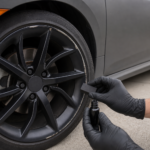
The simplest approach is a touch-up, alloy-specific paint pens or small bottles matched to the wheel’s color, applied over the scrape and sealed with a clear coat layer. This doesn’t restore the surface profile or texture. It conceals the bright raw metal and re-seals the exposed area against moisture. For minor rash on a daily driver you plan to keep, that’s often enough.
Mobile spot repair sits a step above. A technician who offers mobile wheel restoration comes to you with portable tools, sands the damaged area, applies filler if needed, and refinishes that section of the wheel. The results can be impressive on painted wheels with common colors. Machined or polished finishes are harder to match in a mobile setting because those textures require equipment that doesn’t travel easily. Spot repair works well for isolated damage on one or two wheels.
Full professional alloy wheel refinishing means removing the wheel and tire, stripping or sanding the affected area (sometimes the entire face), building the surface back up, and applying a factory-matched finish with proper curing. This delivers the closest result to original appearance. It’s also the most expensive single-wheel option, though still significantly less than replacing an OEM wheel outright.
Replacement makes sense when the damage is structural, when the wheel design can’t be closely matched in a refinish, or when the cost of repairing all four wheels approaches the cost of a quality replacement set. Replacing a single wheel with an exact OEM match can be straightforward for common vehicles and surprisingly difficult for limited or discontinued designs. Some owners use damage on one wheel as the reason to upgrade to a full new set, a choice that sidesteps the matching problem entirely. Each option involves tradeoffs. Touch-up is cheap but temporary. Mobile repair is convenient but limited in finish types. Professional refinishing is thorough but assumes the wheel is structurally sound. Replacement solves everything but costs the most. The right choice depends on the damage, the wheel, and the timeline.
The Professional Refinishing Process
The alloy wheel refinishing process starts with an inspection most owners never think about. Before any sanding happens, a good shop checks the wheel for runout, whether it’s still round and true, and examines the entire surface for cracks, bends, or corrosion that extends beyond the visible rash. If the wheel is bent enough to affect balance or cracked at the spoke junction or barrel, refinishing is the wrong answer. Cosmetic work on a structurally compromised wheel is wasted money.
Assuming the wheel passes, the damaged area is sanded and feathered, meaning the edges of the scrape are gradually blended into the surrounding surface so the repair doesn’t leave a visible ridge. Deep gouges get filled with a two-part alloy-compatible filler, then shaped to match the wheel’s contour. This step is where skill matters most. A poorly shaped fill shows as a wavy reflection under direct light.
After shaping, the surface is primed, then painted with a base coat matched to the original color, and finally sealed with an automotive-grade clear coat. Proper curing, either air cure or bake, depending on the shop’s equipment, determines how durable the finish will be. A clear coat that isn’t fully cured will chip or peel within months.
Finish matching is the hardest part and the area where expectations need to be realistic. Standard painted wheels in silver or dark gray match well. Machined-face wheels, the ones with a lathe-cut pattern visible under the clear coat, require the wheel to go back on a CNC lathe to reproduce that texture. Not every shop has one. Polished or chrome-look finishes are similarly difficult. A refinished section on these wheels may look perfect in shade and noticeably different in direct sunlight. Knowing this upfront prevents disappointment.
Practical Curb Rash Prevention
Most curb rash happens in the same handful of scenarios: parallel parking, tight garage turns, and pulling too close to a raised curb in a standard lot. The common thread is that drivers lose track of exactly where the wheel edge is relative to the curb.
Approach angle is the biggest factor. Pulling into a parking spot at a sharp angle brings the front wheel’s outer lip directly toward the curb face. A straighter, more gradual approach keeps the tire, not the rim, as the closest point to the obstacle. When parallel parking, setting your passenger-side mirror to tilt downward while reversing gives you a direct view of the gap between wheel and curb. Many vehicles offer this as an automatic feature tied to the reverse gear, it’s worth checking your settings.
Choosing the right stall helps too. End spots with a curb on only one side halve the risk. Pull-through spots eliminate it. In parking garages, the stalls farthest from tight corners and structural pillars tend to have the most maneuvering room.
On the vehicle side, opting for a tire with even a slightly taller sidewall when replacement time comes adds a meaningful buffer. Some aftermarket and OEM wheels include a raised rim-protection lip that sits slightly proud of the tire bead area, deflecting light contact away from the visible face. It’s a small design detail that makes a practical difference. Modern driver-assist features are underused for this purpose. Surround-view cameras, front and rear parking sensors, and curb-view camera angles exist on a growing number of vehicles. Using them deliberately, not just glancing at the screen but actually watching the wheel-to-curb gap, turns technology you already own into real prevention.
Curb rash is one of those problems that’s easier to prevent the second time than the first. Once you’ve heard that sound and seen the scar, you tend to park differently. The goal isn’t perfection. It’s building a few habits that keep the wheels in the condition you want them, whether that’s showroom-clean or just good enough to hold their value when it matters.