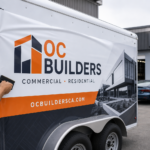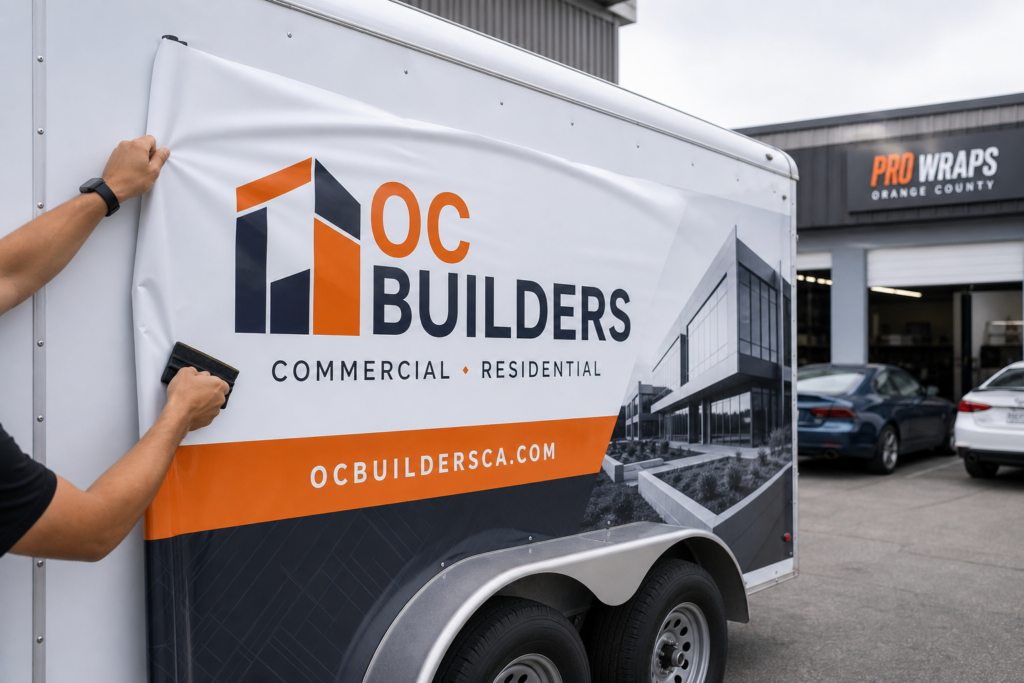
A fully wrapped cargo trailer merging onto the 405 during evening rush near Costa Mesa is putting your brand in front of thousands of drivers who never opted in and will never click away. That same trailer parked at a job site in Anaheim or sitting in a lot off the 55 in Irvine keeps working after the engine shuts off. No impressions bill, no ad rotation, no campaign end date. It’s the reason so many Orange County contractors, landscapers, and service businesses start searching for trailer wrap pricing Orange County, and then get confused by how wide the quotes run.
Understanding what’s actually inside those numbers matters more than finding the cheapest one.
What Your Quote Covers
A trailer wrap quote is not a sticker price. It’s a bundle, design time, material selection, surface preparation, printing, lamination, and installation labor. Each component carries its own cost, and each one affects how long the wrap holds up under conditions specific to this region, direct UV exposure for most of the year, heat radiating off asphalt on inland routes through Santa Ana or Tustin, and salt-laced coastal air if you’re running jobs near the beach cities.
When a shop hands you a number, you’re paying for a finished product that has to survive freeway speeds on the 91 and 5, endure temperature swings between a sealed trailer in a parking lot and highway airflow, and still look sharp after months of job-site dust and pressure washing. The quote reflects how well (or poorly) it’s expected to do all of that. Two estimates for the same trailer can differ significantly not because one shop is overcharging, but because they’re specifying different materials, different laminate thickness, or a more thorough install process. Trailer wrap cost, in other words, is really a durability bet. Orange County’s environment is the house.
Real Price Ranges Explained
So how much does a trailer wrap cost? The honest answer is that it depends on enough variables to make a single number misleading. Partial coverage with basic vinyl and simple graphics on a small utility trailer sits at one end of the spectrum. A full wrap on a large enclosed cargo or box trailer with custom design, premium cast vinyl, and detailed installation sits at the other. The gap between those two scenarios can be substantial, easily a factor of three or more.
Several things explain the spread. Trailer size is the most obvious: a 6×12 enclosed trailer has far less surface area than a 24-foot box trailer, so material and labor scale accordingly. Coverage level matters next, a full wrap covers every panel, while a partial wrap or spot graphics might cover only the sides and rear. Then there’s design complexity, vinyl grade, and whether the trailer’s surface needs repair, cleaning, or priming before anything goes on.
Orange County’s shop density means competitive pricing, but it also means a wide quality range. Comparing trailer wrap pricing boston to Orange County quotes, for example, highlights how regional climate differences, particularly OC’s sustained UV and heat, factor into material specs and drive costs in different directions. Quotes that seem unusually low often reflect thinner calendered vinyl, skipped lamination, or shortcuts on seams and edges, exactly the areas where OC sun and heat punish first.
Coverage, Size, and Trailer Type
The physical trailer drives the math. An open utility trailer with a simple flat side panel is a different job than an enclosed cargo trailer wrap in Orange County with compound curves, rivets, corrugation, and recessed doors. Box trailers, common for commercial fleets, add even more square footage and often require scaffolding or lifts for upper panels.
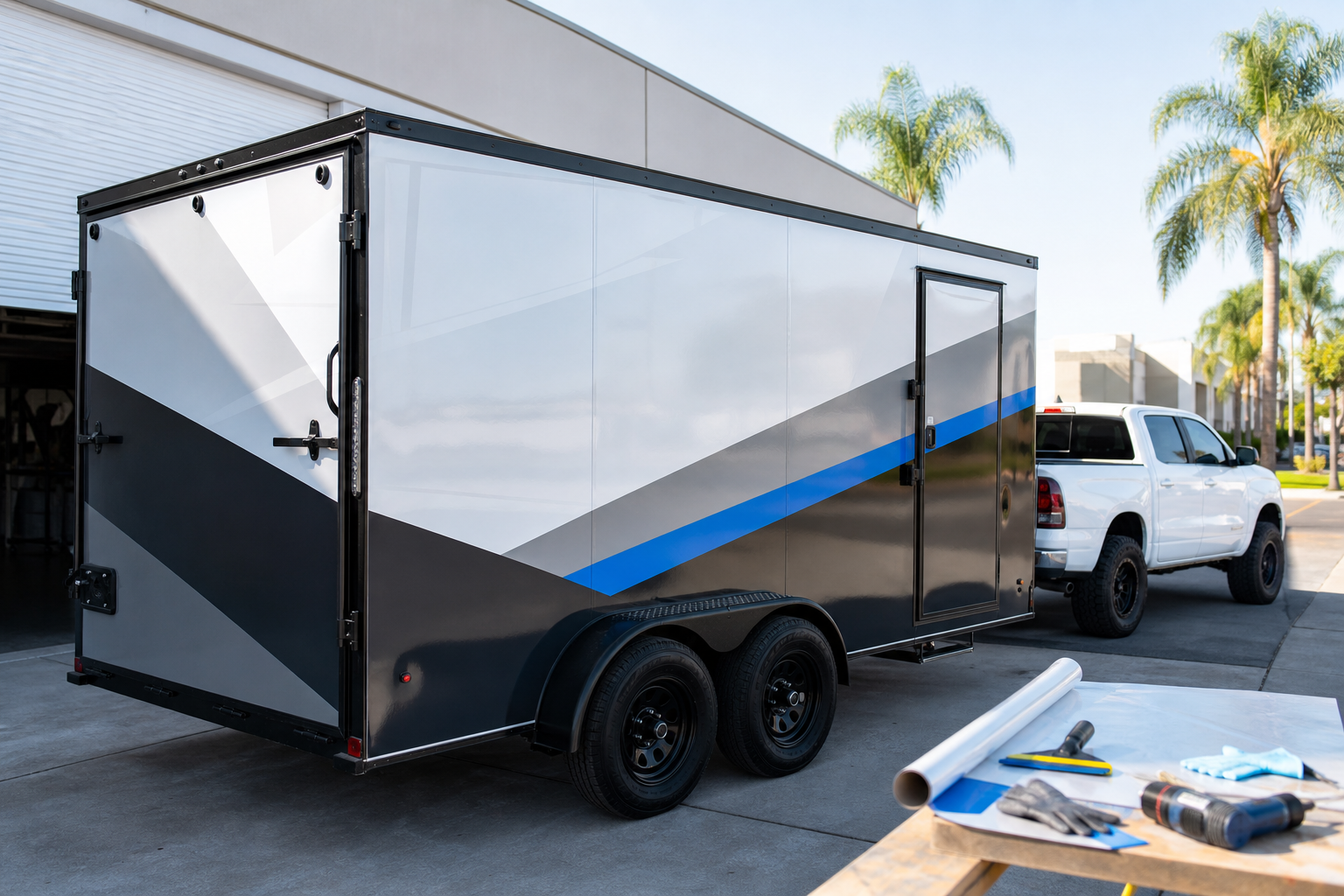
Full wraps deliver maximum impact: every visible surface carries the brand, and the trailer reads as a unified piece from any angle. Partial wraps strategically cover the highest-visibility panels, typically the two long sides and the rear, while leaving the roof or front tongue area bare. Spot graphics go further down the spectrum, applying a logo, phone number, or web address to key panels without covering the base paint or surface.
Each step down in coverage reduces material and labor costs, but also reduces visual punch. For fleet trailer wraps in Orange County, where multiple units might be parked together at a commercial yard or rolling the same freeway corridors, even partial wraps on every trailer can create stronger cumulative brand presence than a single full wrap on one unit. The coverage decision, then, isn’t just aesthetic, it’s a fleet-level budget allocation.
Materials, Design, and Installation
Vinyl film is the core material, and the difference between cast and calendered vinyl matters more in Orange County than in milder climates. Cast vinyl is thinner, more conformable, and generally holds color and adhesion longer under sustained UV and heat. Calendered vinyl costs less but tends to shrink, crack, or lift sooner, sometimes noticeably within a year of outdoor parking in inland OC heat.
Laminate, the clear protective layer printed over the graphic, adds UV resistance and abrasion protection. A quality overlaminate can meaningfully extend the life of a wrap, which matters when the trailer sits in direct sun five or more days a week.
Design hours vary with complexity. A straightforward layout using existing brand assets and a clean color scheme requires less time than a fully custom illustration or photographic wrap. Most shops charge design separately or build it into the total, so it’s worth asking how that line item breaks down.
Trailer wrap installation in Orange County should account for local conditions: dust, pollen, and particulates in shop air can cause bubbles and imperfections if the environment isn’t controlled. Proper surface prep, degreasing, removing oxidation, addressing rivets and corrugation, takes time but directly affects how long edges hold. Rushing install to hit a lower price point is where most durability problems start. Shops that quote noticeably below the local average may be cutting time here.
Durability and Impression Value
A well-installed wrap using quality cast vinyl and proper laminate can last several years in OC conditions with reasonable care. A cheaper setup might start showing edge lift, fading, or cracking much sooner, especially on a trailer that parks outdoors full-time in Anaheim or Mission Viejo rather than garaged.
The impressions math is what makes trailer wraps compelling as marketing. Wrapped vehicles and trailers on busy routes can generate significant daily impressions, and Orange County freeways like the 5, 405, 55, and 91 rank among the most congested in the country. A wrapped trailer doesn’t just earn impressions during transit, though. It earns them parked at a job site, sitting in a commercial lot visible from a surface street, or idling in traffic on Beach Boulevard. It’s a marketing machine that works around the clock with no recurring media spend.
Spread the initial cost of a quality wrap over its functional life and divide by estimated impressions, and the cost per impression drops to a fraction of what digital or print advertising charges. That’s the real value proposition, not the day-one price, but the compounding return over years of exposure. Maintaining that return means occasional cleaning, avoiding high-pressure washing directly on seams, and inspecting edges seasonally. Minor edge repairs early prevent full panel failure later.
Matching Spend to Your Usage
Matching your wrap investment to how the trailer actually lives is more practical than chasing the lowest quote or defaulting to the most expensive option. A trailer that runs the 91 corridor daily during peak hours and parks at visible residential job sites justifies a full wrap with premium materials, it’s earning maximum exposure and taking maximum environmental punishment. A trailer that mostly sits at a yard and comes out for weekend events might do well with a partial wrap or high-impact spot graphics on quality vinyl.
When searching for a trailer wrap near me, the useful comparison isn’t just price, it’s what’s specified. Ask about vinyl brand and type (cast vs. calendered), laminate inclusion, design revision rounds, surface prep steps, and any warranty on materials and labor. Two quotes at different price points might actually represent fair value at each tier; the question is which tier matches the trailer’s role.
For fleet operators considering commercial trailer wraps in Orange County, consistency matters. A uniform look across multiple trailers builds recognition faster than one showcase wrap on a single unit. Sometimes allocating the budget across several partial wraps produces better marketing results than concentrating it on one full wrap.
Ultimately, trailer wrap pricing reflects a stack of decisions, coverage, material, design, prep, and craftsmanship, each of which affects how long the wrap lasts and how hard it works. In a market with as much freeway traffic, outdoor sun exposure, and visual competition as Orange County, those decisions compound. The best-value wrap isn’t the cheapest or the most expensive. It’s the one that survives the conditions, stays visible, and keeps earning impressions long after the invoice is paid.