What Curb Rash Damages
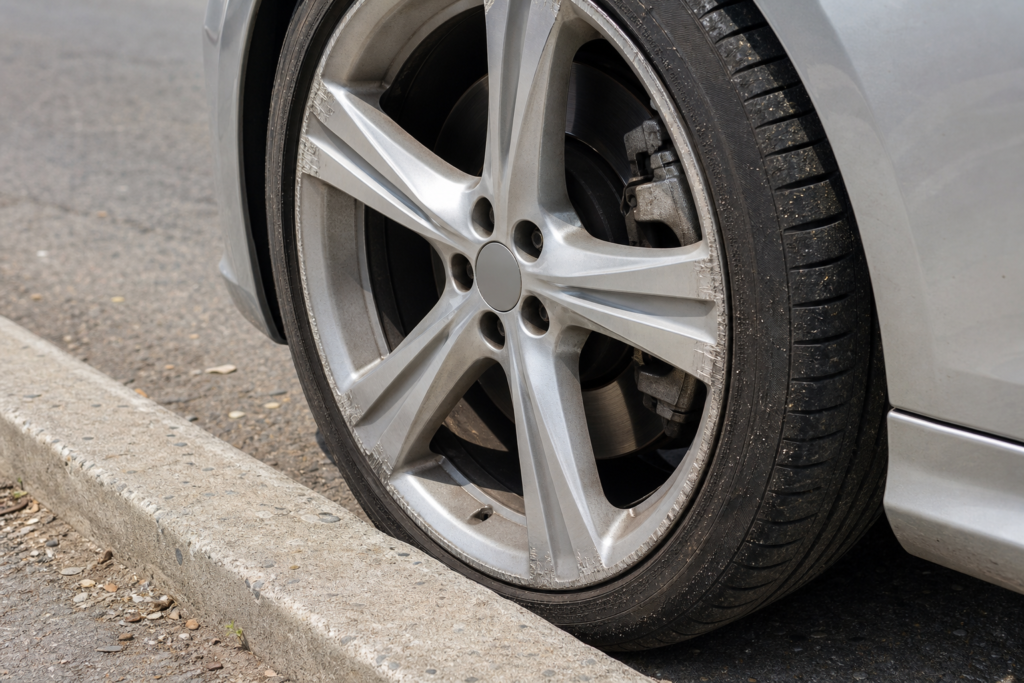
That unmistakable metallic grind as your wheel drags against the curb during a tight parallel park or a narrow drive-thru lane, you already know what happened before you get out to look. Curb rash on rims is one of those instant-regret moments, and it stings twice as hard when the car underneath those wheels was bought to turn heads. A high-performance car commands attention on the street. But scuffed, gouged wheels flip the message from “this person cares about their ride” to “careless” in a single second. That’s not the kind of attention anyone paid for.
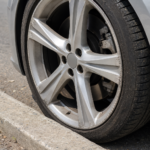
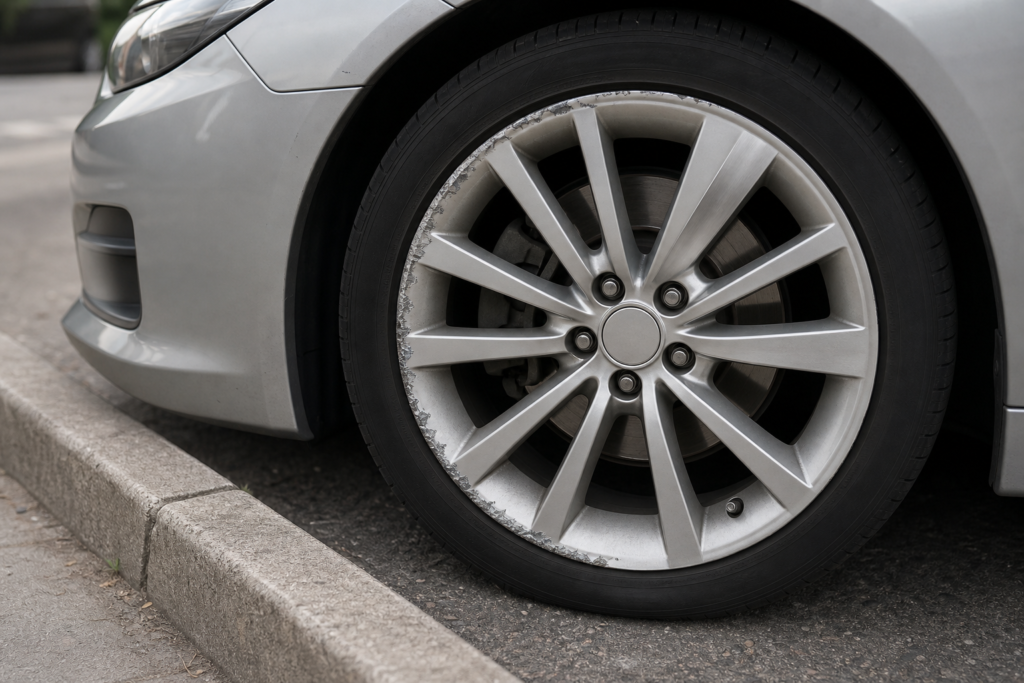
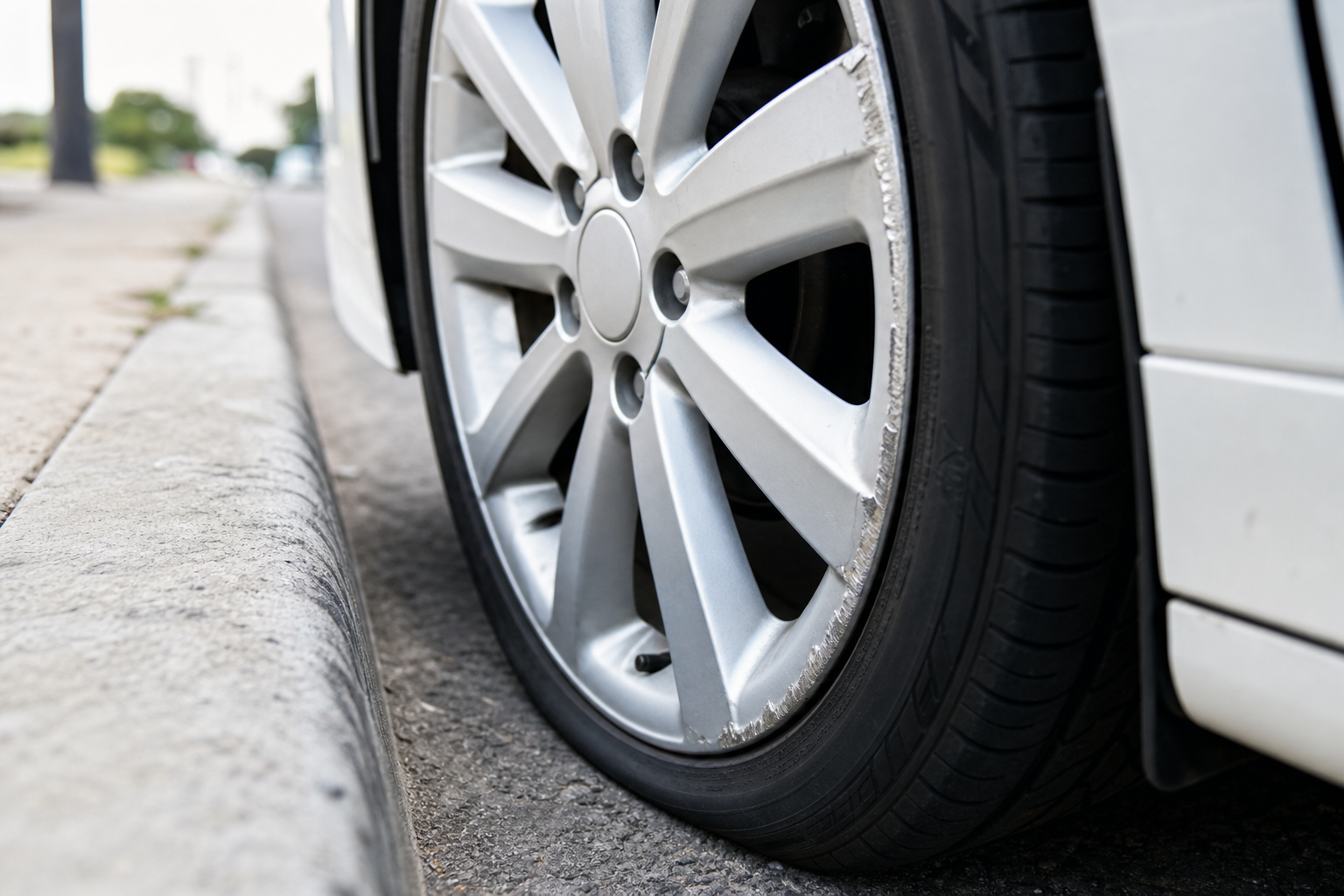
What most people see is a cosmetic blemish, a rough patch on the wheel lip, some missing finish, maybe exposed bare metal. What’s actually happened beneath the surface matters more. The clearcoat that protects the wheel’s finish has been breached. On alloy wheels, that exposed aluminum is now open to moisture, road salt, and brake dust. Left alone, oxidation starts quietly. Over weeks and months, corrosion creeps under the surrounding finish, causing peeling and flaking well beyond the original scrape. A small cosmetic mark becomes a spreading problem.
Not all curb rash is equal, though, and a quick self-check saves a lot of guessing. If the damage is limited to surface scuffing on the outer lip, finish removed, metal lightly scratched, no deformation, you’re dealing with a cosmetic issue. That’s annoying but not urgent. If the wheel lip is visibly bent, if there’s a crack running from the contact point, or if the tire sidewall shows a deep cut or bulge from the same hit, you’ve moved past cosmetics. A bent or cracked wheel can cause vibrations, slow air leaks, and in rare cases, structural failure. A damaged sidewall is a tire replacement, full stop. When in doubt, run your finger along the inside of the lip and inspect the sidewall closely. The difference between “I’ll deal with it later” and “I need this looked at now” is whether the wheel’s shape or the tire’s integrity has been compromised.
Fixing Curb Rash on Rims
Once you’ve confirmed the damage is cosmetic, you have three honest paths: leave it alone, fix it yourself, or pay a professional. Each one makes sense depending on the wheel, the damage, and how much the appearance matters to you.
Doing nothing is a valid choice on a daily driver with standard factory wheels and a light scuff. If you seal the exposed area with a bit of clearcoat to slow corrosion, you can live with minor curb rash indefinitely. It won’t get dramatically worse if the protective layer is maintained.
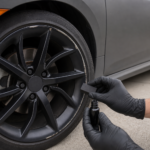
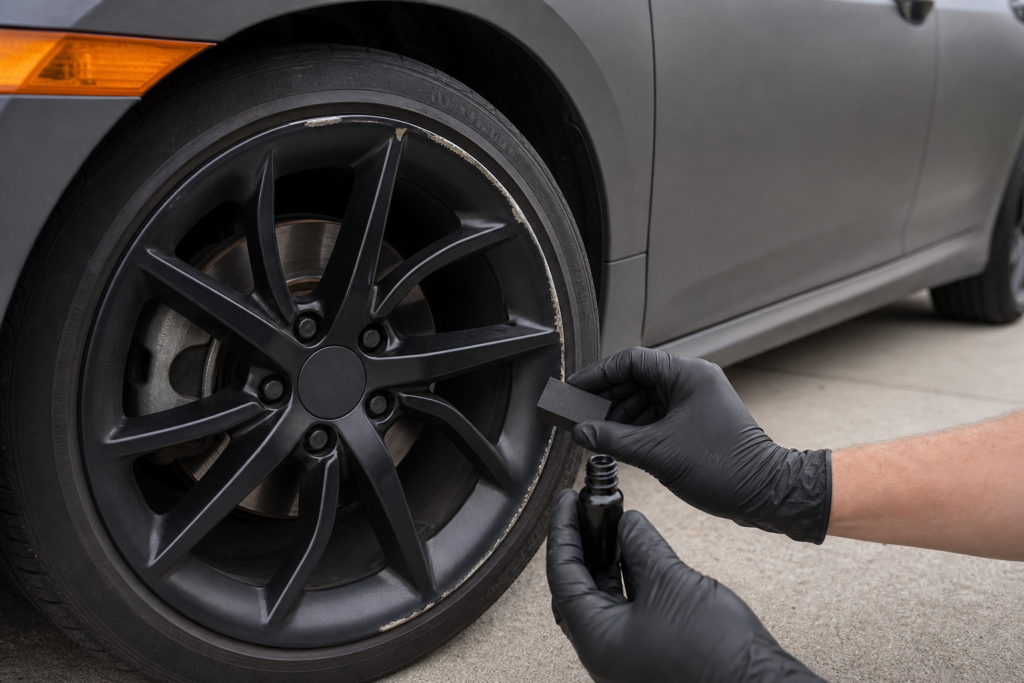
DIY curb rash repair works well for shallow scuffs on bare or painted alloy wheels. A curb rash rim repair kit, typically including sandpaper in progressive grits, filler or putty, primer, and clearcoat, can produce a surprisingly clean result on light damage. The process is straightforward: sand the damaged area smooth, fill deeper scratches, prime, paint, and seal. Curb rash touch up paint matched to your wheel color handles the finish layer. Where DIY falls apart is on deep gouges that need significant filler, on wheels with complex multi-stage finishes, and especially on chrome. If you’re working on a simple silver or gray alloy, a weekend repair can look solid from a few feet away. If you’re trying to fix curb rash on alloy wheels with a diamond-cut or machined face, the visible difference between factory and repaired is hard to hide without professional equipment.
Professional refinishing is the other end of the spectrum. A wheel refinishing shop or mobile wheel repair tech will sand, fill, repaint, and clearcoat the damaged area, or refinish the entire wheel face for a result that matches the rest of the wheel. For high-end or aftermarket wheels where appearance is the whole point, this is usually the only path that truly restores the look. Mobile techs handle most standard curb rash repair on-site. Full refinishing shops can strip and recoat an entire wheel when the damage warrants it. Owners of specialty vehicles often benefit from marque-specific expertise, for example, tesla wheel repair in orange county is a common search for Southern California EV owners who want techs familiar with Tesla’s particular wheel finishes and fitments.
Curb Rash Repair Costs
The cost of curb rash repair swings widely, and understanding the variables keeps you from overpaying or expecting too little.
Wheel type is the biggest driver. A standard painted alloy costs less to refinish than a forged monoblock or a multi-piece wheel with a polished lip. Finish complexity matters just as much, single-stage silver paint is simpler than a two-tone machined face or a satin black powder coat. Severity plays the obvious role: a quarter-sized scuff on the lip is a quicker job than a gouge running several inches along the barrel.
Where you get the work done also shifts the price. A mobile wheel repair tech typically charges less per wheel than a full refinishing shop because overhead is lower and turnaround is faster. Dealer service departments tend to be the most expensive option. They often subcontract to the same independent specialists and add margin. If you search for something like “curb rash rim repair near me,” you’ll usually find a mix of mobile techs and dedicated wheel shops. Getting two or three quotes is worth the effort. Ask whether the price covers full-face refinishing or spot repair, and whether clearcoat and curing are included. A spot repair looks great initially but can show its edges over time compared to refinishing the entire face.
For DIY, a basic rim repair kit runs considerably less than any professional service, but the trade-off is your time, skill level, and the finish quality ceiling.
Alloy, Black, and Chrome Challenges
The same curb contact produces very different repair challenges depending on your wheel’s finish.
On bare or silver-painted alloy wheels, curb rash repair is the most forgiving. The color is relatively easy to match, filler blends well, and clearcoat seals the job. Most DIY kits are designed with this finish in mind, and most mobile techs handle it routinely. If you want to fix curb rash on alloy wheels yourself, this is where your odds of a good result are highest.
Curb rash on black rims, whether painted or powder-coated, introduces a visibility problem. Black finishes show imperfections more readily than silver because any exposed alloy underneath creates stark contrast. Light scuffs can sometimes be addressed with curb rash touch up paint in a matching satin or gloss black, but the sheen has to match the original or the repair stands out under direct light. For powder-coated black wheels, spot repair is trickier because powder coat is applied and cured as a complete layer. A localized paint touch-up over powder coat can work cosmetically, but it won’t have the same durability as the surrounding finish.
Curb rash on chrome rims is the hardest scenario. Chrome plating is a multi-layer electrochemical process, copper, nickel, and chromium deposited onto the wheel surface. You can’t brush on chrome from a can. When curb rash cuts through that plating, DIY curb rash repair is effectively off the table for anything beyond very minor scuffs masked with a chrome-look pen, which rarely fools anyone up close. Professional rechroming, stripping and replating the entire wheel, is the real fix, and it’s the most expensive refinishing path by a wide margin. Some owners of chromed wheels opt to switch the damaged wheel to a painted or powder-coated finish rather than rechrome. It’s a practical call that depends on budget and how much the original chrome matters.
Preventing Curb Rash
Prevention is cheaper than any repair, and most curb rash comes down to habits, not bad luck.
The most common cause is cutting turns too tight into parking spaces or around corners with raised curbs. Adjusting your mirrors to actually show the wheel-to-curb gap while parking makes a measurable difference, especially on the passenger side, where depth perception from the driver’s seat is weakest. When parallel parking, approach slowly and use your side mirror to monitor clearance rather than guessing. Leaving a few extra inches between your wheel and the curb costs nothing. The vanity of a perfect tuck against the curb is how most rash happens in the first place.
Drive-thrus and tight commercial lots deserve extra caution. The curbs in these areas are often higher than standard street curbs and painted in ways that make them harder to see. Wider wheels and lower-profile tires, common on performance cars, reduce the margin for error because there’s less rubber sidewall absorbing the gap between rim and concrete.
Rim protectors and adhesive wheel bands exist as physical barriers. They attach to the outer lip of the wheel and take the hit instead of the finish. Opinions on them vary. They add a visible ring to the wheel’s edge that some owners find acceptable and others consider an aesthetic compromise. On a daily-driven car with expensive wheels, they’re worth considering. On a show car, most owners would rather adjust their driving than alter the wheel’s appearance.
The simplest prevention advice is also the least glamorous: slow down in tight spaces and pay attention to where the curb is. Most curb rash happens at low speed in mundane situations, not on a spirited drive.
Pride vs. Practicality
Curb rash is annoying out of proportion to its size. A scrape that fits under your thumb can change the way an entire wheel, and by extension the entire car, looks. That frustration is legitimate, especially if you drive a high-performance car that was chosen, at least in part, because of how it looks rolling down the street. You bought the car to be noticed for the right reasons, and a chewed-up wheel lip undercuts that every time someone glances down.
But not every scrape demands the same response. A light scuff on a factory alloy daily driver might warrant nothing more than a quick clearcoat seal and moving on with your life. A deep gouge on a forged aftermarket wheel calls for professional refinishing. Chrome needs professional help almost by definition. Black finishes sit somewhere in between, depending on how visible the damage is and how closely you, or anyone else, is going to look.
The practical framework is simple. Assess whether the damage is cosmetic or structural. If structural, get the wheel inspected immediately. If cosmetic, decide how much the appearance matters given the car, the wheel, and your tolerance. Then choose the repair path, nothing, DIY, or pro, that matches the finish type and the damage depth. Skip the guilt, skip the panic, and handle it like what it is: a fixable problem with a clear set of options.