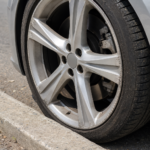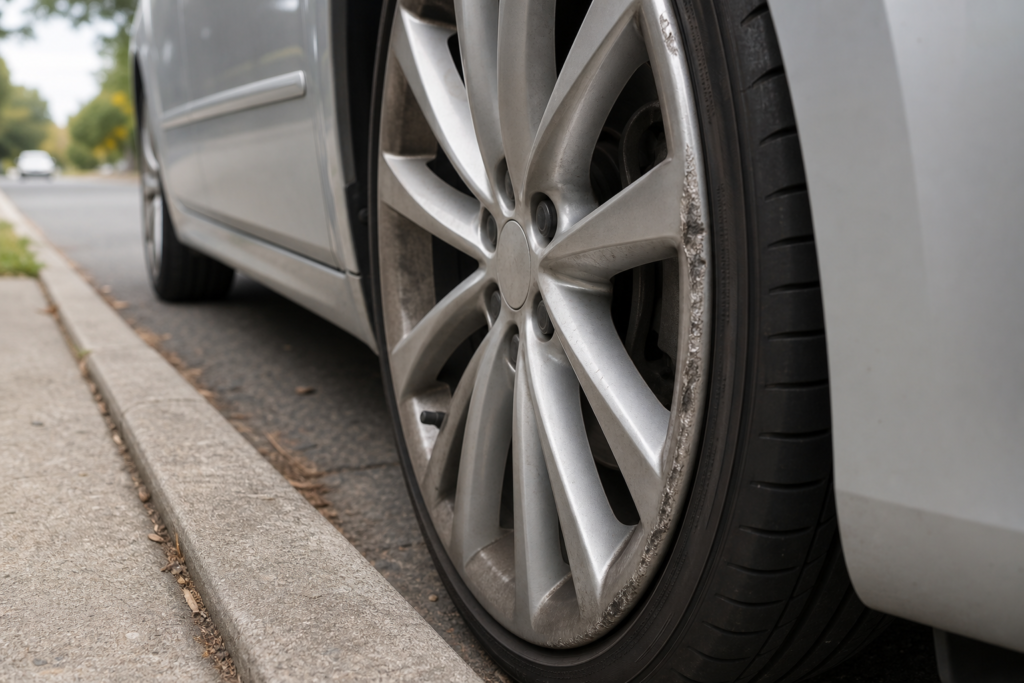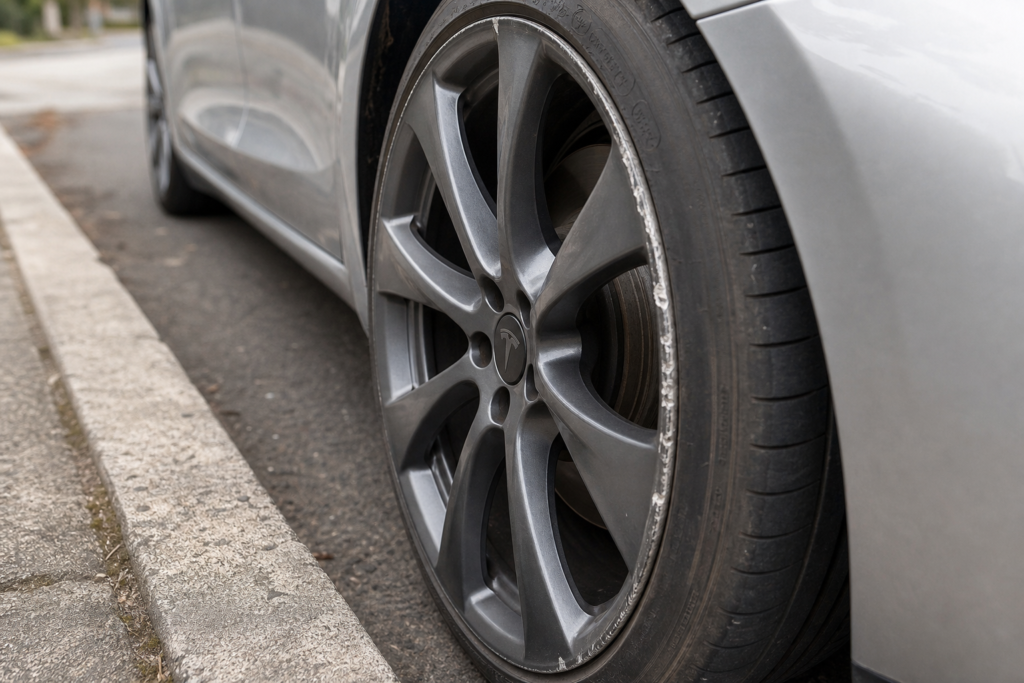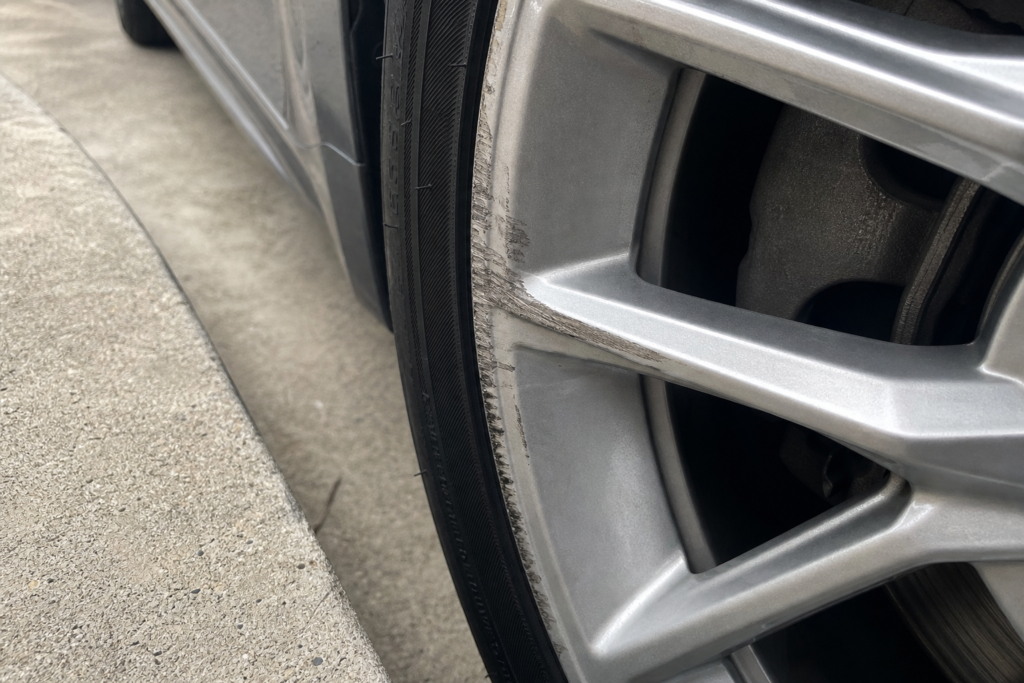
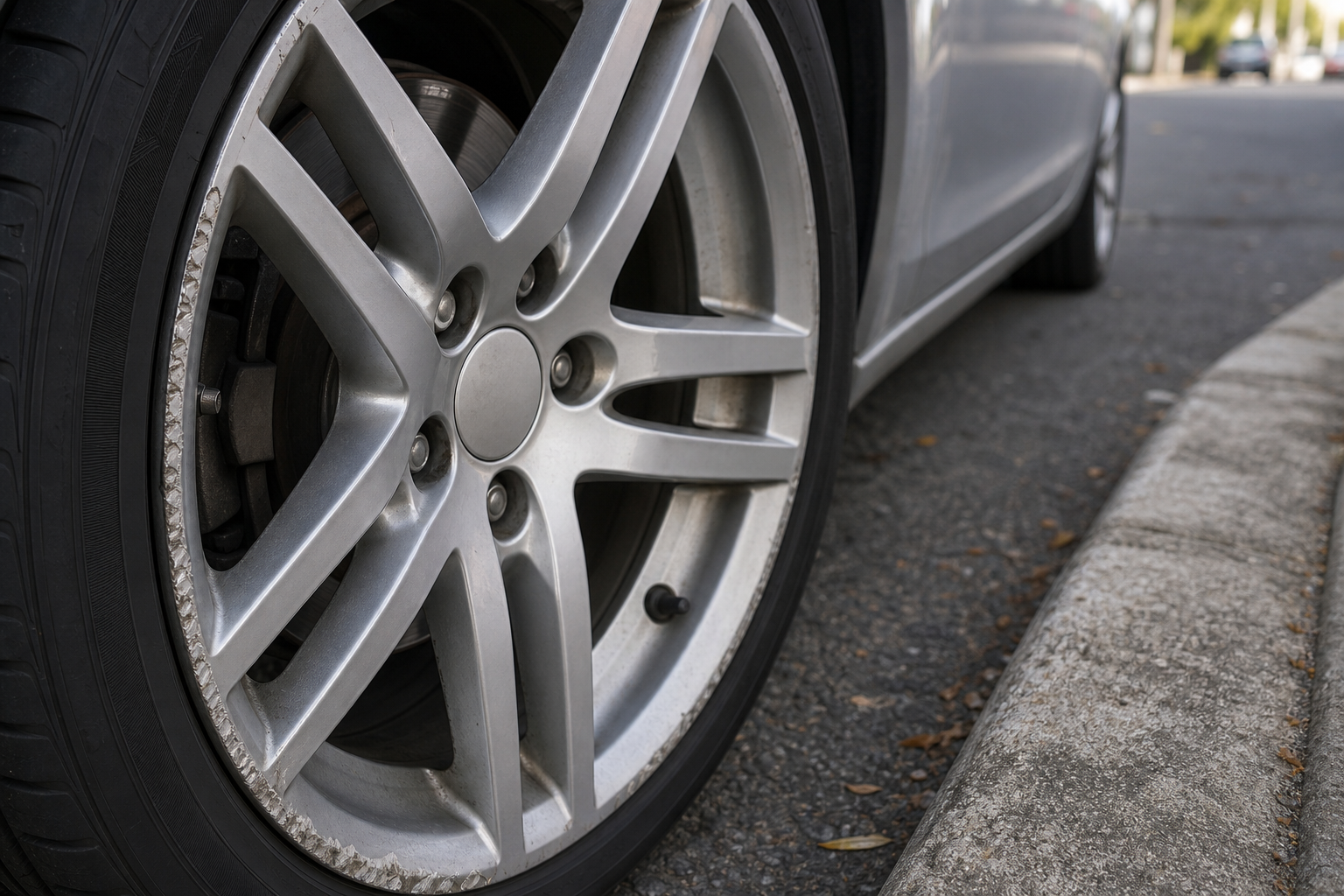
You’re easing into a parallel spot or inching through a drive-thru lane when you hear it, a quick, gritty grind of alloy against concrete. You step out, crouch by the wheel, and there it is: a rough, scuffed band running along the outer lip of your rim. It looks like a rash on skin, except the skin here is polished alloy, and the rash is a trail of tiny scratches and raw metal that stands out sharply against the rest of the wheel’s finish.
Curb Rash Defined
The curb rash meaning is straightforward: it’s surface damage on a wheel rim caused by scraping against a curb. The name sticks because the visual resemblance to a skin rash is uncanny, a patch of rough, abraded texture surrounded by otherwise smooth, clean surface. Instead of irritated skin, you’re looking at scratched, scuffed, or chipped wheel material where the rim’s edge made contact with concrete or stone.
On a painted alloy wheel, the most common type on the road today, curb rash strips away the paint and sometimes the clear coat, exposing bare aluminum underneath. The exposed metal is lighter and rougher than the surrounding finish, making even a small scrape easy to spot. On a machined-face wheel, where the factory finish is a precision-cut bare aluminum look topped with clear coat, the damage shows up as a dull, textured line disrupting the polished grain. Curb rash on chrome wheels tends to look slightly different: the chrome plating chips or flakes at the point of contact, sometimes peeling back like a thin skin, revealing the base metal beneath.
What curb rash is not: it isn’t a gouge deep enough to remove significant material from the rim structure, and it isn’t a bend or crack in the wheel itself. Drivers sometimes use “curb rash” to describe all curb damage, but a bent lip or a visible crack is a structural issue, a different category entirely. Knowing the difference matters because the response to each is very different.
Common Real-World Causes
Most curb rash doesn’t come from dramatic moments. It comes from the mundane geometry of everyday driving. Parallel parking is the classic culprit: you cut the wheel, reverse toward the curb, and misjudge the gap by an inch. Drive-thru lanes with raised concrete islands are another frequent offender, your attention is on the menu board or the payment window, not the six inches between your front wheel and the curb. Tight turns into parking garages, narrow residential driveways with raised edges, and angled parking spots with concrete wheel stops round out the list.
Certain setups make curb rash more likely. Larger-diameter wheels sit closer to the edge of the tire, reducing the rubber buffer between rim and curb. Low-profile tires compound the problem because their short sidewalls offer less cushion and flex. A wheel-and-tire combination with minimal sidewall height and a wide rim lip is essentially asking for contact in tight spaces. This is why curb rash is disproportionately common on sport-oriented trims and aftermarket wheel packages, the aesthetic that makes those wheels look good also makes them more vulnerable.
Beyond Cosmetic Damage
For many drivers, curb rash is purely cosmetic, an annoyance that stings when you notice it on a clean car but doesn’t affect how the wheel performs. A light scuff on a painted alloy wheel, caught early, often stays exactly what it is: a surface blemish.
The trouble starts when the damage breaks through the clear coat or paint and leaves bare aluminum exposed to the elements. Curb rash on alloy wheels is more than a visual issue in climates where road salt, moisture, and freeze-thaw cycles are part of winter driving. Exposed aluminum oxidizes. Over weeks and months, that oxidation can progress into pitting, small craters in the metal surface that spread outward from the original scrape. Once pitting sets in, it’s harder and more expensive to repair than the original scuff.
Clear-coat failure is the other escalation path. A scrape that only nicked the clear coat can allow moisture underneath the remaining finish, causing it to bubble and peel in an expanding area well beyond the original damage.
The tire-safety question comes up often: does curb rash affect tire safety? In most cases, no. A surface scuff on the rim lip doesn’t compromise the tire’s bead seal or the wheel’s structural integrity. The red flags are specific: if the rim lip is bent or deformed, if there’s a crack visible at or near the scrape, or if you notice gradual air loss after the incident. Any of those signals points to a functional problem, not a cosmetic one.
Curb Rash Repair Options
Knowing how to fix curb rash on rims starts with an honest assessment of severity, because the right response ranges from doing nothing to a full professional refinish.
Minor scuffs, shallow scratches that haven’t exposed much bare metal, are easy to live with. They’re cosmetic, and on a daily driver that sees parking lots and highway miles, accumulating a few over the years is normal. Some drivers accept them as part of ownership.
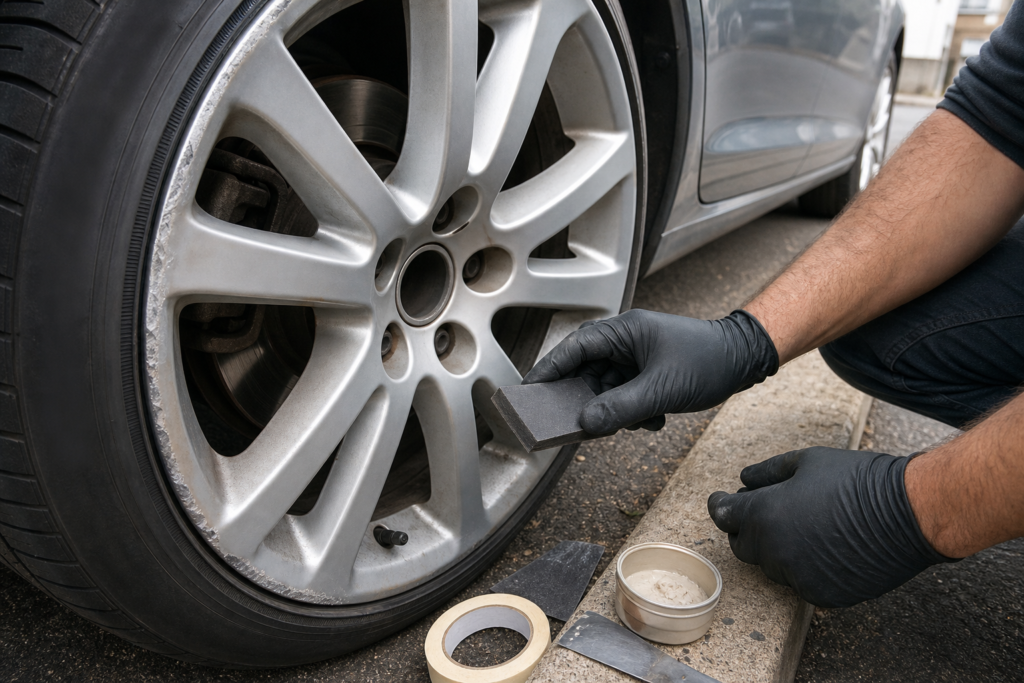
Mid-range scrapes that have broken through paint and clear coat but haven’t gouged the metal deeply can often be addressed with curb rash touch-up paint matched to the wheel’s factory color. This isn’t a perfect restoration, you’ll likely see the repair up close, but it seals the exposed metal against moisture and slows any corrosion progression. It’s a practical middle ground between ignoring the damage and spending significantly more on professional work.
For deeper or more extensive damage, professional wheel refinishing is the appropriate path. This typically involves sanding, filling, repainting, and re-clearing the wheel, often while it’s still mounted on the car. Curb rash repair cost varies widely based on the wheel finish, the severity, and your local market. Painted alloy wheels generally sit at the lower end; machined-face and chrome wheels cost more because the finish is harder to replicate.
Effective Prevention Habits
Curb rash prevention isn’t about becoming a paranoid parker. It’s about building a few spatial habits that become automatic over time.
The most effective one is simple: before you commit to a turn near a curb, glance at your passenger-side mirror. Most curb rash happens on the right-side wheels because drivers have less visibility and spatial sense on that side. Adjusting your right mirror slightly downward while parking, a trick often recommended in parallel-parking guides, gives you a direct sightline to the gap between wheel and curb.
Approach curbs at shallow angles rather than sharp ones. A wheel that’s turning hard while close to a curb is far more likely to make contact than one tracking straight or nearly so. When parallel parking, straighten the wheel before pulling forward to close the gap to the curb; don’t try to steer into the space at the last moment.
On the equipment side, rim protectors, raised rubber or plastic rings that sit on the tire’s sidewall just above the rim lip, can absorb a light brush with a curb before the alloy makes contact. They aren’t foolproof, and some drivers find them visually distracting, but they do reduce the frequency of minor scuffs. Choosing a tire with a slightly taller sidewall, where your wheel diameter allows it, adds a natural buffer as well.
None of these habits eliminate the risk entirely. Curbs are everywhere, and tight spaces are part of daily driving. The goal is fewer incidents, not zero.
Quick Decision Checklist
The next time you crouch beside your wheel and see that rough, rash like patch on the rim lip, run through a short mental sequence. First, check the rim for any bend, crack, or deformation. If you find one, prioritize an inspection before driving further. Second, check for air loss over the next few days; a slow leak after curb contact suggests the bead seal may be compromised.
If the wheel is structurally sound, you’re in cosmetic territory. Look at the depth: is bare metal exposed, or is the damage limited to the clear coat? If bare alloy is showing and you live in a climate with road salt and wet winters, sealing it, even with a simple touch-up, prevents the scrape from becoming a corrosion problem down the line. If the scuff is shallow and the wheel’s finish is otherwise intact, it’s reasonable to leave it alone.
For damage that covers a large area, runs deep, or sits on a high-end wheel finish you want to preserve, professional refinishing is the right call. Get a quote from a wheel specialist, compare it against what the wheel matters to you, and decide accordingly.
Curb rash is common, it’s usually minor, and it almost never affects safety. But it does reward attention. Catching it early and making a deliberate choice about how to respond keeps a small scrape from turning into a bigger, more expensive headache.