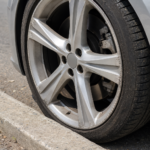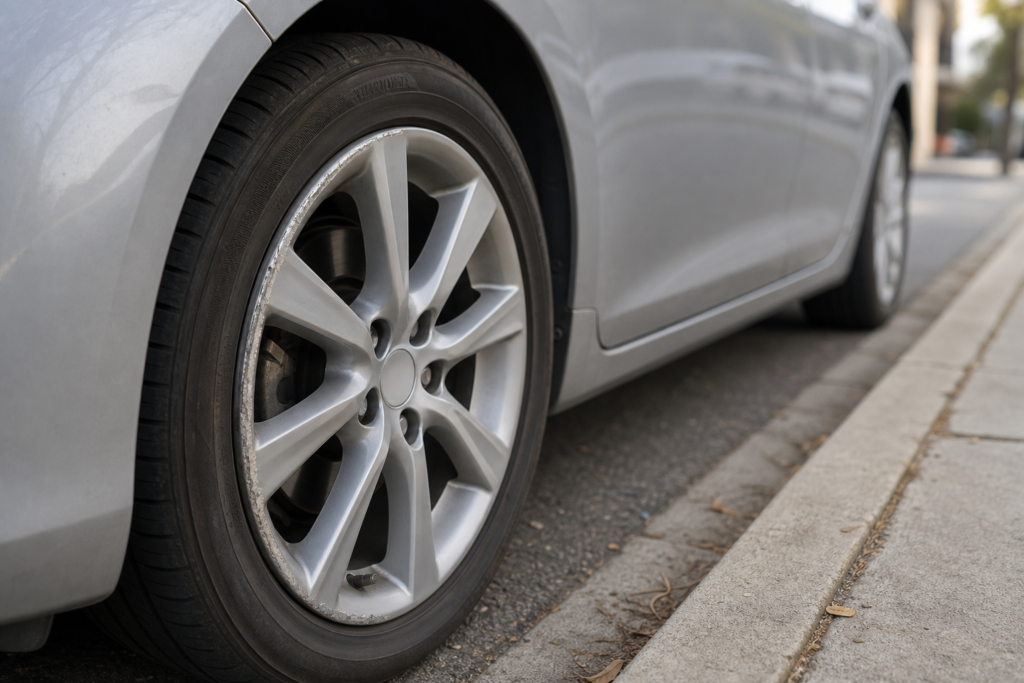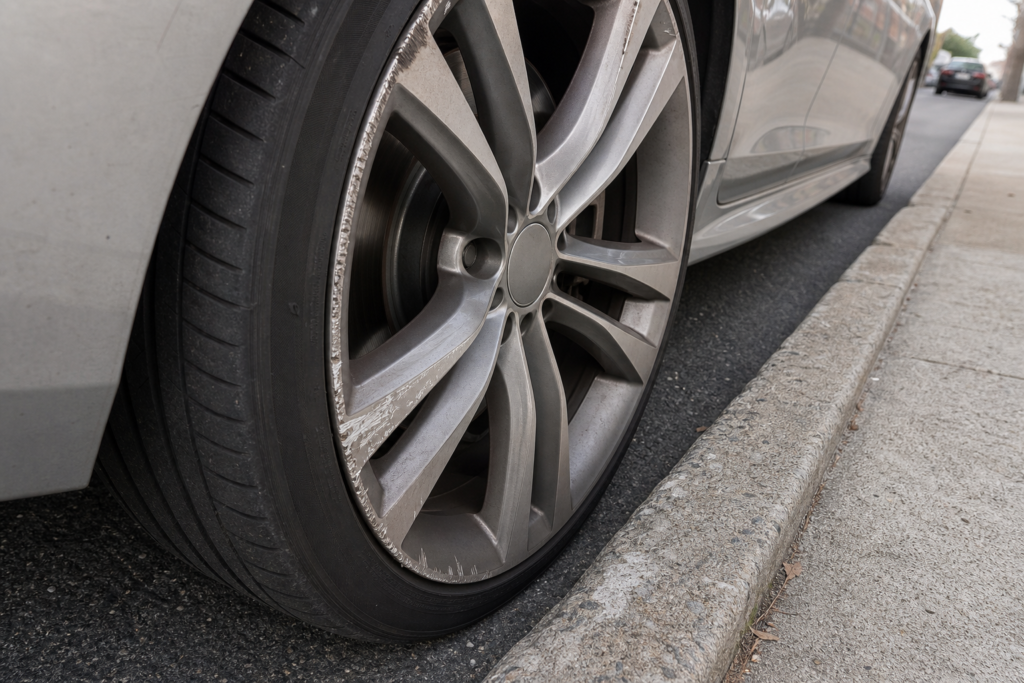
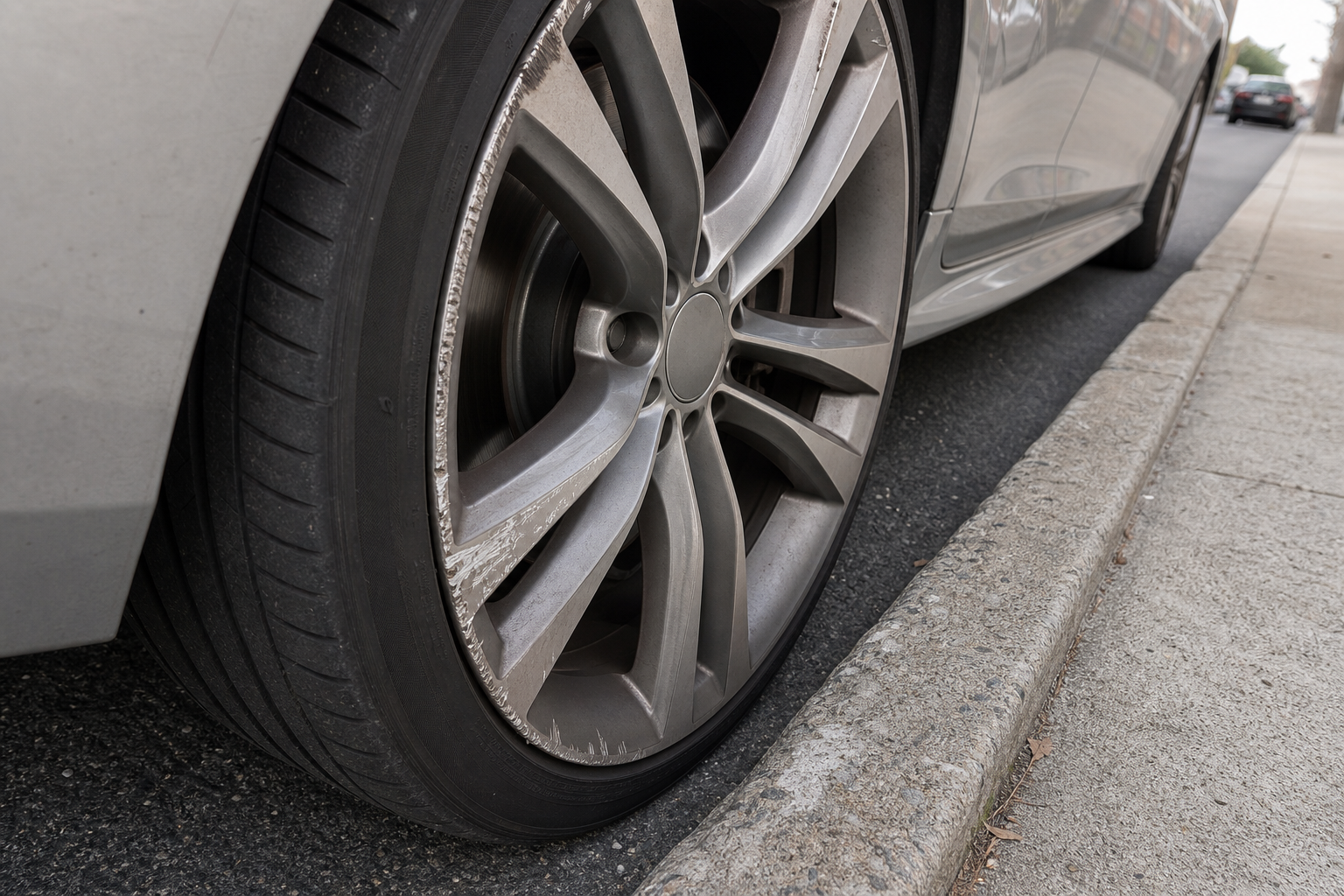
You’re easing into a parallel parking spot on a quiet street, turning the wheel at walking speed, when you hear it, a low, gritty scrape that travels up through the steering column. By the time your brain registers the sound, the damage is already done. That’s curb rash: the rim’s outer lip dragged across concrete under the full lateral load of a slow turn, grinding away finish and alloy in one sustained, abrasive rub. It isn’t a collision. It’s a prolonged sanding, and it happens far more easily than most drivers expect.
Curb Rash Core Mechanics
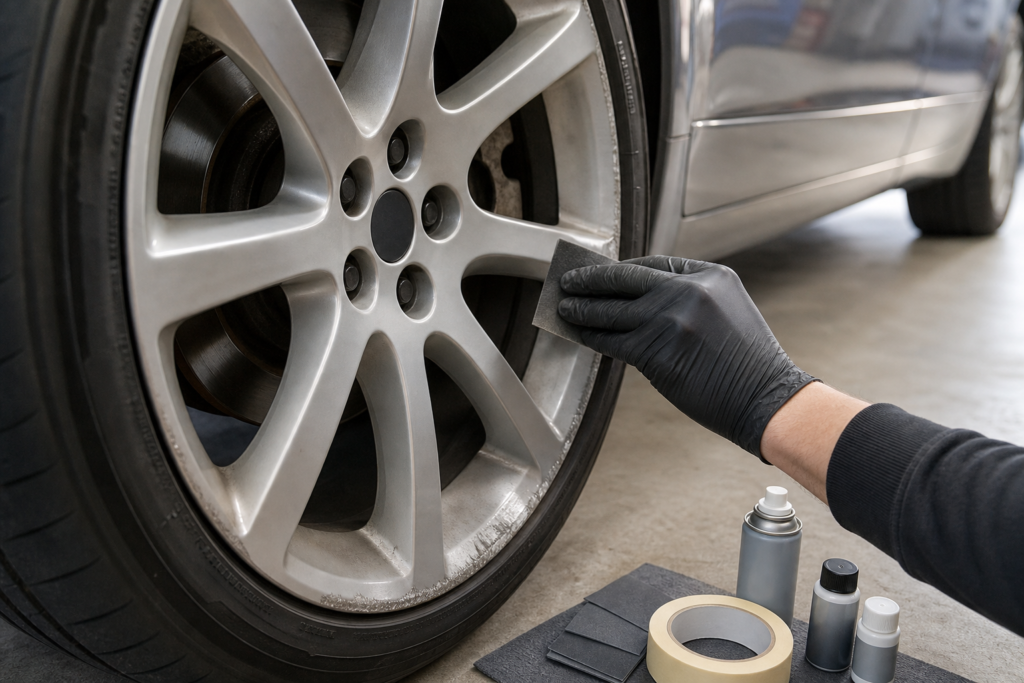
Curb rash is the cosmetic and structural surface damage that results when a wheel’s rim lip scrapes against a hard, abrasive edge, a concrete curb, a sidewalk lip, a parking block. It’s distinct from pothole impact damage, which dents or cracks the wheel from below. Curb rash works sideways, across the face of the rim, stripping material as the wheel rotates against a stationary surface.
The mechanics are straightforward. During a slow turn or a lateral slide toward a curb, the vehicle’s weight transfers toward the outside wheels. Suspension compresses slightly on that side, and the tire sidewall flexes inward under the lateral load. If the rim lip is close enough to the curb, contact begins. Once the alloy touches concrete, the wheel is still turning, even at parking-lot speeds, that rotation drags the rim edge across a rough, abrasive surface with thousands of pounds of vehicle weight pressing it into the contact zone.
Concrete curbs are essentially coarse sandpaper at the scale that matters. The contact patch between a rim lip and a curb edge is narrow, sometimes just a few millimeters wide, which concentrates all that force into a tiny strip. The result is a continuous grind that peels away clear coat, paint, or machined finish and gouges the softer alloy underneath. Even a single slow pass can leave a visible scar several inches long. What causes curb rash on wheels is not speed or drama. It’s sustained, weighted contact between a soft metal and a hard mineral surface.
Modern Wheels’ Greater Vulnerability
Two trends in wheel and tire design have made curb rash more common than it was a generation ago.
The first is low-profile tires. A tire with a tall sidewall acts as a rubber buffer between the rim lip and anything it might touch. When the sidewall is short and stiff, as it is on most sport-oriented and appearance-focused packages, there’s less rubber to absorb lateral flex before the rim itself contacts the curb. Curb rash and low-profile tires go hand in hand because the geometry simply leaves the rim more exposed.
The second is wheel diameter. Larger alloy wheels sit closer to curb height, and they present a wider, more prominent lip. That bigger target is harder to keep clear during tight maneuvers.
Then there’s the finish itself. Curb rash on alloy wheels is so visible because the finishes are thin. A machined-face wheel has a microscopically precise surface that any abrasion destroys instantly. Painted or powder-coated wheels show raw silver alloy the moment the coating is breached. Chrome-clad wheels peel and flake once the chrome layer is scratched through. Beyond appearance, a broken finish exposes bare aluminum to moisture and road salt. Over weeks and months, that leads to oxidation and pitting, cosmetic damage that started as a light scrape can quietly worsen into corrosion if the exposed area isn’t sealed.
Common Real-World Scenarios
Curb rash from parallel parking is probably the single most common variety. The maneuver requires turning the front wheels sharply while the car moves slowly backward, then forward, repeatedly swinging the rim lip toward the curb at close range. Weight shifts side to side with each direction change, and the driver is often watching mirrors or a backup camera rather than the gap between tire and curb. The rear wheels, which track inside the front wheels’ arc, are the most frequent victims. Many drivers don’t feel the scrape on the rears at all until they walk around the car later.
Tight parking lots and narrow drive lanes create a similar problem at higher frequency. Every sharp turn around a concrete island or past a raised median is a chance for the front wheels to clip the edge. Parking structures are particularly unforgiving, the curbs are often painted the same gray as the concrete floor, low lighting hides depth cues, and the turning radii are tight by design. Curb rash in a tight parking lot usually hits the front wheels, because drivers cut corners to fit through narrow lanes.
Turning too close to the curb at intersections and driveway aprons catches drivers off guard for a different reason: the curb shape changes. A rolled curb transitions abruptly to a sharp-edged one, or a driveway cut has a raised lip on one side. The driver follows a familiar line and the wheel catches an edge that wasn’t expected. Parking blocks are another overlooked culprit, pulling forward into a space and rolling the front tire up against a concrete stop often pushes the rim lip right into the block’s corner.
Avoiding Curb Rash
Prevention doesn’t require paranoia. It requires spatial awareness of one gap: the distance between your rim lip and the nearest hard edge.
Mirrors are the most underused tool. Before and during parallel parking, the passenger-side mirror, angled slightly downward, gives a direct view of the rear wheel’s proximity to the curb. Many newer vehicles tilt the mirror automatically when reverse is selected. Use that view.
Approach angle matters more than speed. When pulling alongside a curb, a shallow angle keeps the tire sidewall, not the rim lip, as the closest point. A steep angle swings the rim edge toward the curb first. The same logic applies when pulling into a parking space with a concrete block: stop short and check the gap rather than rolling until contact.
Wheel offset and tire sizing play a role too. Wheels with aggressive positive offset sit further inboard, giving the tire a better chance of touching first. If you’re choosing an aftermarket wheel-and-tire combination, factoring in curb clearance alongside aesthetics is worth the conversation with your tire shop. Rim protector strips, adhesive or snap-on plastic guards that sit on the rim lip, offer a sacrificial layer. They won’t prevent all damage, but they absorb the first pass of a light scrape. How to avoid curb rash, ultimately, comes down to recognizing the moments when you’re most likely to close that gap, slow turns, tight spaces, parallel parks, and giving yourself an extra inch of margin in those moments.
Assessing Severity and Next Steps
Not all curb rash demands immediate action, but it does deserve a look.
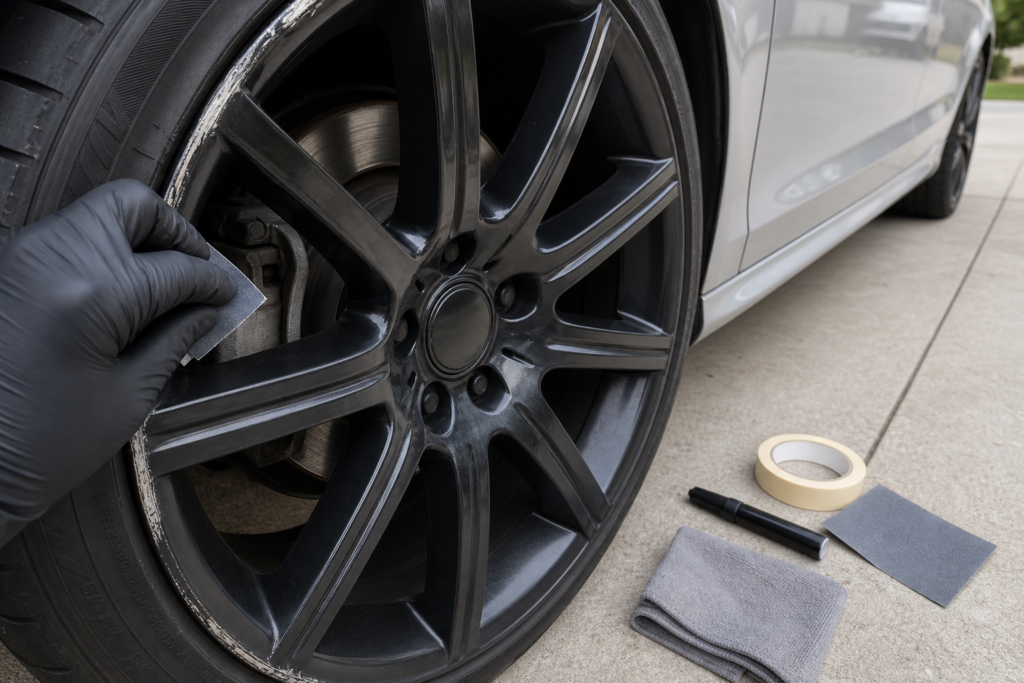
Light scuffing, where the clear coat or paint is scratched but the alloy underneath isn’t deeply gouged, is cosmetic. It won’t affect wheel integrity or tire sealing. It will bother you every time you wash the car, but it won’t get worse on its own as long as the underlying metal isn’t exposed.
Deeper gouges that reveal raw, shiny alloy are a different category. That exposed metal will oxidize over time, especially in climates with road salt or coastal moisture. If left alone for months, the corrosion can spread under the surrounding finish, causing paint to bubble and flake beyond the original scrape. Sealing the exposed area, even with a touch-up clear coat, slows that process significantly.
Curb rash that includes a flat spot, a noticeable dent in the rim lip, or any cracking is structural. A deformed rim lip can break the tire’s bead seal and cause slow air loss. Cracks can propagate under repeated load. Either condition warrants a professional inspection. Wheel repair specialists, including services like mobile wheel repair in orange county that come to your location, can often restore cosmetic rash and minor lip deformation, but a cracked wheel is typically a replacement. The honest assessment: most curb rash falls in the light-to-moderate cosmetic range. It’s worth addressing for resale value and corrosion prevention, but it’s not an emergency.
Four Conditions Behind Every Scrape
Every case of curb rash traces back to the same short chain. A hard, abrasive edge, concrete curb, parking block, sidewalk lip. A lateral load pushing the wheel toward that edge, driven by turning angle and weight transfer. An exposed rim lip with little or no rubber sidewall to absorb contact first. And sustained grinding, because even at low speed, a rotating wheel drags across a stationary surface for inches or feet before the driver reacts.
Break any single link and the rash doesn’t happen. Add sidewall cushion, and the tire touches before the rim. Widen the gap by an inch, and the load never reaches the curb. Straighten the wheel a moment sooner, and the contact ends before it scars. Curb rash damage explained in full always comes back to these four conditions occurring together, and now that you can see them, you can interrupt the sequence before the scrape starts.