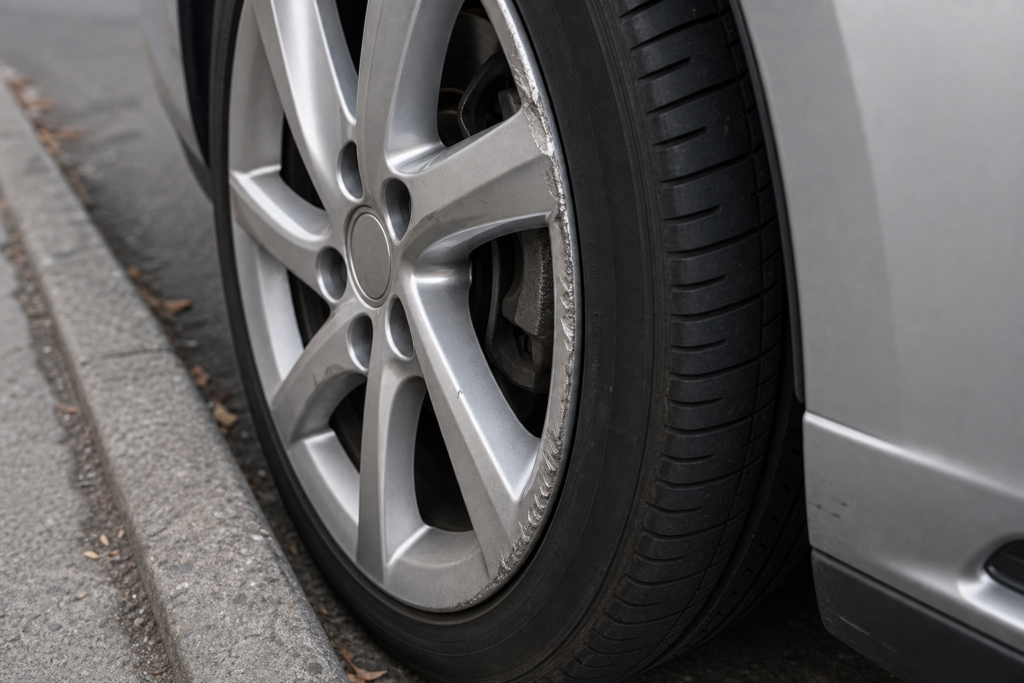
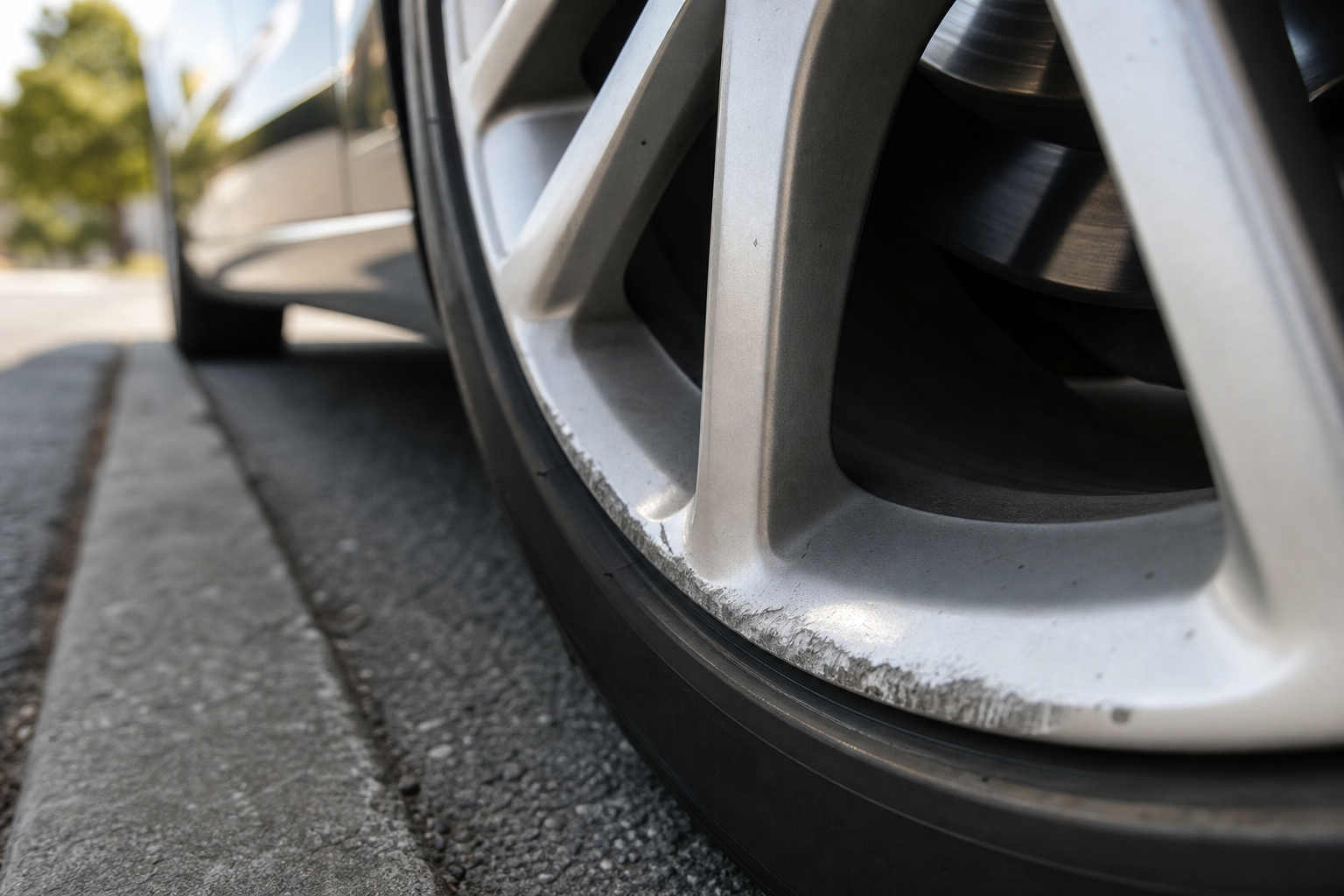
You clip a concrete curb pulling into a tight parking garage, and before you even park you already know. That sickening scrape left a fresh gash across your alloy wheel’s lip. Now comes the real question: is this curb rash repair something you can ignore, something you should fix yourself, or something that needs a professional, and if so, should you drive to a shop or have someone come to you?
The answer depends on more than aesthetics. It depends on how deep the damage goes, what kind of finish your wheel has, and what you plan to do with the car.
Triaging Curb Rash Severity
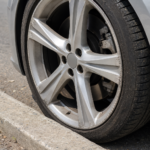
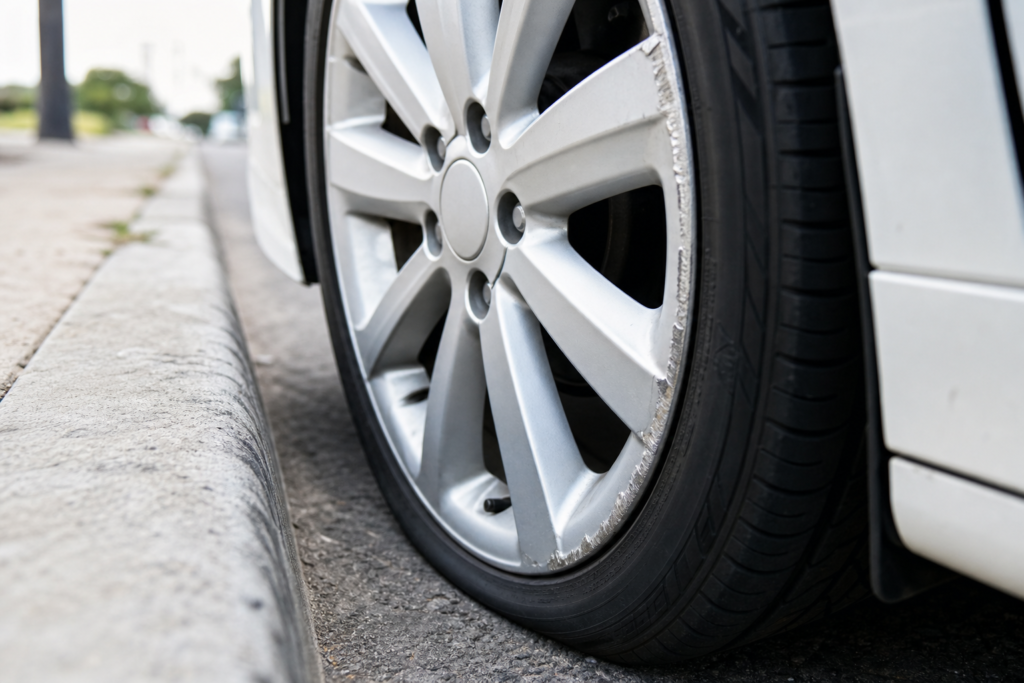
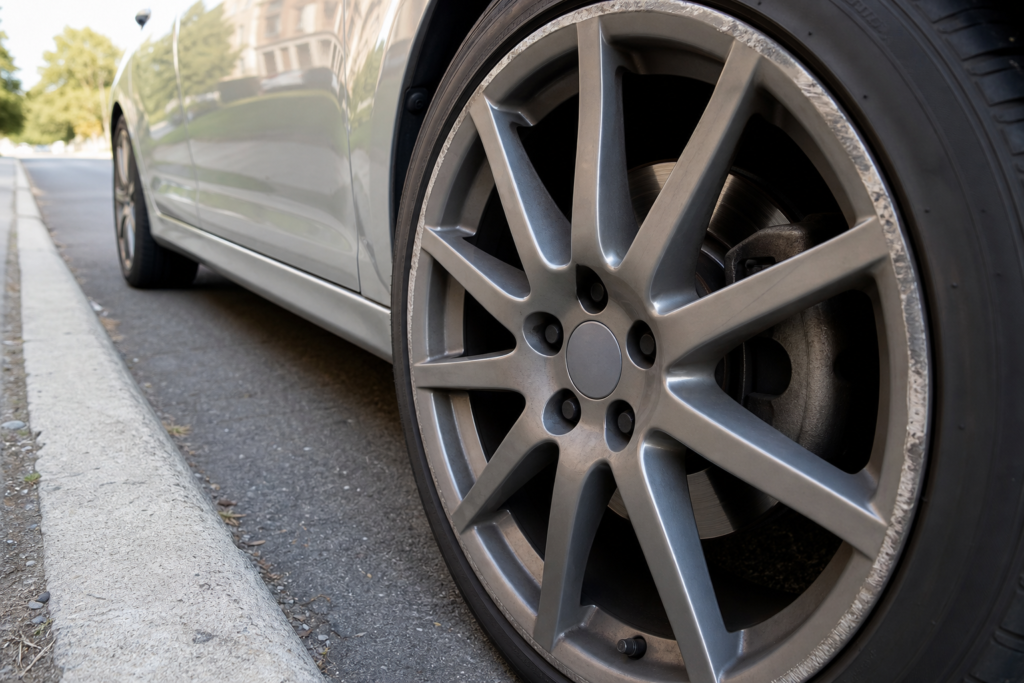
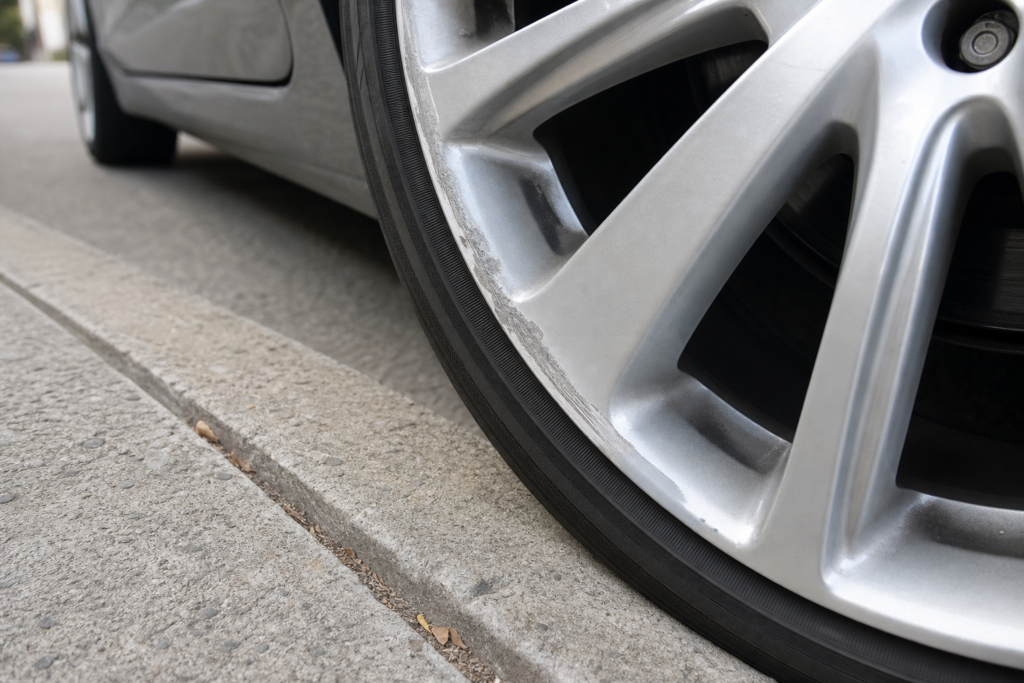
Start with a 30-second visual check. Run your fingertip across the damaged area. A light scuff, where the clear coat is scratched and maybe a thin layer of paint is gone but the surface is still relatively smooth, is cosmetic. It looks bad, but it’s not compromising anything structural.
A gouge is different. If you can catch your fingernail in a groove, if bare aluminum is exposed, or if material is clearly missing from the wheel’s lip, you’ve crossed into territory that can cause problems over time. Exposed aluminum corrodes. A deep enough gouge on the bead seat, the area where the tire seals against the rim, can eventually cause a slow air leak. And if the impact was hard enough to bend or crack the rim, you may have a wheel that’s no longer round, which means vibration, balance issues, and potential tire damage.
Check the tire sidewall too. Curb rash on tires, sidewall scuffs, cuts, or bulges, can indicate impact damage that weakens the tire’s structure. A bulge means internal damage. That tire needs replacement, not repair.
For anyone leasing, resale and lease-return implications matter. Lease inspectors typically flag wheel damage that’s visible from a standing distance, especially gouges or missing finish larger than a quarter. Repairing before turn-in almost always costs less than the penalty charge.
Your Repair Options
The spectrum of ways to fix curb rash runs from doing nothing to a full professional refinish, and the right choice isn’t always the most expensive one. Minor scuffs on a standard painted wheel, where the damage is shallow and the wheel isn’t a focal point of the car’s appearance, can be left alone. A touch of clear coat or even careful polishing may be enough to keep corrosion from starting.
For damage beyond that, you’re choosing between three paths: a DIY repair kit, a mobile technician who comes to your location, or a wheel shop where the rim is removed, repaired, and refinished in a controlled environment.
Curb rash repair cost varies significantly depending on the wheel’s finish, the severity of the damage, and the service type. A single painted alloy wheel with moderate scuffing might run a fraction of what a machined-face or custom-finish wheel costs to refinish. Shops that remove the wheel and work on it off-car tend to charge more than mobile services, but they also have access to equipment that mobile setups can’t carry. Quotes range widely for all these reasons, finish type, damage depth, whether the tire needs to come off the rim, and how much paint and clear coat work is required.
One firm threshold: if the wheel is cracked, bent, or the damage is near the bead seat with signs of air loss, skip DIY entirely. That’s professional territory, and sometimes it’s replacement territory.
Mobile Repair vs Shop Refinishing
A mobile curb rash repair service sends a technician in an equipped van to your driveway, office parking lot, or wherever the car sits. They sand, fill, prime, color-match, and clear-coat the damaged area on-site, typically finishing in a couple of hours without removing the wheel from the car. Convenience is the obvious advantage, no drop-off, no loaner, no waiting days.
A shop refinishing workflow is more involved. The wheel comes off the car, the tire usually comes off the rim, and the wheel is worked on a bench or put on a lathe. This allows for more thorough prep, better access to the full face, and the option to machine-cut a wheel that has a factory-machined finish. Curing happens in a controlled environment, which generally means a harder, more durable final coat.
Where mobile work excels: standard painted wheels with moderate scuffs, situations where time or logistics matter, and cases where the damage is limited to a section of the rim lip. Where shops have the edge: machined-face wheels, severe gouges requiring significant filler, polished or chrome finishes, and any wheel that may need structural assessment or straightening.
When searching for a curb rash repair near me option, whether mobile or shop, ask to see examples of prior work on your wheel’s specific finish. Ask whether they remove the tire. Ask about their warranty on peeling or color mismatch. A confident provider will answer all three without hesitation.
Professional Repair vs DIY Kits
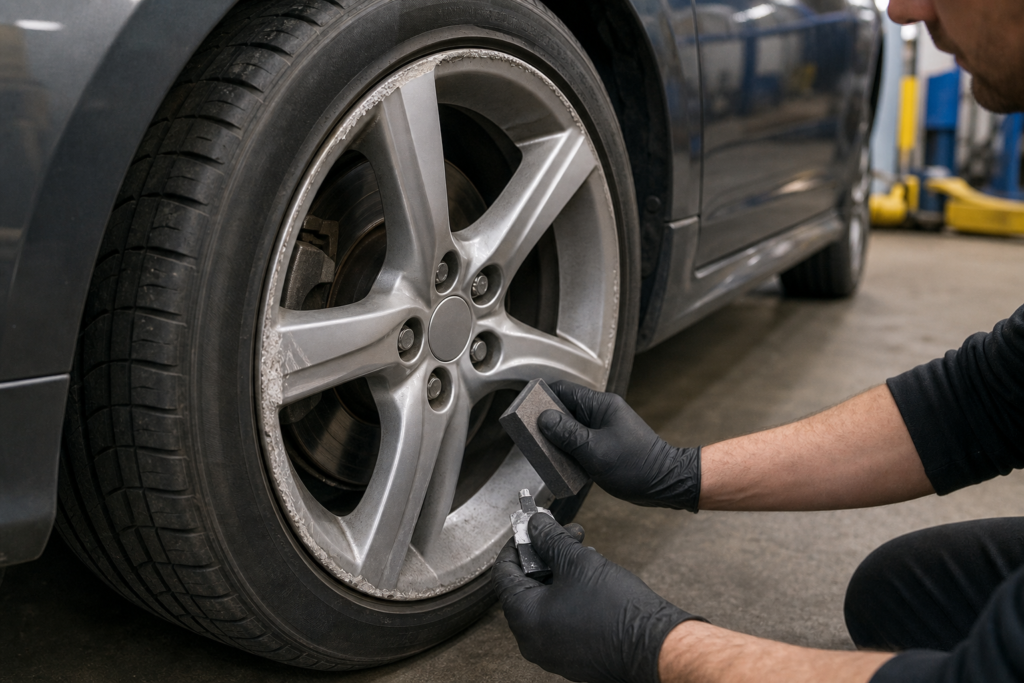
Professional repair follows a consistent sequence: sanding the damaged area to remove loose material and feather the edges, filling gouges with a metal or polyester filler, priming, applying a color-matched base coat, and finishing with clear coat. On machined-face wheels, the process may include lathe-cutting the face to restore the factory pattern before coating. The result, done well, is a wheel that looks factory, or close enough that you can’t tell from a few feet away.
A curb rash repair kit from an auto parts store typically includes sandpaper, filler putty, primer, a paint pen or small spray can, and clear coat. On a light scuff on a simple silver painted wheel, these kits can produce an acceptable result. The damage disappears at a glance, and the repair holds up if the clear coat is applied properly.
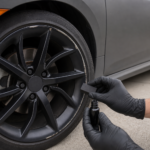
Where DIY falls short is everywhere else. Machined-face wheels have a distinctive lathe-cut pattern that no brush or spray can replicate. Color matching on metallic, two-tone, or dark finishes is extremely difficult without professional spray equipment and paint-code-specific pigments. Black rim curb rash repair is particularly unforgiving, gloss black shows every imperfection, matte black changes sheen if you use the wrong clear coat, and textured black finishes can’t be replicated by hand.
Tesla curb rash repair deserves its own mention. Many Tesla models ship with low-profile tires that offer less sidewall protection, making curb contact more likely and more damaging. Aero wheel covers can hide minor scuffs but also hide damage that worsens over time. The factory finishes on Tesla wheels vary by model and trim, and color matching requires knowing the exact finish spec, something a professional will confirm before starting work.
Judging Results and Red Flags
Curb rash repair before and after photos are everywhere, on shop websites, mobile tech Instagram pages, and forum posts. They’re useful but limited. A photo taken at the right angle, in the right light, immediately after clear coat cures, will make almost any repair look perfect.
What actually matters is how the repair looks in direct sunlight, from multiple angles, after a few weeks. A good repair has a consistent finish across the repaired and original areas. The clear coat is smooth, not bumpy or orange-peeled. The color match holds under natural light, not just garage fluorescents. The filler is invisible under the paint, and the edge where new finish meets old is smooth.
Red flags: clear coat peeling within weeks, visible filler lines or texture differences, a color that shifts noticeably depending on the angle, or a repaired area that feels rough compared to the rest of the wheel. These signs indicate shortcuts, insufficient sanding, poor primer adhesion, wrong clear coat, or a color match done by eye rather than by code.
If you suspect a repair is masking deeper damage, a crack filled over, a bend smoothed but not corrected, get a second opinion. A tire shop can check runout and roundness. Structural compromise isn’t something you want to discover at highway speed.
Choosing Your Next Step
Start with severity. If the damage is a light scuff on a painted wheel, you can live with it or attempt a DIY fix with realistic expectations. If the scuff bothers you cosmetically or you’re preparing for a lease return, a mobile technician is the fastest, most convenient path to a clean result.
If the damage is a deep gouge, if bare aluminum is exposed, or if the wheel has a machined, polished, or complex finish, go to a shop. The controlled environment, proper equipment, and ability to remove the tire from the rim make a meaningful difference in durability and appearance.
If there’s any sign of a bend, crack, or air leak, stop thinking about cosmetics. Get the wheel inspected by a professional who can assess structural integrity. Some wheels can be straightened. Some need to be replaced. Neither outcome is something you want to guess at.
Budget matters, but so does the finish on your car. A curb rash repair DIY attempt on the wrong wheel can make things worse, and a botched repair is harder to fix than the original damage. When in doubt, get a quote. Mobile services and shops will both typically estimate from photos. Compare not just price but what’s included: primer, base coat, clear coat, and whether they warranty the work. Many owners bundle curb rash repair into a broader auto detailing session before a sale or lease return, addressing paint correction, interior cleaning, and wheel restoration at the same time.