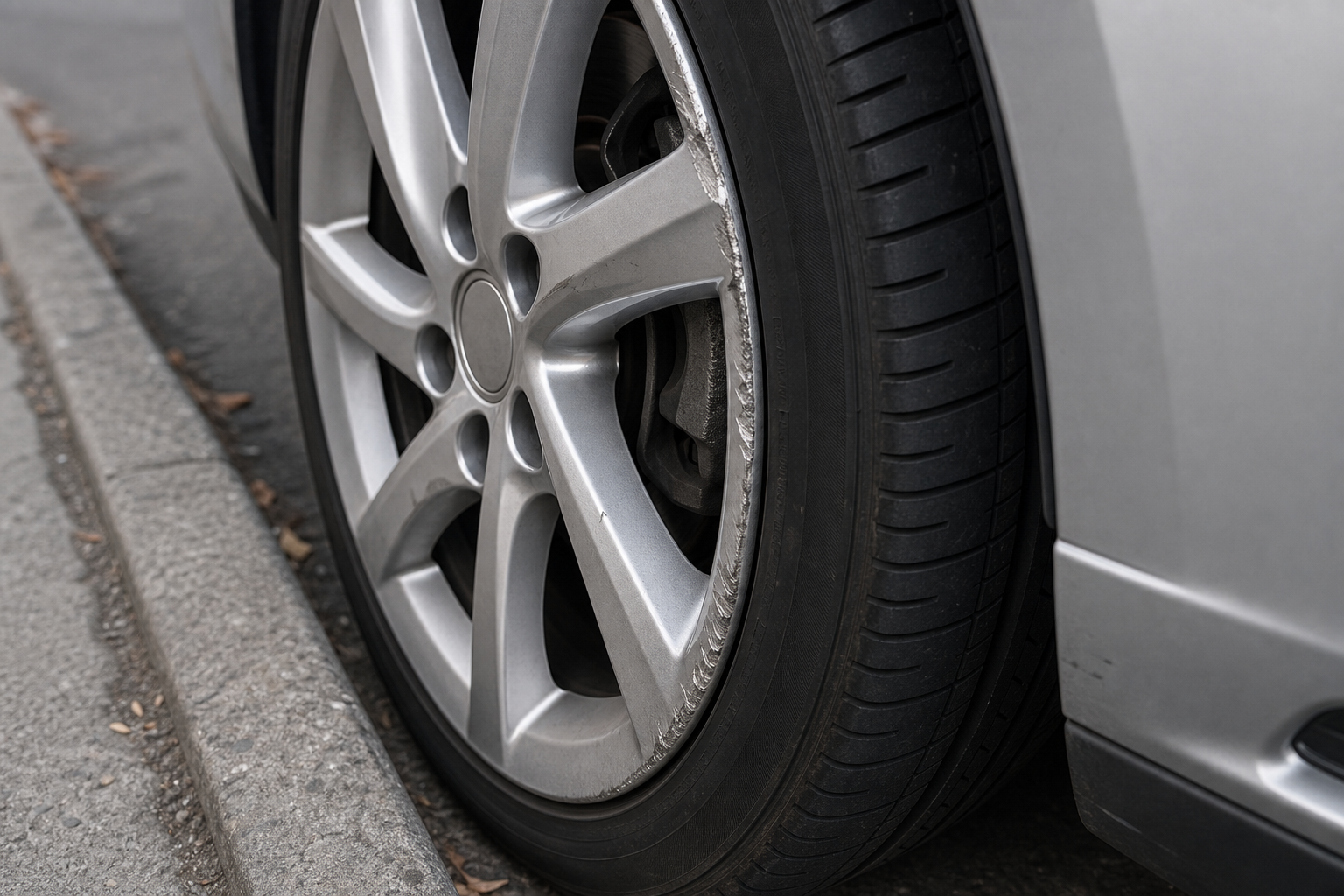
Identifying Curb Rash Damage
A tight parking turn, a concrete curb, and now the wheel’s outer lip is scraped raw, front and center every time you walk up to the car. The key is knowing whether you’re looking at a quick cosmetic fix, a corrosion risk, or damage serious enough to justify repair, or replacement.
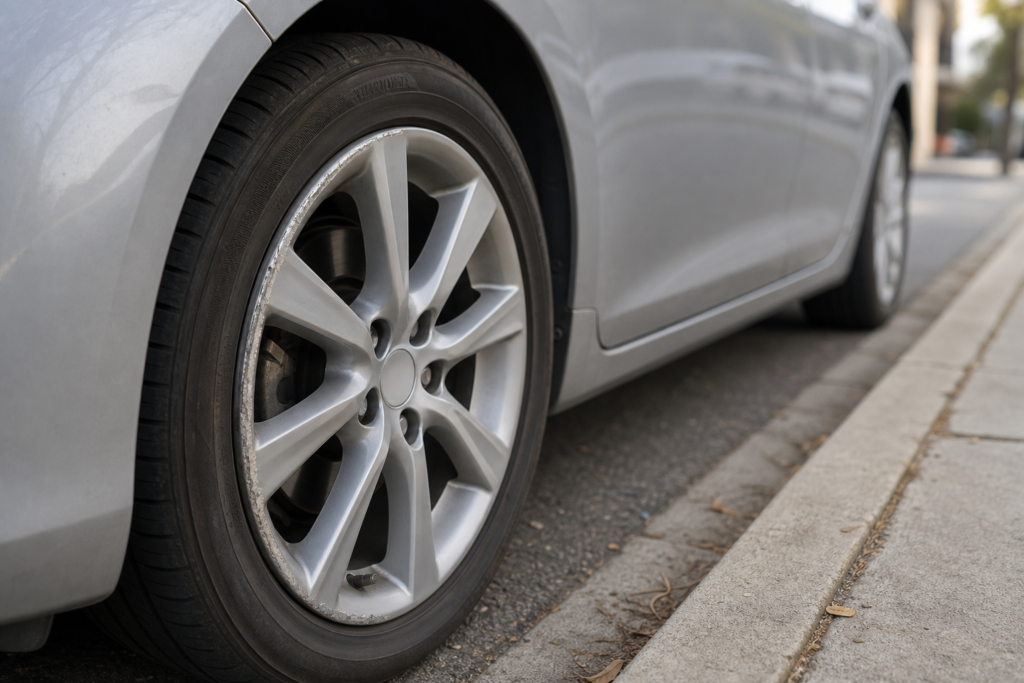
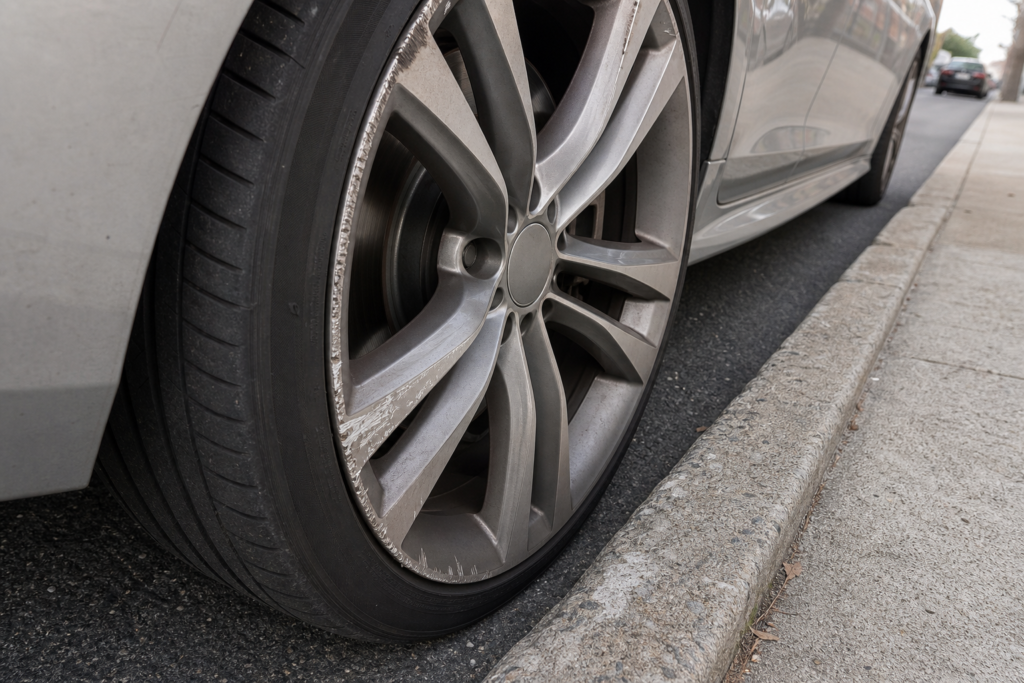
Curb rash on wheels typically shows up as scuffing, scratching, or gouging along the outermost edge of the rim, the part that sits closest to the curb when you park. It can also appear on spoke edges or the flat face of the wheel, depending on the angle and force of impact. The damage ranges from faint clear coat abrasion you can barely feel with a fingernail to deep metal gouges that expose bare aluminum or alloy underneath.
What makes it so frustrating is location. The rim is the single most visually exposed part of the wheel assembly. It faces outward, it catches light, and it’s at eye level when you’re standing next to the car. Even minor scuffs draw attention in a way that, say, an underbody scratch never would. This isn’t vanity, it’s geometry. A scraped rim is impossible to unsee, especially on darker finishes or machined-face wheels where contrast makes every mark pop.
Most curb rash comes from parallel parking, tight drive-thru lanes, parking garage turns, and low-profile tire setups that leave less rubber between the rim edge and the pavement. If you drive in a city with narrow streets or aggressive curbing, the odds go up. None of this means you’re a bad driver. It means curbs are unforgiving and wheels are exposed.
Cosmetic Versus Structural Damage
Not all curb rash is equal, and the line between cosmetic and structural matters more than most people realize.
Light scuffs, surface scratches that haven’t cut through the finish into the metal, are genuinely cosmetic. They look bad, but they don’t compromise the wheel’s integrity. Medium damage, where you can see bare alloy or feel a noticeable ridge with your finger, introduces corrosion risk but usually isn’t structural. Deep gouges, chips that removed material, or any visible crack or bend in the rim edge, those cross into safety territory. A cracked or bent rim can lose its seal against the tire bead, causing slow air loss or, in worse cases, sudden deflation.
Here’s the part that gets overlooked: curb rash tires deserve the same inspection the wheel does. A hard curb strike transfers force through the rim and into the sidewall. Look for cuts, bulges, or scuffing on the tire’s sidewall, the vertical surface between the tread and the rim. A sidewall bulge means internal structural damage to the tire’s cords, and that tire is no longer safe to drive on at speed. A deep sidewall cut, even without a bulge, can weaken the tire enough to fail under load. Unlike tread damage, sidewall damage on a tire generally cannot be repaired.
The practical check takes sixty seconds. Run your hand slowly around the wheel lip, feeling for bends, cracks, or deep material loss. Then visually inspect the tire sidewall on the curb-side, looking for any cut, gouge, or outward swelling. If the tire pressure warning light comes on in the days following a curb hit, that’s a signal worth acting on, don’t just re-inflate and forget.
Corrosion, Finish Loss, and Resale
Bare alloy exposed by curb rash doesn’t stay bare for long. Aluminum oxidizes, and once moisture, road salt, and brake dust settle into an unprotected scratch, corrosion begins to spread underneath the surrounding finish. What started as a quarter-sized scrape can, over a season or two, become a much larger area of flaking clear coat and pitting. At that point, a simple touch-up is no longer enough, the repair scope has grown.
This is especially true in climates with harsh winters, where salt and chemical de-icers accelerate the process. Even in milder regions, brake dust is mildly corrosive and collects along the rim edge where curb rash tends to sit.
Then there’s resale. Curb rash on wheels is one of the first things a used-car buyer or dealership appraiser notices during a walk-around. It signals wear and, fairly or not, suggests the car hasn’t been well maintained. Multiple wheels with visible rash can take a noticeable bite out of trade-in value, often more than the cost of repairing them would have been. Addressing curb damage early protects both the wheel and your negotiating position at resale time.
DIY, Professional Repair, or Replacement
The decision to fix curb rash yourself, pay a professional, or replace the wheel entirely depends on three things: how deep the damage is, what finish the wheel has, and what result you’ll accept.
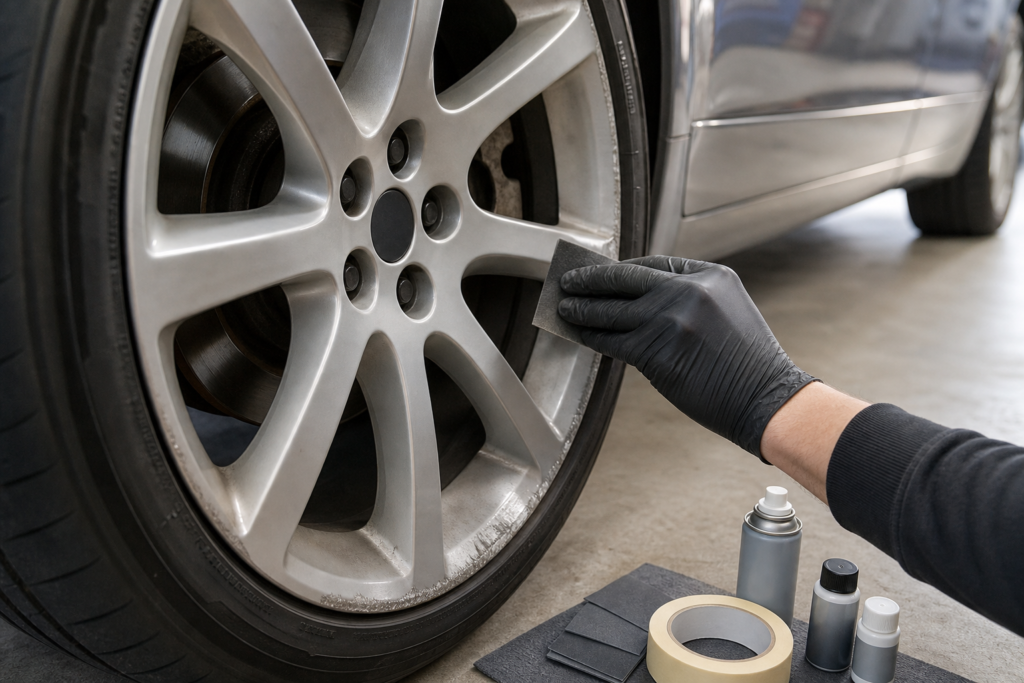
For light scuffs on a standard painted alloy wheel, a careful DIY approach can produce a reasonable result. This typically involves sanding the damaged area smooth, applying a color-matched curb rash touch up paint or filler, and finishing with clear coat. Kits designed for diy curb rash repair are widely available and affordable. The catch: surface prep matters enormously. Rushing the sanding or applying paint too thickly leads to a visible patch that looks worse than the original scrape, and at that point, a professional has to strip the bad repair before starting over, which increases cost. If you’re considering a DIY fix, practice on the least visible wheel first and manage expectations. “Better” is a more realistic goal than “invisible.”
Professional wheel repair typically involves machine-sanding the damaged section, repainting or refinishing to match the original surface, and reapplying clear coat. A skilled technician can often make light-to-moderate curb rash functionally invisible. For deeper gouges, they’ll use alloy filler before refinishing. Mobile wheel repair services can handle many jobs on-site, and if the curb strike also scuffed your bumper, a provider that offers mobile bumper repair in orange county or your local area can often address both issues in a single visit. More severe wheel damage may require removing the wheel and working on it in a shop.
The curb rash vs wheel replacement question usually comes down to structural damage. If the rim is cracked, significantly bent, or has lost enough material to compromise the tire bead seal, replacement is the safer call. No amount of cosmetic refinishing fixes a structural problem. For wheels with complex factory finishes, especially multi-tone machined faces, replacement sometimes makes more sense economically, because matching the original finish perfectly can cost nearly as much as a new wheel.
Finish Types and Cost Factors
Curb rash repair cost varies widely, and the biggest variable is the wheel’s finish. A standard silver-painted alloy wheel is the simplest and least expensive to repair, color matching is straightforward, and the refinishing process is well-established. Most professional repairs on these wheels fall in a moderate price range per wheel, though exact costs depend on severity and local labor rates.
Curb rash on chrome wheels is a different story. Chrome is a plated finish, not a painted one, and matching it requires stripping and re-plating, a process that’s significantly more expensive and not offered by every repair shop. Some owners opt for a chrome-look paint repair as a compromise, though the result rarely matches a true chrome finish exactly.
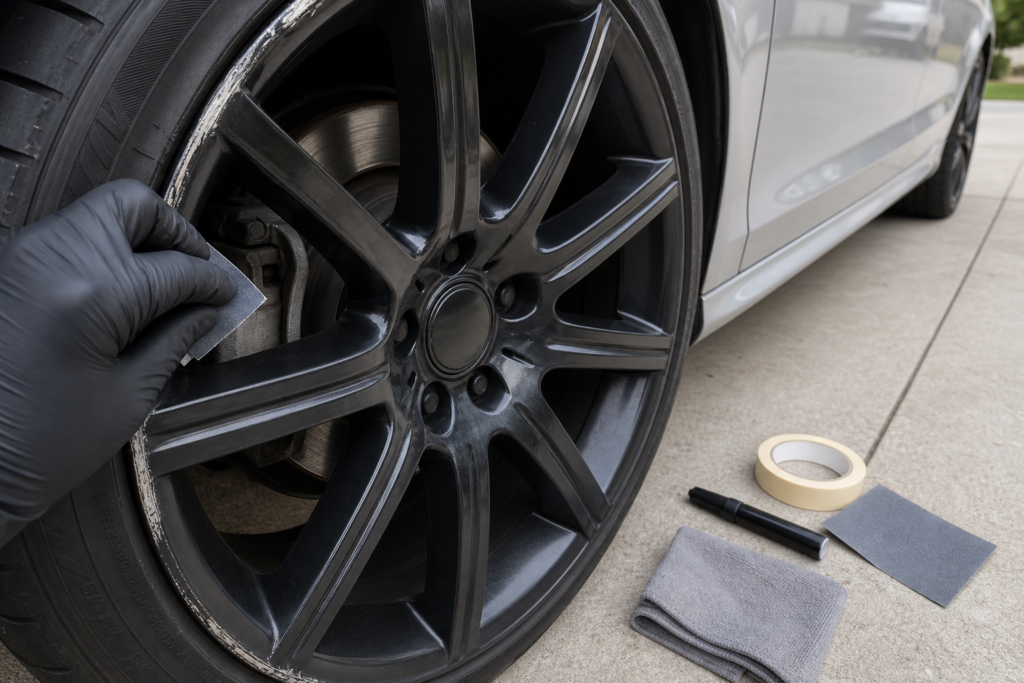
Curb rash on black rims, whether gloss black, satin, or matte, presents its own challenge. Dark finishes show imperfections ruthlessly. A repaired area with even a slight texture or sheen difference from the surrounding surface will be visible in direct light. Matte and satin finishes are particularly unforgiving because clear coat behavior differs from gloss. If you’re weighing how to fix curb rash on alloy wheels with a black finish, a professional repair is usually worth the premium over DIY, simply because the margin for visible error is so thin.
Other cost factors include wheel diameter (larger wheels cost more to refinish), the number of wheels being repaired (shops often offer per-wheel discounts for multiples), and whether the tire needs to be dismounted for the repair.
Results, Prevention, and Post-Strike Checklist
Anyone searching for curb rash before and after examples online will find a wide range of outcomes. Professional repairs on standard alloy wheels often look nearly perfect in photos and hold up well to real-world scrutiny. DIY results are more variable, some are impressively clean, others are clearly patched. The honest truth: most repairs improve the appearance significantly, but “factory new” is not always achievable, especially on complex or dark finishes.
For wheel curb damage prevention, a few habits make a real difference without requiring you to rethink your driving life. Adjusting your mirrors to give a better view of the curb side when parallel parking helps more than most people expect. Approaching parking spots and drive-thrus at a wider angle reduces the chance of clipping with the front wheel. If your vehicle has a curb-view camera or parking sensors, use them, they exist for exactly this reason. Rim protectors, which are rubber or plastic strips that mount on the rim edge, offer a sacrificial layer; they won’t prevent all damage, but they absorb the brunt of light contact.
And finally, the sixty-second post-curb-strike check worth building into habit: feel the full circumference of the rim lip for bends, cracks, or deep gouges. Inspect the tire sidewall from top to bottom on the curb side, looking for cuts, scuffs, or any outward bulge. Check your tire pressure within a day or two, slow leaks from a compromised bead seal often don’t show up immediately. If the wheel has a crack, the tire has a bulge, or you’re losing pressure, don’t wait, get it evaluated before driving at highway speed.
Curb rash on wheels is, most of the time, a cosmetic problem with a cosmetic solution. But the small percentage of cases where it’s more than cosmetic are exactly the ones that matter most. A quick, honest assessment right after it happens is the single best thing you can do, for the wheel, the tire, and your wallet.