Why Wrap Quotes Vary
You’re hauling a 16-foot enclosed cargo trailer down the 405 through Irvine, merging onto the 5 toward Anaheim, parking at a job site in Santa Ana, and the entire time, every panel on that trailer is bare. No logo, no phone number, no brand presence. Meanwhile, a competitor’s wrapped landscaping trailer is sitting in a strip mall parking lot on Beach Boulevard pulling impressions from every car at the light. That gap is what most Orange County business owners are thinking about when they search for trailer wrap pricing in Orange County, and the first thing they discover is that the price range is wide enough to feel unhelpful.
The reason quotes vary so much has less to do with market competition and more to do with the fact “trailer wrap” describes a spectrum. A pair of vinyl lettering panels on a small utility trailer and a fully designed, full-coverage wrap on a 24-foot enclosed trailer are technically both trailer wraps. They share almost nothing in terms of materials, labor, design time, or square footage.
So when a shop quotes one number and another quotes triple, the projects being quoted are usually different projects, different coverage areas, different vinyl grades, different prep requirements. Understanding what actually drives the number matters more than collecting quotes.
Price Drivers and Cost Bands
So, how much does a trailer wrap cost? The honest answer requires four inputs: trailer size, coverage level, material grade, and design complexity.
Size is the most obvious factor. A 4×8 open utility trailer has a fraction of the wrappable surface of a 20-foot enclosed box trailer. Shops typically price by the square foot for material and labor, so more surface means a higher total. But size also affects difficulty, larger trailers take longer to install and require more seams, which adds labor hours.
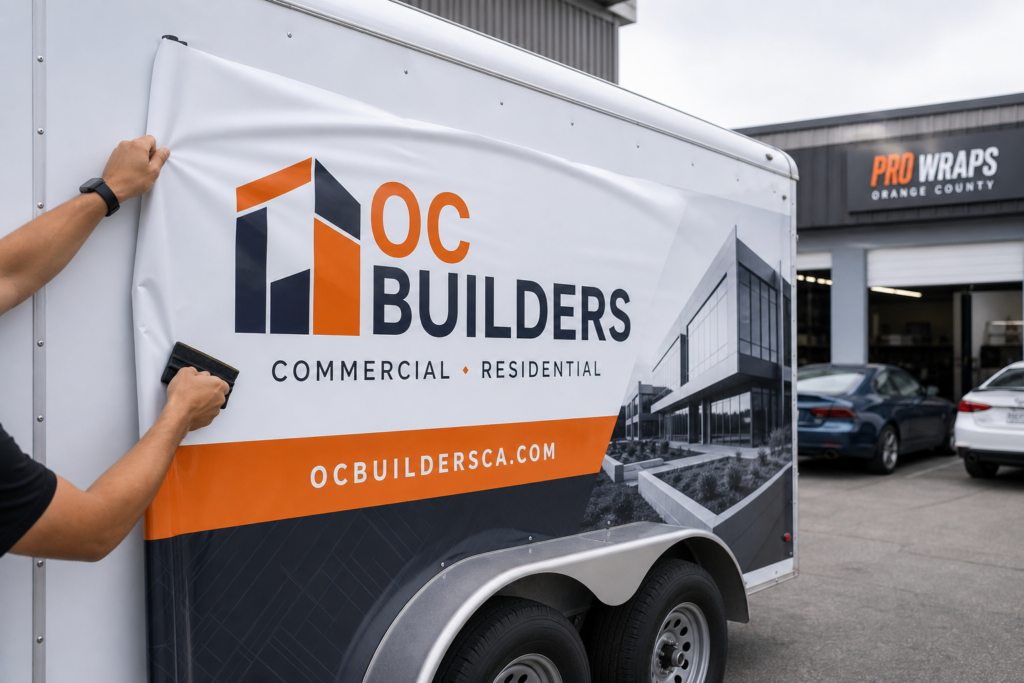
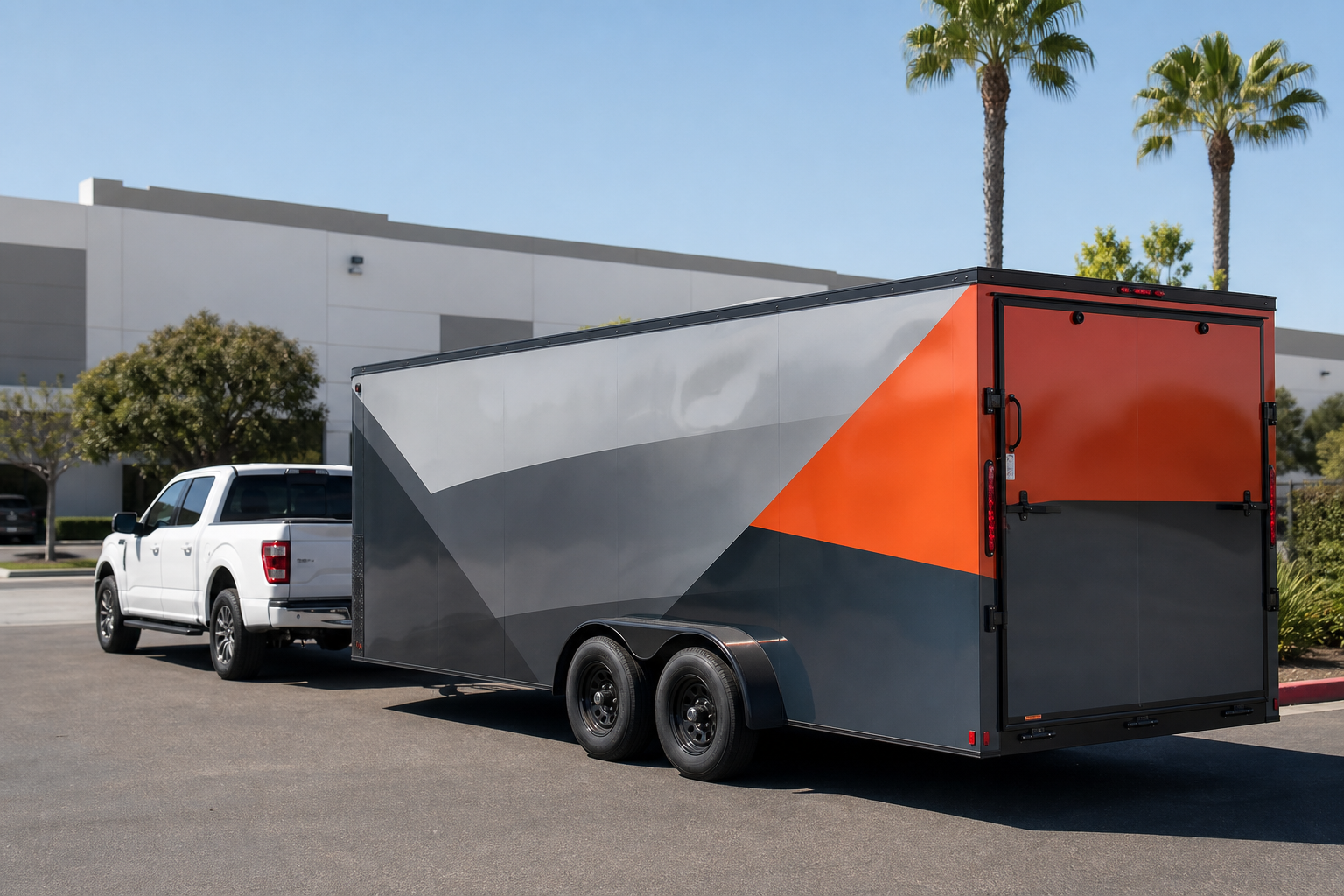
Coverage level is where the real pricing tiers separate. Spot graphics, a logo and phone number on each side, sit at the low end. Partial wraps cover selected panels, usually the rear and both sides, with some areas left in the trailer’s base color. Full wraps cover every visible surface. Each step up roughly doubles the material and labor involved.
Material grade matters too. Premium cast vinyl costs more than entry-level calendared film, but it conforms better to curves and corrugations and lasts longer, especially in direct sun. Design is the final variable. A simple logo placement with existing artwork costs far less than a custom-designed wrap with photography, gradients, and layout revisions. For a cargo trailer wrap in Orange County, a basic partial wrap on a mid-size enclosed trailer generally falls in a different bracket than a full wrap on the same trailer, and both are well above simple lettering. Without inventing specific dollar figures, because shop rates, vinyl suppliers, and labor costs shift, the rule is predictable: more coverage, better material, and custom design push the number up. These same cost drivers apply regardless of geography; anyone researching trailer wrap pricing boston will encounter the same variables, even though local labor rates and climate considerations differ. An open utility trailer with minimal graphics sits at the entry point; a fully wrapped 20-plus-foot enclosed trailer with a custom design sits near the top.
Materials, Installation, Hidden Costs
The vinyl itself is only part of the material conversation. Laminate, a clear protective layer applied over the printed vinyl, is standard for quality wraps. It guards against UV fade, scratches, and chemical exposure. Some shops include it in their square-foot pricing; others list it separately. If a quote seems low, check whether laminate is included.
Cast vinyl versus calendared vinyl is the core material decision. Cast film is thinner, more conformable, and more durable in high-heat environments like Orange County summers. Calendared film is thicker and less expensive but can shrink or lift on complex curves over time. For trailers with rivets, corrugated panels, or recessed areas, cast vinyl performs noticeably better, and costs noticeably more.
Installation is where hidden costs live. A trailer with clean, smooth panels wraps faster and cheaper than one with surface rust, old decals, oxidized paint, or residual adhesive from a previous wrap. Rivet lines across enclosed trailers require extra time and technique to wrap cleanly. Door hardware, hinges, latches, and recessed channels all add complexity.
Some shops charge flat rates for prep work; others bill hourly. If your trailer has been previously wrapped or has damaged paint, expect the quote to include removal and surface prep as separate line items. These aren’t upsells, they’re real labor that determines whether the new wrap adheres properly and lasts.
Wrap Durability in OC Climate
Orange County’s climate is a double-edged factor for vinyl wraps. The lack of harsh winters and road salt is good news, those are vinyl killers in other markets. But relentless sun exposure and coastal salt air create their own wear patterns. UV radiation is the primary enemy of printed vinyl, which is why laminate and UV-resistant inks matter more here than in overcast climates.
A quality wrap using cast vinyl with proper laminate, installed on a well-prepped surface, generally lasts several years under normal OC driving and parking conditions. Trailers parked outdoors in direct sun for extended periods will see shorter life than those garaged or parked in shade. Frequent freeway miles add abrasion from road debris, but this tends to affect the lower panels and front face more than the sides.
Compared to a custom paint job, a wrap offers two advantages: it protects the underlying surface, and it’s reversible. When you rebrand, change phone numbers, or sell the trailer, the wrap comes off without destroying the factory finish underneath. Paint is permanent and typically costs more for equivalent visual complexity. Simple vinyl decals and lettering cost less upfront but offer far less visual impact and don’t protect the surface. They also look dated faster because they cover so little area, faded paint around crisp lettering highlights age rather than hiding it. The tradeoff is straightforward: wraps cost more than decals and less than paint, last longer than decals and shorter than paint, but offer more flexibility than either.
Wrap ROI Versus Recurring Ads
Here’s where the conversation shifts from expense to investment. A wrapped trailer is a marketing machine that works 24/7. It doesn’t stop advertising when your ad budget runs out, when the algorithm changes, or when a campaign ends. Every mile driven and every hour parked generates impressions, and in Orange County’s dense, traffic-heavy corridors, those impressions add up fast.
Wrapped vehicles driven on busy routes generate a significant number of daily impressions simply by being visible in traffic. Even parked at a job site in a commercial area or on a residential street during a service call, a wrapped trailer sits in public view for hours at a time. Consider what you’d pay for equivalent visibility through digital ads, mailers, or even a static billboard along the 91. Over the lifespan of a wrap, typically several years, the trailer wrap cost amortizes down to a remarkably low cost per impression compared to virtually any recurring advertising channel.
The key insight is that you’re already driving these routes. The trailer is already on the 5, already parked in front of the customer’s house, already sitting in your yard visible from the street. The wrap doesn’t create new trips or new expenses, it monetizes the visibility you already have. For contractors, landscapers, HVAC companies, mobile detailers, and food distributors running daily routes across Orange County, that existing exposure is the asset. The wrap just activates it.
Getting an Accurate Estimate
To get a full trailer wrap price estimate that’s actually useful, bring specific information to the shop. Measure your trailer’s exterior dimensions, length, height, and width of each wrappable panel. Photograph every side, including the rear doors, any rivets or corrugation, and any damage or existing graphics. Know what coverage level you want before you walk in: full wrap, partial, or spot graphics. If you have existing brand artwork in vector format, say so, it saves design time and cost.
When searching for “trailer wrap near me” in the Orange County area, expect shops to ask about your timeline, your trailer’s current surface condition, and whether you need design work. A shop that quotes without seeing the trailer or asking these questions is guessing. The best estimates come from in-person inspections or detailed photo submissions with dimensions.
Whether the spend makes sense depends on your specific situation. If your trailer runs high-traffic OC routes daily, parks visibly at job sites, and represents a business that serves a local geographic area, the math tends to favor wrapping. If the trailer rarely leaves a private yard or runs routes with minimal public visibility, the return is lower. The decision isn’t about whether wraps work in general, it’s about whether your trailer’s existing miles and parking patterns generate enough exposure to justify the one-time cost over the alternatives you’d spend that budget on instead. For most Orange County businesses already putting a trailer on the road every day, the answer is hard to argue against.