Introduction
Boston roads are tough on chrome, and that is exactly why chrome delete has become one of the most requested upgrades across Greater Boston. This guide breaks down the most popular packages, climate considerations, finish options, target areas, pricing, and when it makes sense to DIY versus booking a pro.
- Local Services
- New England Climate
- Style Categories
- Target Areas
- Tesla Specialist Note
- Comparison Guide
- Boston Pricing Guide
- DIY vs. Professional
- Summary
Local Services
Not all chrome delete jobs are equal, and in Greater Boston, the best shops offer modular packages designed around how real locals drive, lease, and maintain their cars. Here is what to look for; and what questions to ask before you book.
- Boston Blackout Packages: Bundle deals that combine window trim, front grille, emblems, mirror caps, and door handles into a single quoted price. Always cheaper than booking each piece separately; expect 15 to 25% savings on full exterior packages.
- The One-Day Transformation: Drop your car off in the morning in Medford, Quincy, or Newton; pick it up blacked out by 5 PM. Many shops now offer this same-day turnaround for standard sedan and SUV packages, designed around the commuter’s schedule.
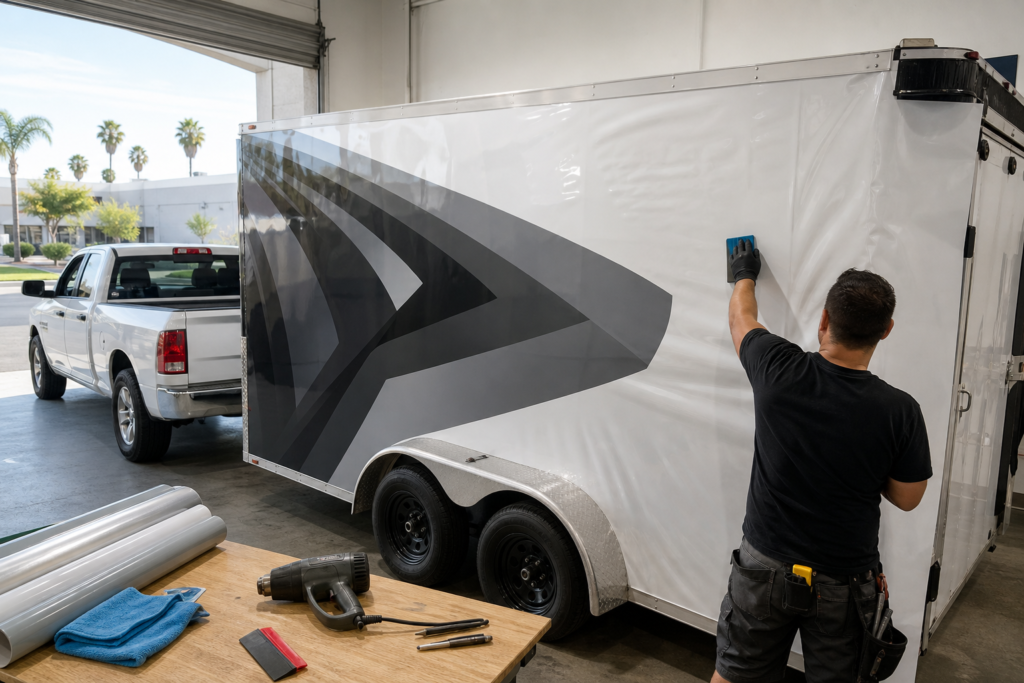
- Mobile Installation Services: Some Boston-area specialists bring the shop to you. Critical in winter, when indoor installation in a heated garage ensures proper vinyl adhesion. Vinyl applied below 50°F can fail to bond correctly; especially on curved chrome trim.
- Tesla Chrome Delete Specialists: Older Model 3s and Model Ss are the number-one candidates for this service in Boston. Tesla shipped these vehicles with substantial chrome trim that ages poorly in the New England climate. Specialist shops have pre-cut kits ready to install.
- Lease-Friendly Customization: High-quality vinyl is 100% reversible. For the thousands of Bostonians leasing luxury vehicles in the Seaport, Back Bay, and Brookline, this means full personalization without lease return penalties. Remove it cleanly before you hand the keys back.
- Concierge and Valet Options: Premium shops near downtown Boston now offer pick-up and drop-off service; your car gets collected from your home or office in the South End or Cambridge, transformed, and returned. Ideal for busy professionals who cannot spare a day off.
New England Climate
The pitch for chrome delete in Boston is not just aesthetic; it is practical. New England’s climate is genuinely hostile to factory chrome trim in ways that most drivers do not fully appreciate until the pitting and oxidation sets in.
Corrosion Shielding
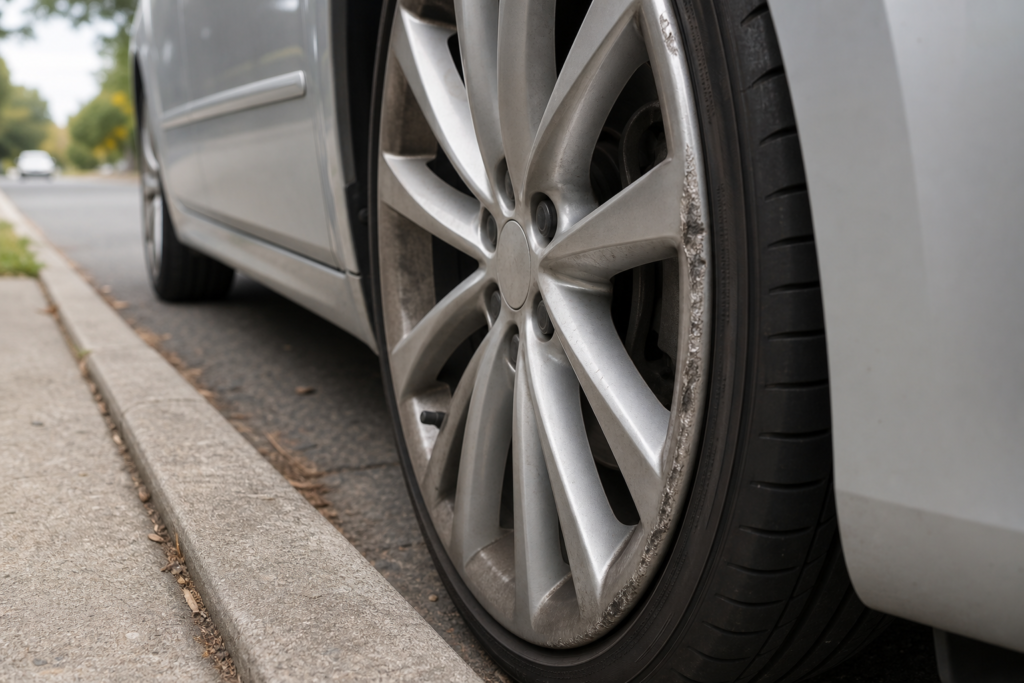
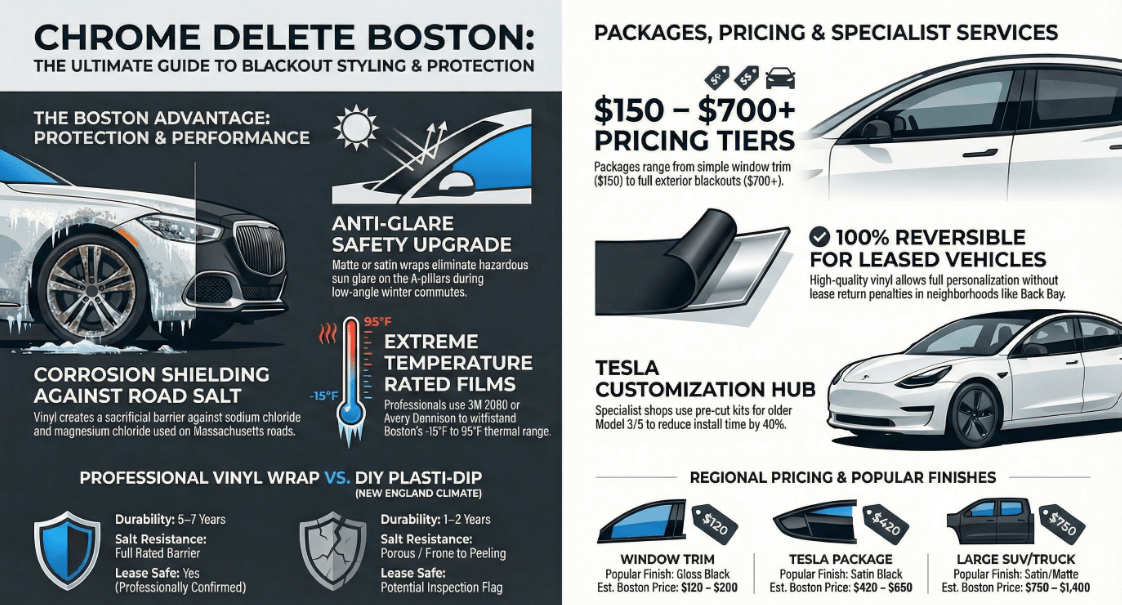
Massachusetts applies sodium chloride and magnesium chloride to roads from October through April. These chemicals penetrate micro-scratches in chrome plating and cause progressive pitting and oxidation; a process that is irreversible once it starts. A quality vinyl wrap creates a sacrificial barrier, protecting the underlying trim from direct salt contact.
The Anti-Glare Safety Pitch
Boston’s winter sun sits at a low angle all day, and chrome trim on the A-pillars, grille, and mirror caps can create genuine glare hazards on westbound Route 1, the Tobin Bridge approach, and Storrow Drive. Matte or satin black wraps eliminate this entirely; turning a safety risk into a style upgrade simultaneously.
Temperature-Rated Films
Not all vinyl is created equal. For Boston winters; where temperatures can swing from -15°F during a Polar Vortex to 95°F in July; only premium films hold up. Shops should be using 3M 2080 Series or Avery Dennison Supreme Wrapping Film. Both are rated to handle the full thermal range without cracking, bubbling, or edge lifting.
Humidity and UV Protection
Boston’s July and August humidity is a secondary threat. Cheap vinyl absorbs moisture under edges and begins to peel from door handles and grille surfaces within one season. Premium-grade films with proper laminate coatings resist UV degradation and maintain adhesion through New England’s humid summers without lifting or clouding.
Installer Red Flag: If a shop does not mention film brand or operating temperature range when quoting, ask specifically. Budget vinyl rated only to plus or minus 20°F will fail in Boston conditions, typically starting at the edges of window trim during the first deep freeze. Always specify 3M 2080 or Avery Dennison SW900 by name.
Style Categories
Chrome delete is not a monolithic look. The finish you choose dramatically changes your car’s character. Here are the four dominant categories in the Boston market and what each achieves.
- Gloss Black: Mimics the “Night Edition” or “Black Optic” factory packages. Reflective, sharp, and the most mainstream choice. Pairs perfectly with dark window tint for a cohesive black-on-black aesthetic.
- Satin or Matte: The “murdered out” aesthetic. A flat, light-absorbing finish that makes your vehicle look like it rolled off a secret military project. Popular across Cambridge and Brookline with M-Sport and S-Line owners.
- Carbon Fiber: A woven-pattern vinyl that mimics real carbon fiber for a fraction of the price. Applied to mirror caps and door handles, it adds a high-performance, track-day aesthetic favored by Boston’s performance car community.
- Color-Matched: Vinyl matched exactly to your body paint. A white-out on a white Audi, or a body-color delete on a Glacial White BMW, creates a seamless one-tone look that is still virtually unknown in the Greater Boston market.
Target Areas
Most factory vehicles have chrome accents concentrated in five key zones. Each area has a preferred finish and a specific benefit that goes beyond aesthetics. Here is the breakdown professionals use when quoting a full delete.
- Window Trim or Belt Line: Popular finish is Gloss Black. Primary benefit is that it seamlessly extends window tint; creating a dark, unbroken band around the vehicle’s upper half. Complexity is low to medium.
- Front Grille: Popular finish is Satin Black. Primary benefit is that it transforms the car’s “face” and gives an aggressive, planted look. Particularly effective on BMWs and Audis with large kidney or single-frame grilles. Complexity is medium to high.
- Emblems and Badges: Popular finish is Matte Black. Primary benefit is de-cluttering the rear of the vehicle. A blackout badge on a dark car becomes a subtle, intentional detail rather than a chrome brand stamp. Complexity is low.
- Side Mirror Caps: Popular finish is Carbon Fiber. Primary benefit is adding a high-performance, aftermarket feel. One of the highest-impact-per-dollar modifications available; visible from outside at all times. Complexity is low to medium.
- Door Handles: Popular finish is Gloss Black. Primary benefit is protection against scratches from keys, rings, and fingernails. Chrome door handles are among the first areas to show micro-scratching on daily drivers. Complexity is low.
- Trunk and Tailgate Trim: Popular finish is Satin Black. Primary benefit is unifying the rear of the vehicle, especially on SUVs with wide chrome trim bars below the license plate or around the rear glass. Complexity is medium.
Tesla Specialist Note
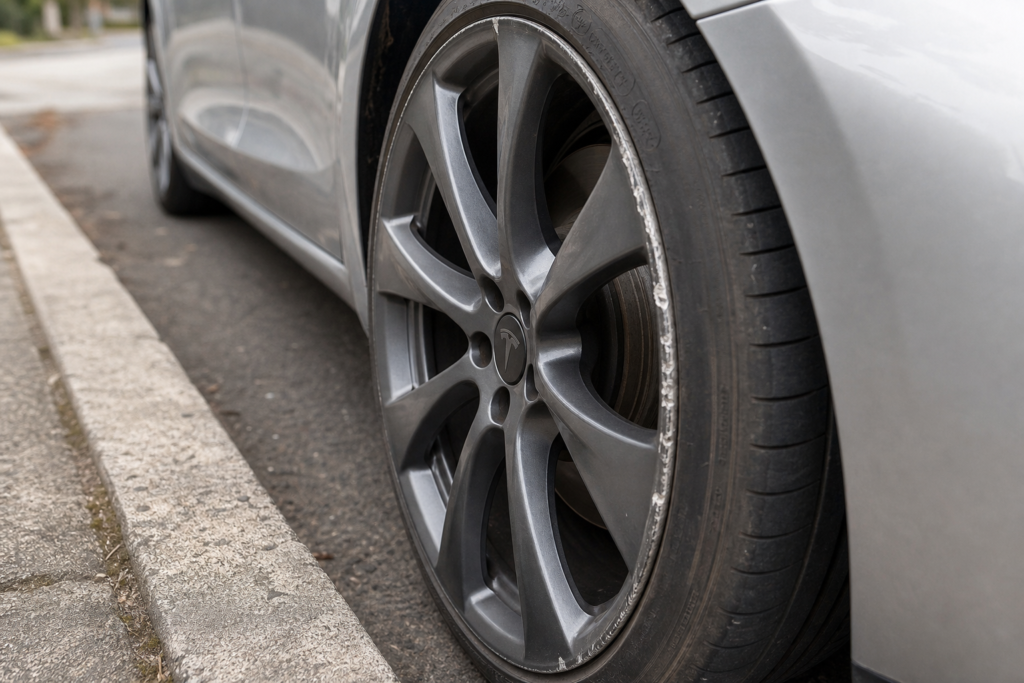
Older Tesla Model 3s and Model Ss shipped from the factory with a significant amount of chrome trim; a design choice Tesla themselves eventually moved away from. In Boston’s salt-heavy winters, that chrome trim ages poorly and quickly. Specialist chrome delete shops now keep pre-cut Tesla kits in stock, enabling faster turnaround and cleaner fitment than custom-cut jobs.
If you are searching “Tesla chrome delete Boston” specifically, look for shops that list Tesla as a named specialty; not just a car they can do. Pre-cut kits cut installation time by 30 to 40% and virtually eliminate air bubbles on curved surfaces like the Model 3’s door handles.
- Typical install: 3 to 4 hours
- Lease return penalty: $0
- Premium film warranty: 5 years
- Reversible installation: 100%
Leasing a Luxury Vehicle in Back Bay or the Seaport?
You have more options than you think. High-quality vinyl wrap is completely reversible; it does not damage paint, alter VINs, or affect lease terms. Before you return your leased BMW 4 Series or Mercedes C-Class, a professional installer can remove all vinyl cleanly, leaving the factory finish underneath in the same condition it went on. Many Boston dealers and leasing companies are now familiar with this process. Just make sure your installer uses premium-grade films; cheaper alternatives can leave adhesive residue if left on longer than 3 to 4 years.
Comparison Guide
Plasti-Dip is the go-to DIY budget option in Boston; a can of it costs $12 at any auto parts store in Dorchester or Somerville. But for daily drivers in New England, the comparison is not close. Here is the honest breakdown.
- Upfront cost: Professional vinyl wrap is $150 to $900 (pro-installed); Plasti-Dip (DIY) is $12 to $50 per can.
- Finish quality: Professional vinyl wrap is factory-level with seamless edges; Plasti-Dip has visible brush or spray lines and uneven sheen.
- Durability: Professional vinyl wrap lasts 5 to 7 years with premium film; Plasti-Dip lasts 1 to 2 years before peeling in Massachusetts winters.
- Salt resistance: Professional vinyl wrap is a full barrier rated for road salt exposure; Plasti-Dip is porous under prolonged salt contact.
- Removability: Professional vinyl wrap is a clean peel with no adhesive residue; Plasti-Dip peels off but can leave residue on aged chrome.
- Lease safe: Professional vinyl wrap is yes and professionally confirmed; Plasti-Dip is technically yes, but may flag at inspection.
- Complex grilles: Professional vinyl wrap is heat-formed to fit perfectly; Plasti-Dip is near-impossible on GMC Yukon or Cadillac Escalade mesh.
- Long-term value: Professional vinyl wrap cost-per-year is often lower than Plasti-Dip; Plasti-Dip repeated reapplication negates initial savings.
The DIY Trap: Wrapping complex chrome surfaces; like the multi-bar grille on a Cadillac Escalade or the interlocking mesh of a GMC Yukon; requires professional heat-forming tools and at least 15 to 20 hours of practice to execute cleanly. The result of a failed DIY attempt is not just aesthetic; chrome trim is often a single piece that is expensive to replace if the vinyl bonds incorrectly and tears the surface during removal.
Boston Pricing Guide
Greater Boston pricing runs 15 to 25% above national averages due to higher labor costs and overhead in the metro area. Here are realistic price ranges based on current market rates from Medford to Quincy.
- Entry Point: $150; range $120 to $200. Window trim only. Single chrome strip along belt line. Typically 1.5 to 2 hours of install time. Great starting point for lease vehicles.
- Partial Delete: $350; range $280 to $450. Window trim plus emblems plus door handles. The most popular “starter” package in Boston. Covers all the highest-visibility chrome without touching the grille.
- Full Exterior Delete: $700; range $550 to $950. Complete chrome delete; window trim, grille, emblems, mirror caps, door handles, and all accent trim. Full-day job. Includes 3M or Avery film warranty.
- Tesla Specialist Package: $500; range $420 to $650. Pre-cut Tesla kit for Model 3 or Model S. Includes full belt line, door handles, trunk trim, and front grille surround. Faster turnaround than custom-cut.
- Carbon Fiber Accent Package: $400; range $320 to $520. Mirror caps, door handles, and roof spoiler in carbon-look vinyl. Popular upgrade for performance models; BMW M, Audi S-Line, and Mercedes AMG.
- Large SUV or Truck: $900; range $750 to $1,400. Full delete on Cadillac Escalade, GMC Yukon, or Chevy Suburban. Complex grille work and larger surface area drive up labor time significantly.
Boston Area Tip: Shops in Medford, Malden, and Quincy typically run 10 to 15% cheaper than installers based in Newton, Brookline, or South Boston due to lower overhead costs. If you are flexible on location, booking a shop just outside the core metro area can save $80 to $200 on a full delete package.
DIY vs. Professional
The honest answer depends heavily on which parts of your car you are targeting. Some areas are genuinely approachable for a careful first-timer. Others will punish inexperience in ways that are expensive to correct.
Low-Risk DIY Zones
Flat emblems, trunk badges, and small window trim pieces are reasonable starting points for DIY. These are flat or near-flat surfaces where pre-cut kits are widely available, and mistakes are forgiving; you can peel, reposition, and retry without damaging underlying trim. Allow 2 to 4 hours and watch installation tutorials specific to your vehicle’s year and model.
Professional-Only Territory
Front grilles; especially the large, three-dimensional mesh grilles on vehicles like the Cadillac Escalade, GMC Yukon, Jeep Grand Cherokee, and newer BMW kidney grilles; require professional heat-forming tools to conform vinyl to complex curves without lifting edges or creating air bubbles. These surfaces have dozens of individual faces at varying angles, and a botched DIY job typically results in a patchy, lifting mess within 30 days.
Door handles with curves and pronounced edges are another frequent DIY failure point. The transition from the flat face of a handle to its curved underside requires stretch-wrapping techniques and heat application that most beginners underestimate. Fingerprint oils on chrome during handling are also a common cause of adhesion failure.
The Math on DIY vs. Professional
A professional full exterior delete in Boston costs roughly $700 with a 5-year film warranty. A DIY attempt using pre-cut premium vinyl kits runs $150 to $250 in materials, but failed sections typically need to be redone within a year, and re-wrapping over failed vinyl requires removal first. When factoring in time, tools, and the realistic probability of needing professional correction, the cost difference narrows considerably; especially for complex vehicles.
🛠️ Recommended DIY Approach: If you are committed to doing it yourself, start with the emblems only. Purchase a pre-cut kit specific to your vehicle’s make, model, and year. Watch the manufacturer’s installation video twice before touching anything. Use a heat gun; not a hairdryer; and work in a warm indoor space. Attempting a full exterior delete as your first vinyl project is the most common way to create a job that costs more to fix than it would have cost to book a professional from the start.
Summary
Chrome delete in Greater Boston is part style upgrade and part climate survival strategy. The best results come from premium film, temperature-aware installation, and a finish that matches your vehicle and goals. If you want the cleanest look and the longest lifespan; especially on complex grilles and curved trim; professional vinyl wrap is the clear winner over DIY shortcuts.
Conclusion
If you are planning a chrome delete in 2025, focus on film quality, installer experience, and a quote that clearly lists what is included. A clean blackout can modernize the entire vehicle; and when done with premium materials, it holds up far better to Boston winters, summer humidity, and daily commuting wear.