The Transmission Fluid’s Real Job
You’re merging onto the highway, foot on the accelerator, and for a half-second longer than usual the engine revs climb before the transmission catches the next gear. It’s subtle, easy to dismiss. But that brief hesitation is your transmission telling you something has changed in the fluid responsible for every shift it makes.
What happens if you don’t change transmission fluid isn’t dramatic at first. That’s the problem. The car still drives. The shifts still happen. So the service gets deferred, six months, a year, another oil change comes and goes. Most drivers think of transmission fluid as a lubricant, and lubricants feel optional until something squeals. But automatic transmission fluid does far more than reduce friction between metal surfaces. ATF is the hydraulic medium that actuates every gear change. It’s the cooling agent that carries heat away from the torque converter and clutch packs. And it’s a precisely engineered friction modifier, its chemical profile determines how smoothly clutch plates grab and release inside the transmission.
When that fluid is fresh, it manages all three jobs simultaneously. When it’s degraded, each job suffers a little, and those small deficits compound in ways you won’t feel on Tuesday but will absolutely feel by next summer. Skipping transmission fluid changes doesn’t remove a function from the car. It slowly degrades every function the transmission depends on, all at once.
Fluid Breakdown and Early Wear
Heat is the primary killer. Every minute your transmission operates, ATF absorbs thermal energy from the torque converter, the clutch packs, and the planetary gearsets. Fresh fluid handles this well. But over tens of thousands of miles, the base oil oxidizes and the additive package, detergents, anti-wear agents, friction modifiers, depletes. The fluid darkens, thins under heat, and loses its ability to maintain stable hydraulic pressure.
Once that pressure becomes inconsistent, the valve body, the hydraulic control center that routes fluid to engage specific gears, starts commanding shifts with less precision. Clutch packs that should engage firmly begin to slip microscopically. Each micro-slip generates more heat, which degrades the fluid faster. This is the feedback loop that turns minor neglect into major failure.
Contamination accelerates the process. Metallic particles from normal wear, friction material shed from clutch plates, and sludge from oxidized fluid circulate through the system. They score valve body bores, clog small passages, and embed in seals. Modern transmissions, many with eight, nine, or ten speeds, route fluid through tighter tolerances and more complex valve bodies than older four-speed units. That means they’re less forgiving of contaminated fluid. The engineering that makes modern shifts smoother also makes the system more vulnerable when maintenance lapses.
The damage timeline varies, but the pattern is consistent: additive depletion, then pressure instability, then accelerated clutch wear, then hard or erratic shifts, then component failure. Each stage makes the next one arrive sooner.
Warning Signs and Internal Damage
Delayed engagement is often the first thing drivers notice. You shift from park to drive and there’s a pause, a second or two where the engine is running but the car isn’t moving. Inside, the clutch pack for that gear is waiting for enough hydraulic pressure to fully engage. Degraded fluid delivers that pressure late or at reduced force.
A shudder during light acceleration, especially at moderate speeds, usually points to torque converter clutch slip. The friction modifiers in the ATF have broken down enough that the converter’s lockup clutch can’t grab cleanly. It chatters instead. Shift flare, where the engine RPMs spike briefly between gears, signals that one gear is releasing before the next one fully engages. The valve body is struggling to time the overlap correctly because the fluid’s viscosity or pressure no longer matches what the transmission’s control module expects.
Outright slipping, where RPMs climb without a corresponding increase in speed, means clutch packs are failing to hold under load. By this point, a fluid change alone may not resolve the damage.
The practical distinction: delayed engagement and shudder caught early often respond to a fluid service, especially if the fluid is dark and smells burnt. Flare and slipping usually warrant a diagnostic scan and closer inspection before assuming fresh fluid will help. Replacing the fluid in a transmission that already has significant internal damage can sometimes make symptoms worse by altering the friction profile that worn parts have adapted to.
Driving Conditions That Accelerate Damage
Not all miles are equal for transmission fluid. Stop-and-go commuting generates far more heat per mile than highway cruising because the torque converter and clutch packs cycle constantly. A thirty-minute urban commute can stress ATF more than an hour at steady highway speed.
Towing multiplies the load on the transmission, which multiplies heat output. Even towing a small trailer within a vehicle’s rated capacity raises fluid temperatures significantly. If the fluid is already past its service interval, towing pushes it into the temperature range where oxidation accelerates dramatically.
Hot climates compound everything. Ambient temperatures in the nineties mean the transmission’s cooling system starts at a disadvantage, it has less thermal headroom to reject heat. Mountain grades combine sustained load with high RPM operation, sometimes for minutes at a stretch. Descending long grades with engine braking also cycles the transmission hard.
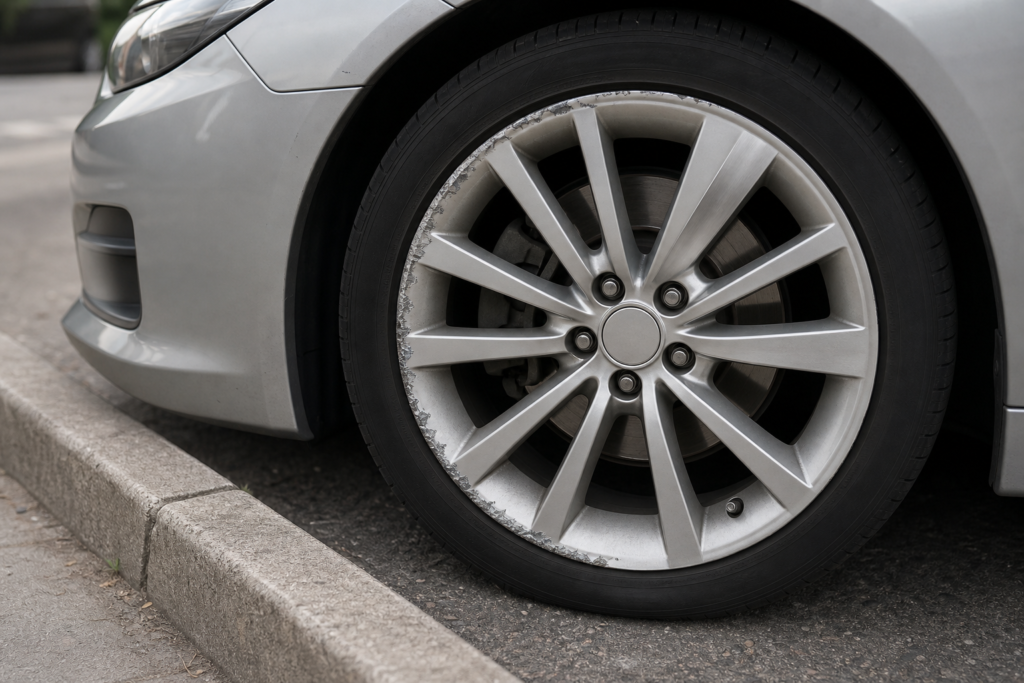
Most manufacturers define a “severe duty” schedule for vehicles that regularly encounter these conditions. The problem is that many drivers who commute in heavy traffic, live in warm climates, or occasionally tow don’t think of their driving as severe. By the manufacturer’s own definition, it often is. If your driving involves any combination of these factors, the standard interval in your owner’s manual probably isn’t conservative enough. The tire wear patterns you see under different driving conditions (https://4wheelcars.com) follow a similar logic, stress that seems routine still accelerates degradation.
Service Options and “Lifetime” Fluid
Several automakers have marketed certain transmissions as “sealed” or filled with “lifetime” fluid, meaning no service interval is listed in the standard maintenance schedule. The lifetime transmission fluid myth deserves direct pushback: “lifetime” typically refers to the expected life of the warranty period, not the mechanical life of the transmission. Independent transmission specialists and even some dealer technicians acknowledge that servicing these transmissions on a reasonable interval extends their working life well beyond what “lifetime” fill achieves.
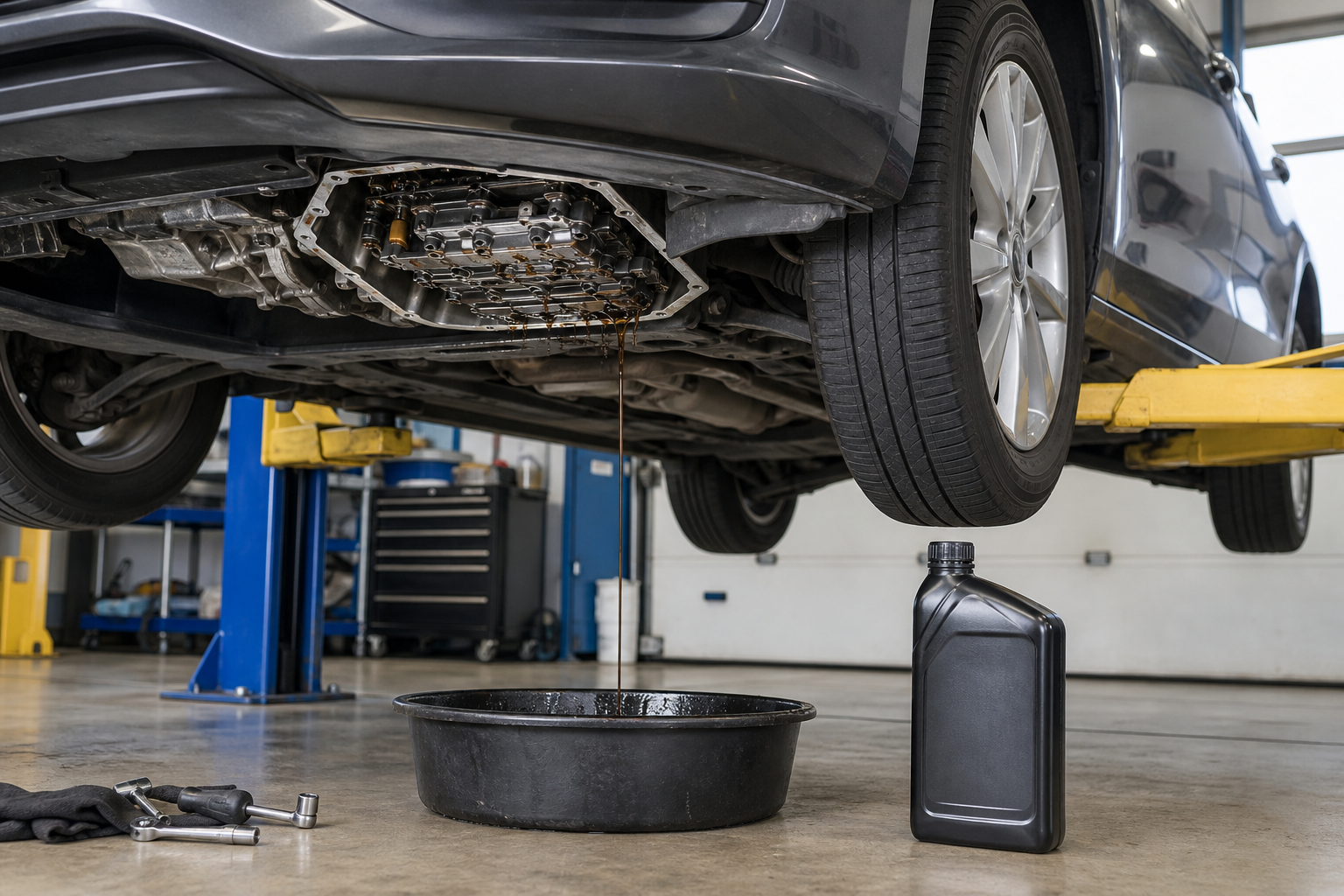
When it’s time for service, the transmission fluid change vs flush distinction matters. A basic fluid change, dropping the pan, replacing the filter, and refilling, swaps only a portion of the total fluid volume, since a significant amount remains in the torque converter and cooler lines. It’s the lowest-risk option and is appropriate for most vehicles serviced at reasonable intervals. A full flush uses a machine to cycle new fluid through the entire system, replacing nearly all of the old fluid. On well-maintained transmissions, a flush delivers a more complete service. On high-mileage units that have never been serviced, a flush can dislodge accumulated debris and push it into the valve body, potentially causing new problems. For neglected transmissions, a pan-drop service with filter replacement is generally the safer first step.
If you’re evaluating a used car, ask for service records showing transmission fluid changes. No records doesn’t necessarily mean no service, but it’s a risk factor. Dark, burnt-smelling fluid on the dipstick, where one exists, is a tangible warning. A thorough used car checklist (https://4wheelcars.com) should always include a transmission fluid inspection.
Preventing the Expensive Surprise
Transmission replacement or rebuild costs dwarf every fluid change you’ll ever pay for. The math isn’t close. The simplest prevention rule: follow the severe-duty schedule in your owner’s manual regardless of how you think you drive, and if your manual says “lifetime” fill, service the fluid anyway at an interval your independent mechanic recommends based on your driving conditions.
Keep a dated record of every transmission service, even a note in your phone with the mileage and date. That record protects you twice: it keeps you honest about intervals, and it becomes proof of maintenance if you ever sell the car. Pairing routine mechanical services with regular auto detailing reinforces the habit of staying on top of your vehicle’s overall condition and preserving its long-term value.
What you know now is mechanical, not just conventional wisdom. You understand that old ATF doesn’t just get dirty, it loses its ability to control pressure, manage heat, and maintain the precise friction profile your transmission was engineered around. You can recognize the early symptoms, distinguish between a fluid service situation and one that needs diagnosis, and make an informed decision about what kind of service fits your vehicle’s history. Skipping transmission fluid changes was never saving money. It was borrowing against a repair bill that collects interest in heat, wear, and hydraulic pressure, quietly, until it isn’t quiet anymore.