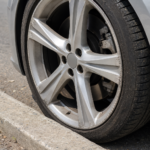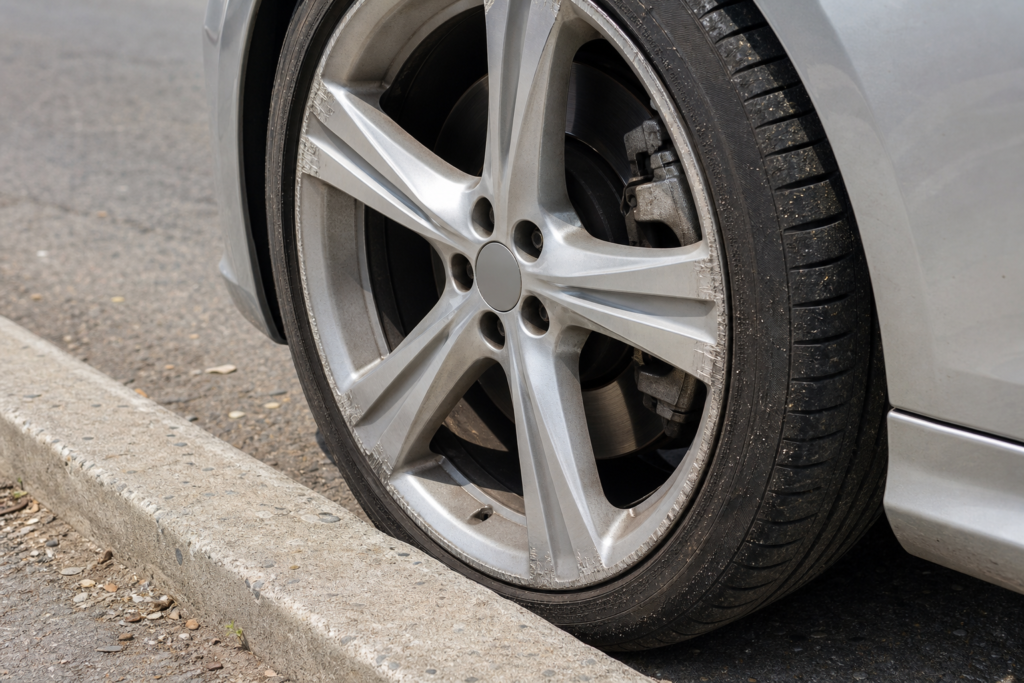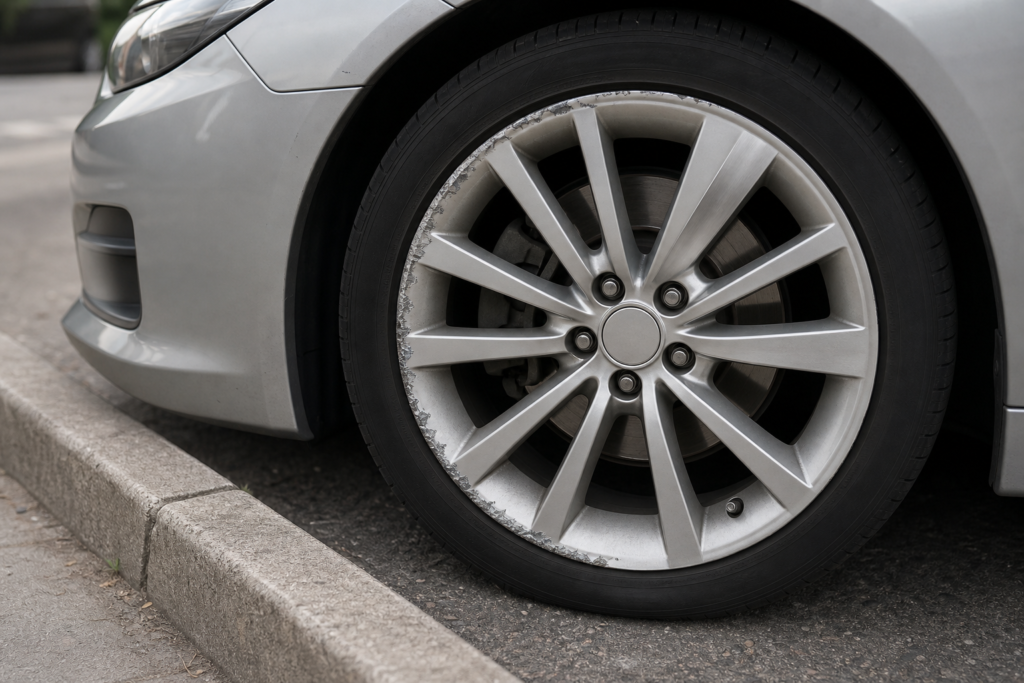
You pull away from a tight parallel parking spot, glance in the mirror, and catch it, a fresh silver gouge scraped across your painted alloy wheel where the curb just bit in. That sinking feeling is universal, and the first question that follows is almost always the same: where do I get this fixed?
If you search “curb rash repair near me,” you’ll find mobile technicians, dedicated alloy wheel shops, powder-coating facilities, body and collision shops, and dealership service departments all claiming they can help. The right choice depends on three things: your wheel’s finish, how deep the damage actually is, and how soon you need the car back. Each provider type has real strengths and real limitations, and understanding those trade-offs up front will save you money, time, and a second repair.
Classifying Your Damage First
Before calling anyone, look closely at the wheel. Curb rash falls into a rough spectrum. A clearcoat scuff, where the surface feels rough but no color is missing, sits at the mild end. Paint or primer loss, where you see bare metal or a lighter substrate showing through, is moderate. A deep gouge with material actually carved out of the rim’s edge or face is severe. Edge-only damage, the outer lip, is generally simpler to address than damage that extends across the spoke face, where color matching and blend lines become visible.
Your wheel’s finish changes the answer dramatically. Standard painted alloys are the most forgiving to repair. Machined or diamond-cut wheels, identifiable by their fine concentric lines and bright metallic face, require a lathe to restore properly, which immediately narrows your provider list. Polished, chrome-look, and high-gloss black finishes each introduce their own matching challenges. Powder-coated wheels hold up well to wear but need a specific refinishing process to restore correctly.
One important distinction: most curb rash is purely cosmetic. But if the gouge is deep enough to displace metal, or if you hit hard enough to feel a vibration afterward, you may be dealing with a bent wheel or tire sidewall damage. Run your finger along the inner edge of the rim. If you feel a dent or see sidewall bulging on the tire, get the wheel inspected for structural integrity before worrying about cosmetics.
Knowing the severity and finish type is the foundation for choosing between a quick driveway repair and a full shop refinish, or deciding whether curb rash repair is a DIY fix or a professional job.
Provider Types Compared
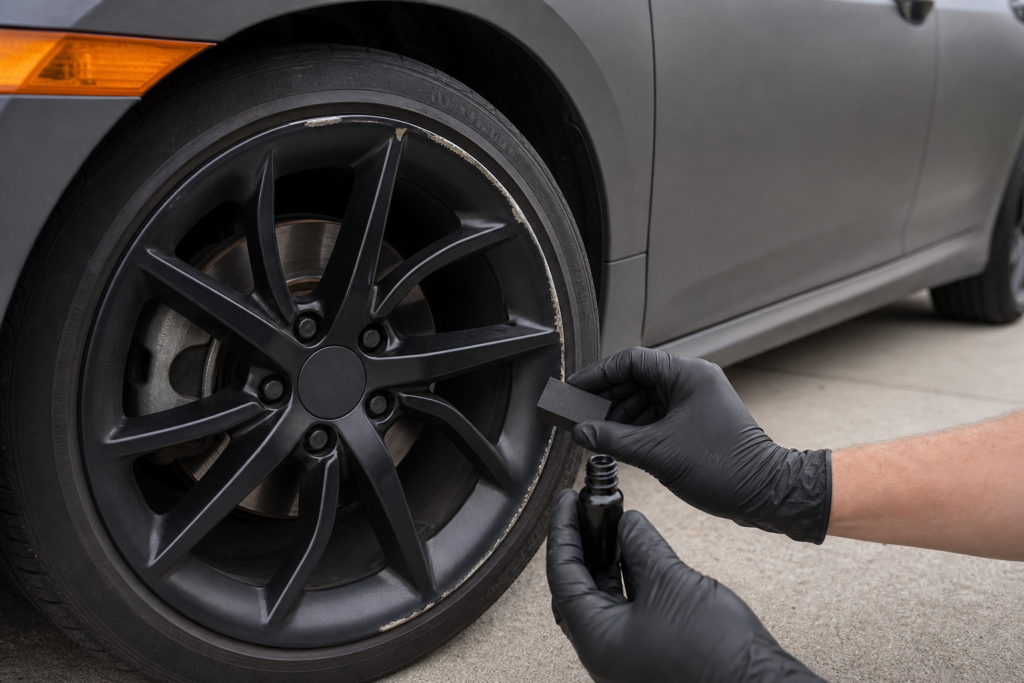
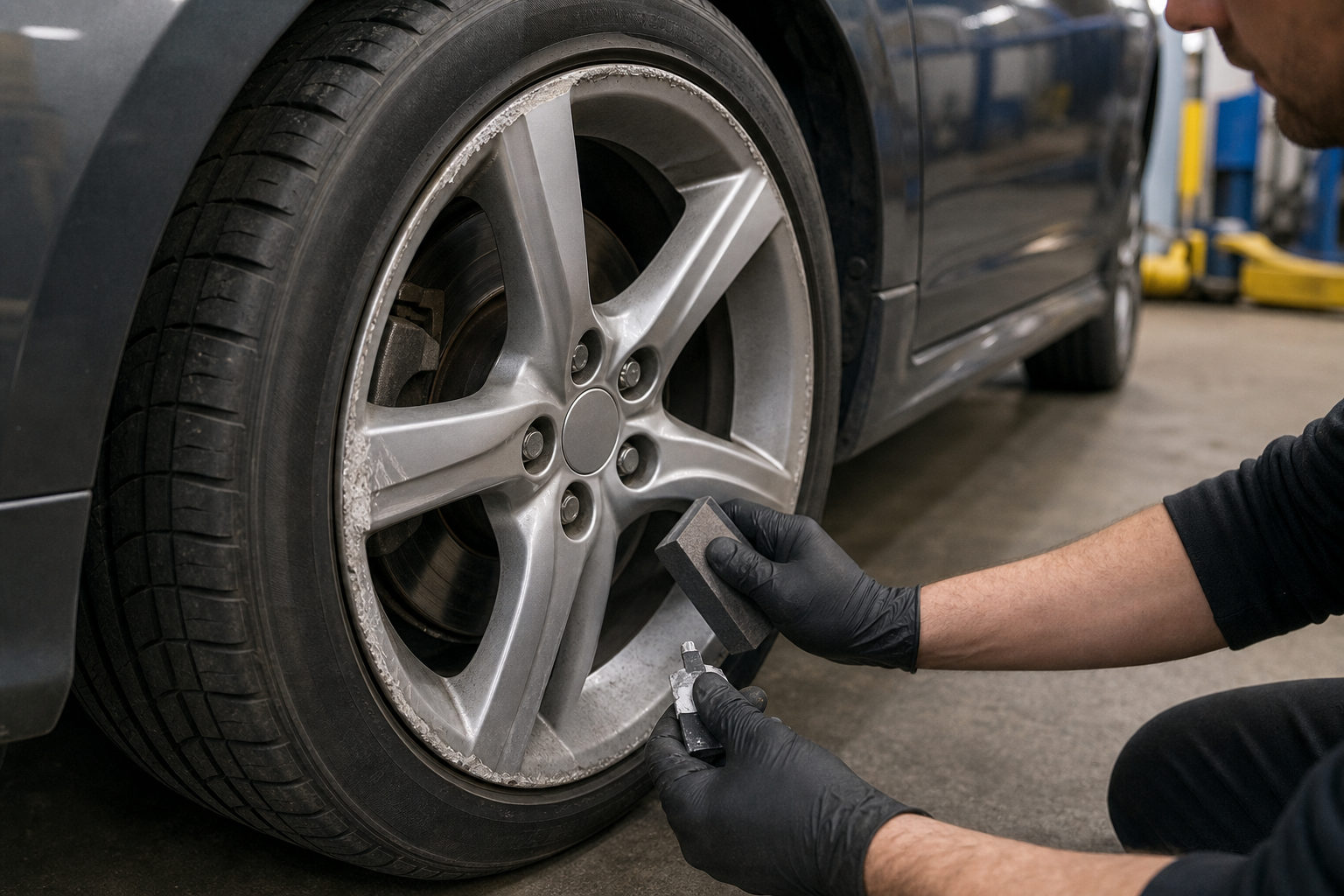
Mobile wheel repair technicians are the convenience play. A mobile curb rash repair tech comes to your driveway, office parking lot, or wherever the car sits. They inspect the damage, sand and fill the affected area, blend and spray-paint to match, apply clearcoat, and cure it, often in under two hours. For light-to-moderate rash on standard painted or powder-coated wheels, mobile techs deliver solid results, especially when your expectation is “looks great from a few feet away.” They’re ideal if you have a packed schedule and can’t leave the car at a shop.
The limitation is precision. Diamond-cut finishes can’t be machined on-site. Multi-stage or metallic colors are harder to match outside a controlled booth. Durability can vary depending on the products and curing methods used, so ask about clearcoat type and cure time before booking. For standard painted alloys with light-to-moderate damage, a mobile wheel restoration service is often the fastest path from gouge to clean finish without leaving your driveway.
Local alloy wheel repair shops are the best curb rash repair service for most situations. A dedicated wheel shop differs from a general body shop because wheels are its entire focus. These facilities typically have lathes for machining diamond-cut faces, spray booths calibrated for small-radius parts, and balancing equipment to verify the wheel after work is done. Moderate-to-severe rash, hard-to-match finishes, and situations where cosmetic perfection matters all point here. Turnaround ranges from same-day for straightforward painted wheels to one to three days for machined or multi-coat finishes.
Powder-coating facilities make sense when the damage is widespread, the existing finish is peeling or oxidized, or you want a full color change. The process involves stripping the old finish entirely, media-blasting the bare wheel, applying powder coat electrostatically, and baking it in an oven. The result is exceptionally uniform and durable. The trade-off is time, expect several days to a week or more, and cost that reflects a complete refinish rather than a spot repair. Powder coating also replaces the OEM finish, which may matter for resale or lease return. Body and collision shops enter the picture when curb rash happened alongside other damage, a scraped bumper, for instance, or when an insurance claim covers multiple repairs. But wheels aren’t a body shop’s core product, so ask directly whether they send wheels out or refinish them on-site, and request before-and-after examples on a similar finish. Dealership service departments offer familiarity and OEM parts access, but most either replace the wheel outright or sublet the repair to a specialist, and the markup is typically the highest. DIY kits can be adequate for a very small scuff on a standard painted wheel, but mismatched color, visible blend lines, and damaging a diamond-cut face are common outcomes. If the damage is on a diamond-cut, polished, or high-gloss black wheel, or if the gouge is deep enough to catch a fingernail, skip DIY.
Repair Costs and Price Factors
Wheel curb rash repair cost is driven by a handful of variables: wheel diameter, finish complexity, damage depth, how many wheels need work, your metro area’s labor rates, and whether you’re paying for mobile convenience or shop overhead. Urgency matters too, curb rash repair same day is realistic with mobile techs and some alloy wheel shops for standard painted rims, but diamond-cut machining queues and powder-coat baking cycles push timelines out.
Mobile repair typically falls at the lower end per wheel for painted finishes. Alloy wheel repair shops charge more but deliver higher precision, especially on complex finishes. Powder coating a full set costs more still, though per-wheel it can be competitive when multiple wheels need attention. Dealership wheel replacement, a new OEM wheel rather than a repair, is almost always the most expensive path.
Understanding terminology helps decode estimates. “Repair” usually means filling and repainting the damaged section. “Refinish” means stripping and recoating the entire wheel face. “Replace” means a new wheel. Each carries a different price, and shops don’t always use these terms consistently. Ask what’s included.
For scheduling, mobile techs and some shops need clear photos in advance to quote accurately. Mobile work requires dry weather and adequate space. Wheel-off service at a shop allows more thorough back-side inspection but adds a tire dismount-and-remount step. These details affect both price and turnaround.
Large-Wheel and EV Considerations
Curb rash is disproportionately common on Teslas and other EVs. Large-diameter wheels paired with low-profile tires leave minimal sidewall buffer between rubber and rim. Dark satin or matte finishes, popular on many EV models, show even minor scuffs prominently. If you’re searching “tesla curb rash repair near me,” you’re far from alone.
Before booking any repair, verify the wheel’s exact finish. Some EV wheels use multi-layer coatings or factory-specific colors that not every shop stocks. Aero covers should be removed before assessment so the tech can see the full wheel face. Confirm the shop is familiar with EV-specific requirements: correct jacking points to avoid battery damage, proper lug torque specs, and awareness of regenerative braking dust patterns that can affect prep work.
On dark and satin finishes, spot repairs are harder to blend invisibly than on lighter metallic colors. When rash covers a large portion of the face, a full refinish often produces a better result than trying to feather a localized repair into the surrounding finish.
Evaluating Any Repair Provider
Start with the portfolio. Ask for before-and-after photos on a wheel finish similar to yours, not just their best work on an easy silver alloy. A reputable alloy wheel curb rash fix provider will show results on the finish types they actually handle well and be candid about finishes they don’t.
Request a written estimate that specifies repair versus refinish, the number of wheels included, and whether balancing or tire remount is part of the price. Ask about the color-match method, spray-to-match from a mixing system vs. rattle-can touch-up, the clearcoat product, recommended cure time before washing, and whether the work carries a warranty.
Red flags include blanket claims like “we can match anything” without supporting examples, no discussion of your specific finish’s limitations, and vague or verbal-only pricing. A provider who acknowledges what they do well and what falls outside their capability is almost always more trustworthy than one who promises perfection on every wheel type.
As a mental model, if your damage is light and your wheel is standard painted, a mobile tech or a curb rash repair shop with same-day availability is a strong fit. If you have diamond-cut or machined wheels, go to an alloy wheel shop with a lathe. If you want a total reset on a tired set of wheels, a powder-coating facility delivers the most uniform result. If you’re bundling with collision work or navigating a lease return, a body shop or curb rash repair dealership path may simplify logistics, just verify who’s doing the actual wheel work.
Your Next Steps
The right place to get curb rash repair depends on three things you can identify in five minutes: your wheel’s finish type, the depth and spread of the damage, and how quickly you need the car back. Before calling around, take clear photos of the damage in natural light, one close-up and one showing the full wheel face. Check whether your wheel is painted, machined, polished, or powder-coated. If you’re unsure, your owner’s manual or a quick VIN lookup on the manufacturer’s site will clarify. Decide whether you need a blend repair on the damaged section or a full refinish of the entire wheel, because that distinction shapes both provider choice and cost. Armed with those details, you’ll get accurate quotes faster and avoid paying for work that doesn’t match what your wheel actually needs.